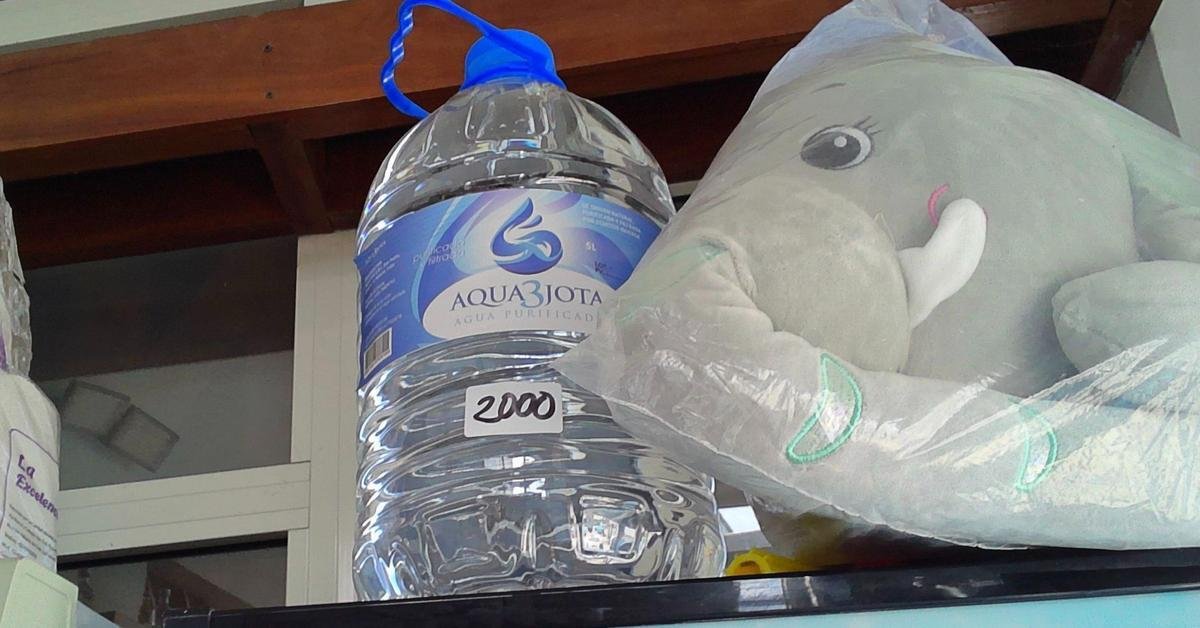
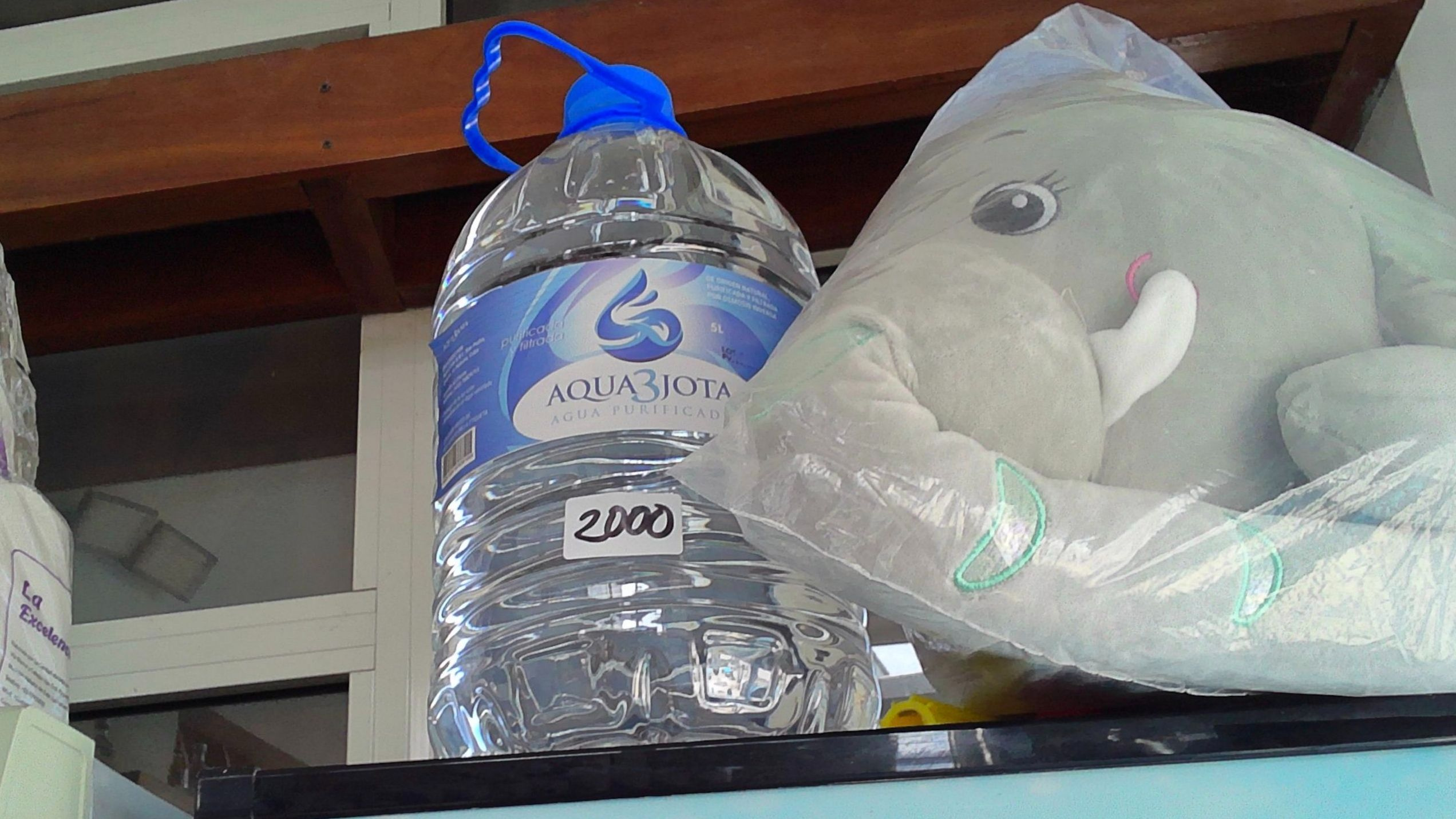
Havana/In Luyanó, water has become a luxury item. On a refrigerator in a private business, a five-liter bottle has a handwritten price stuck on it: 2,000 pesos. Next to it, a stuffed elephant seems to guard the container, as if it were a jewel of several carats. The scene has something of a cruel joke in a Havana neighborhood where the pipes have been dry for more than a week.
The label on the knob promises “purified water,” but the real appeal is that it contains something that is in short supply in homes in the area. At 400 pesos per liter, filling a glass to quench thirst requires an amount of resources that many families cannot afford. Not to mention cooking, washing clothes or washing dishes, for these tasks one or more monthly salaries would have to be mortgaged.
“I have all my clothes dirty, my mother has hepatitis and in my house there is not a drop of water to drink,” says a young woman who went out this Monday to visit the shops in Luyanó.
“I have all my clothes dirty, my mother has hepatitis and there is not a drop of water to drink in my house,” a young woman who went out this Monday to visit the shops in Luyanó tells this newspaper. After searching for a solution among shelves and counters, he ended up in front of the 2,000 peso bottle. Necessity does not allow for many price comparisons, much less when a sick person is waiting in the house and the kitchen sink has been transformed into just a wall decoration for days.
The water carriers, common characters in Havana, cannot cope either. Their tanks run through the streets and some have motors to propel the water to tanks located on high floors. Before it was enough to locate them and negotiate the service; Now they work with waiting lists. The neighbors wait their turn like someone excited about a specialized medical consultation or an interprovincial bus. The substance essential for human life is distributed through a kind of informal reserve.
But the problem does not end when a bucket is filled. Then you have to decide what to do with the water. A little to drink, a little to prepare food and a minimum amount for cleaning. The toilet demands its share, the dishes pile up in the sink and the washing machine demands a share. Every liter can be a reason for dispute. Residents of the most affected areas have improvised mechanisms to collect rain because, although it is not suitable for drinking, it is welcome to clean the floor or scrub a pair of pants.
“What we have to do is all go out into the street, but all of us, not a small group,” a neighbor, fed up with dry pipes, called loudly this Monday.
“What we have to do is all go out into the street, but all of us, not a small group,” a neighbor called loudly this Monday, fed up with dry pipes and waiting for solutions. The outrage also circulates on Facebook, where there is a group that calls itself “Victims of Havana Waters”. A user there asked a question that reads like an ultimatum: “Do you think we are weevils?” And she immediately answered herself: “Well no, we are human beings and we need to be treated as such.”
In Luyanó, as in so many Havana neighborhoods, the thirst business thrives due to hydraulic blackouts. The State cannot bring water to homes, but the market has already found a way to sell it at a luxury price.