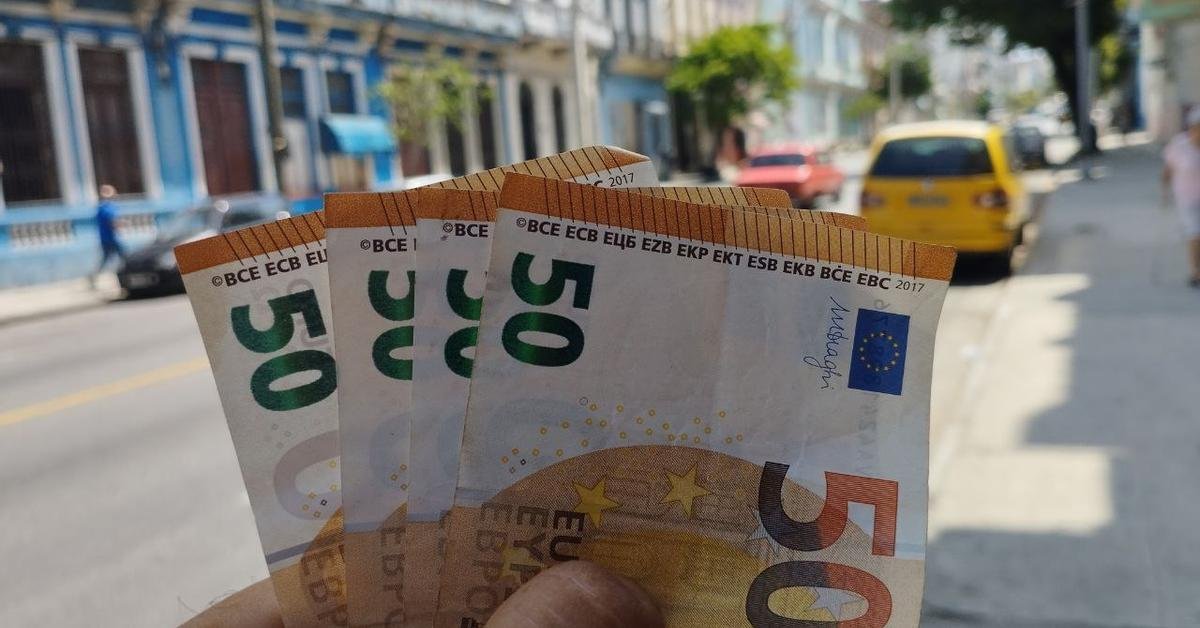
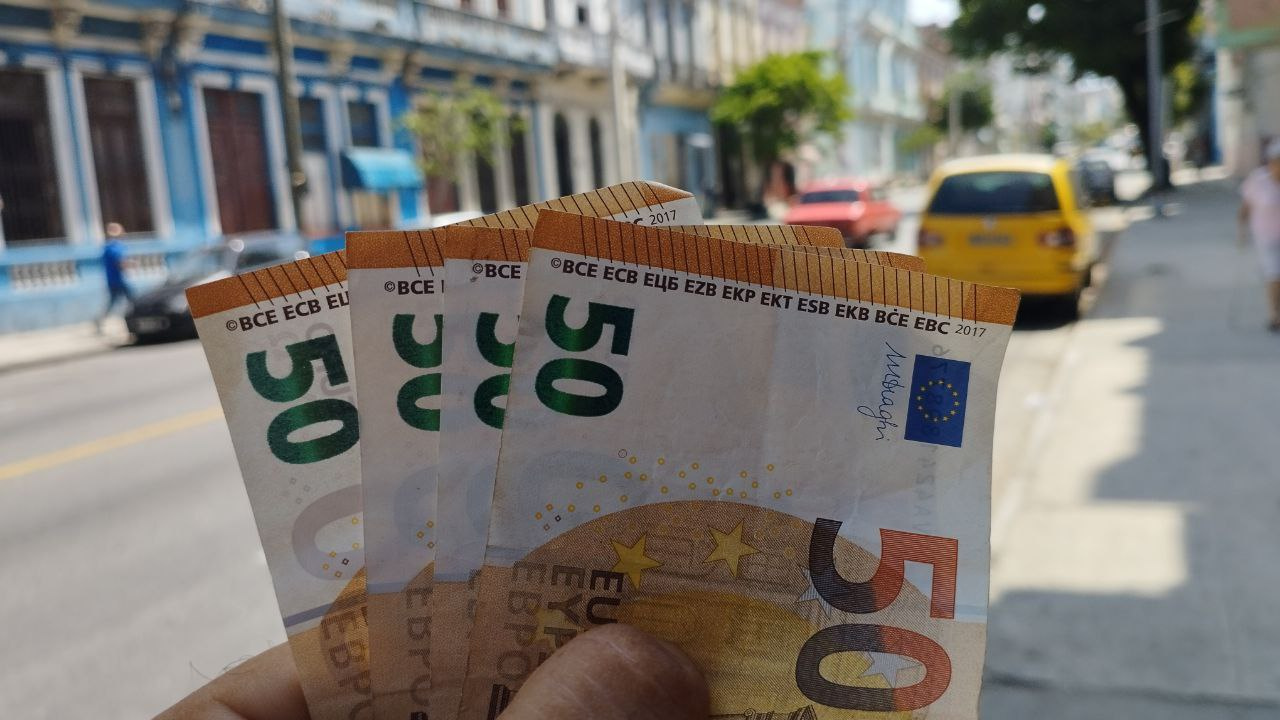
Havana/The euro reached the barrier of 1,000 Cuban pesos this Tuesday in the informal currency market of the Island, according to the real-time price of The Touch. The figure, with a strong symbolic impact, comes just 24 hours after the US dollar touched 900 pesos, in a week of vertigo for the exchange market and growing loss of value of the national currency.
The rise of both currencies confirms a trend that has accelerated in recent days. The dollar, which began the year trading at 435 pesos, reached 800 on October 15 and needed just over half a month to add another 100. Just a week ago it was exchanged for 840, but since then the increases have been practically daily.
Although the dollar continues to be the most traded currency on Cuban streets, the European currency has a specific and sustained demand. Among its main buyers are those who need to pay for consular procedures, especially visa applications for European countries whose consulates require payment in euros and cash.
Added to this need is the growing migratory flow towards Spain, also fueled by the processes of acquiring Spanish nationality. The Democratic Memory Law has allowed numerous Cubans to obtain a European passport, while others are still pending resolution of their files or preparing to leave the Island.
The dollar, which began the year trading at 435 pesos, reached 800 on October 15 and needed just over half a month to add another 100.
According to recently published data, An average of 34,000 Cubans arrive in Spain every yearmany of them with Spanish nationality. This constant movement contributes to maintaining the demand for euros in cash, both to cover initial travel expenses and to have money available during the stay.
The European currency is also attractive to certain private entrepreneurs who seek to preserve the value of their income and keep savings outside the Cuban banking system. For those who have business or family ties with Europe, keeping capital in euros or depositing it in European banks is an alternative to the depreciation of the peso.
The preference for currencies also reflects the lack of confidence in the recovery capacity of the national currency. In a country where a good part of private imports must be financed with resources obtained outside the state banking circuit, each increase in the exchange rate makes the replacement of merchandise more expensive and ends up being reflected in the prices that consumers pay.
The distance between the informal market and official quotes remains considerable. This Tuesday, the rate of the Central Bank of Cuba placed the value of the euro at 868 pesos, far from the impressive peak it has reached in informal networks.
This Tuesday, the rate of the Central Bank of Cuba placed the value of the euro at 868 pesos, far from the impressive peak it has reached in informal networks.
The 1,000 pesos per euro do not only represent a new mark in exchange statistics. For Cubans who receive salaries and pensions in national currency, they constitute another measure of the deterioration of their purchasing power. And for those who need to buy foreign currency with a view to emigrating, studying or simply protecting their savings, the distance between their income and the price of foreign currency widens again.