April 28 is World Day for Safety and Health at Work. On the occasion of this date, we decided to draw attention to the most widespread violations against workers in Tajikistan.
1. Voluntary-forced labor
In Tajikistan, it has become common practice to force workers to go out on clean-up days to clear the area of garbage, plant landscaping, and others. When all this is done voluntarily and a couple of times a year, then one can understand. But when they force you to do it on a weekly basis, especially before numerous holidays and the arrival of distinguished guests, then excuse me, this is already a violation of the legal rights of a person to work and rest.
The most popular characters of subbotniks are teachers, health workers, and employees of state enterprises and institutions. They are forced several times a year to “voluntarily” go out on Saturdays and Sundays for subbotniks, hashars to clean up territories, including other people’s, to plant landscaping, and to pick cotton. Those who don’t come out are threatened with punishment.
Article 8 The Labor Code of Tajikistan prohibits forced labor, although there is a clause “except in cases specified by the legislation of the Republic of Tajikistan.”
Forced labor is not considered to be work in military service, in emergency situations or under a court sentence.
At the same time, according to the law, they must pay a premium for working on weekends and holidays and for overtime work.
2. Deductions from wages
We often witness that money from the same category of workers is forcibly withheld for subscriptions to various newspapers and magazines, books, and money is collected for various holidays and events without their consent.
Article 163 Labor Code Tajikistan states that deductions from an employee’s salary to pay off debts to the employer can be made by order of the employer in the following cases:
— return of an unearned advance payment issued to an employee on account of wages;
— return of amounts overpaid due to accounting errors;
— repayment of unspent and not returned in a timely manner advance issued in connection with a business trip or transfer to another job, to another location and for economic needs, unless the employee disputes the grounds and amount of the withholding. In these cases, the employer has the right to make an order to withhold financial resources no later than one month from the date of expiration of the period established for the return of the advance, repayment of debt or from the date of incorrectly calculated payment;
– dismissal of an employee before the end of the working year in which he has already received labor leave, for unworked vacation days.
The employer is obliged to make deductions from the employee’s wages upon his written application for non-cash payments.
3. Violation of safety regulations
Often employers, especially private ones, do not provide instructions on safe work practices.
According to the builders themselves, at most construction sites in Tajikistan these requirements are practically not observed.
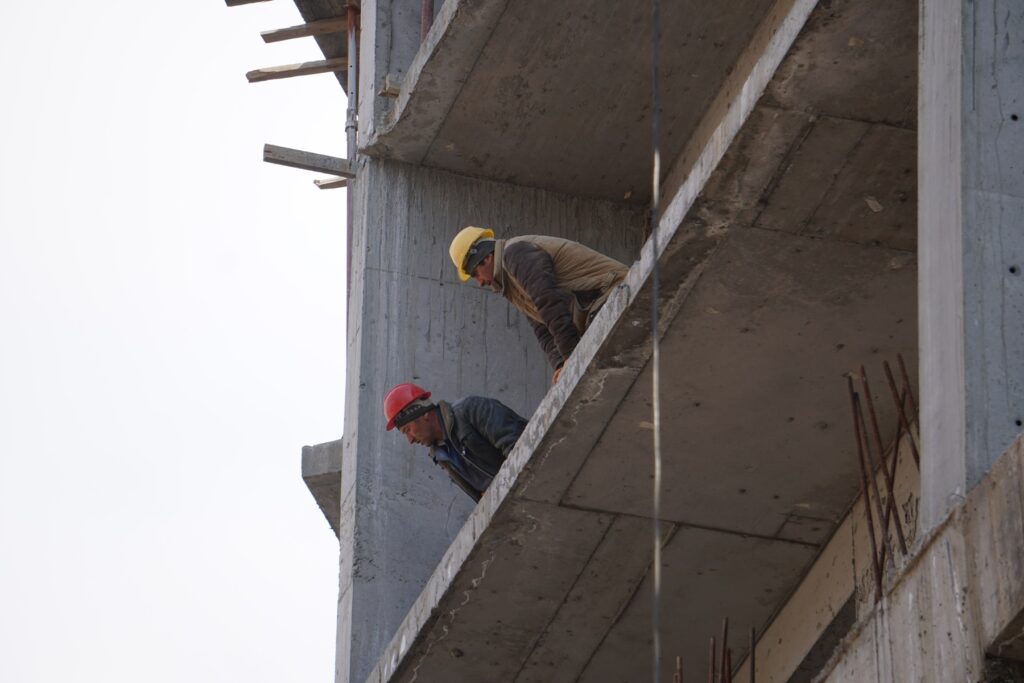
According to the Service for State Supervision of Safe Work in Industry and Mining Supervision, due to non-compliance with safety regulations, deterioration of equipment and failure to undergo an industrial safety examination, as well as the low level of professional training of workers, in 2025, 18 people died and 22 were injured.
4. Late payment of labor
In practice, late payment of wages, vacation pay, and other benefits has become a frequent occurrence in Tajikistan. If there is a delay due to the fault of the employer in the payment of wages in comparison with the established deadlines, the employer is obliged to additionally pay the employee funds in the amount of the discount rate of bank interest existing at the place of work on the day of payment for each day of delay.
But this provision of the Labor Code is rarely observed by employers and usually everyone is paid once a month, and not 2 times a month.
The employer is responsible for the delay in payment of wages, in accordance with the legislation of the Republic of Tajikistan. Unfortunately, this is more common in government agencies.
5. Collective agreement
According to the law, all labor collectives are required to conclude collective agreements.
Collective bargaining agreements are concluded to establish working conditions, employment and social guarantees in addition to legislative and other regulations.
Representatives of the parties who signed the collective agreement annually or within the time limits provided for in such an agreement report on its implementation at the general meeting (conference) of the labor collective.
But in most work collectives, especially small ones, there is no collective agreement with employees at all.
6. Conclusion of fixed-term employment contracts
The Labor Code of the Republic of Tajikistan directly prohibits the conclusion of fixed-term employment contracts in order not to pay employees vacations or compensation during layoffs.
But this clause is often violated by employers and most companies practice concluding annual contracts with the same employees many times.
7. Conclusion of civil contracts instead of labor contracts
Often, employers, in order to avoid paying compensation when dismissing employees, as well as not giving employees vacations and other guarantees due to employees, enter into civil law contracts with employees instead of labor contracts.
When a person performs “services” for one organization on an ongoing basis, there are already all the signs of an employment relationship, and not a contract for the provision of services.