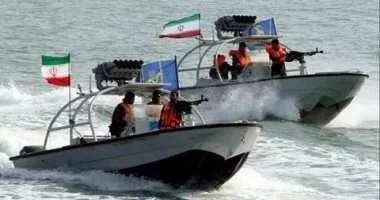
The threats posed by the Revolutionary Guard to navigation in the Strait of Hormuz have raised doubts and a state of anxiety in the Old Continent due to the severe disruption in trade and oil circulation in the Strait of Hormuz, which prompted these countries to search for exceptional options in terms of defense readiness to deal with the problems raised in the Middle East.
In this regard, European countries are working on preparing a plan for the post-Iran war phase, which aims to ensure freedom of navigation through the Strait of Hormuz, by forming a broad international coalition to reopen the sea lane, including deploying mine-clearing ships and other military vessels, but this plan may exclude the United States.
Germany is preparing to send naval units to the Mediterranean, in preparation for their possible deployment as part of an international mission in the Strait of Hormuz, according to Bloomberg.
German naval units in the Mediterranean
German Defense Minister Boris Pistorius said in an interview with the newspaper “Rheinische Post”: “We will deploy a minesweeper in the Mediterranean and provide it with a command and supply ship,” without specifying the launch date of the two ships.
Pistorius pointed out that ending hostilities in the region is a prerequisite for any German deployment, noting that this deployment will not be possible except after the approval of Parliament (the Bundestag).
He added: “To save time, we decided to deploy parts of the German units in the Mediterranean early, so that we do not lose more time once we obtain authorization.”
German Chancellor Friedrich Merz had previously indicated the possibility of Germany participating in an international military mission to secure navigation in the Strait of Hormuz, but he explained that this would require international authorization first.
Defensive plan
French President Emmanuel Macron said last week that the plan is based on establishing an international defense mission that does not include “warring parties,” in reference to the United States, Israel and Iran, while informed European diplomats made clear that European ships will not be under American command.
Macron announced that part of the forces currently stationed in the eastern Mediterranean and the Red Sea, including the aircraft carrier Charles de Gaulle, could be redirected to support the mission.
The European plan aims to reassure shipping companies and encourage them to use the strait after the fighting ends, which may take time, according to officials.
Frogmen for mine clearance
For its part, the British Ministry of Defense reported that British military divers are preparing to conduct mine clearance operations if needed in the Strait of Hormuz.
Royal Navy experts, trained in mine neutralization and clearing, are being equipped to provide additional options alongside unmanned systems. Britain also confirmed that it would provide autonomous minesweepers as part of a proposed multinational mission to protect the Strait.
Britain and France jointly held a series of meetings aimed at ensuring freedom of navigation in this commercial artery, and alleviating some of the economic pressures caused by its closure at the beginning of last March.