Havana/The Cuban artists Adriana Pérez Mugía, Karla Betancourt and Nadia Díaz bring together their works in Threads of the eartha group exhibition that takes textile practices as a starting point to delve into painting, photography, installation and ceramics. The exhibition, curated by Ana Beatriz Almeida, explores the vital and cosmic cycles associated with growth, mutation, deterioration and regeneration.
Rather than presenting weaving as a technique common to the three creators, the exhibition turns it into an articulating language. Fibers, glass beads, threads, pigments, photographs and objects are combined in pieces where the manual process itself—stitching, crimping, interlacing—leaves a visible trace and functions as a vehicle of individual and collective memory.
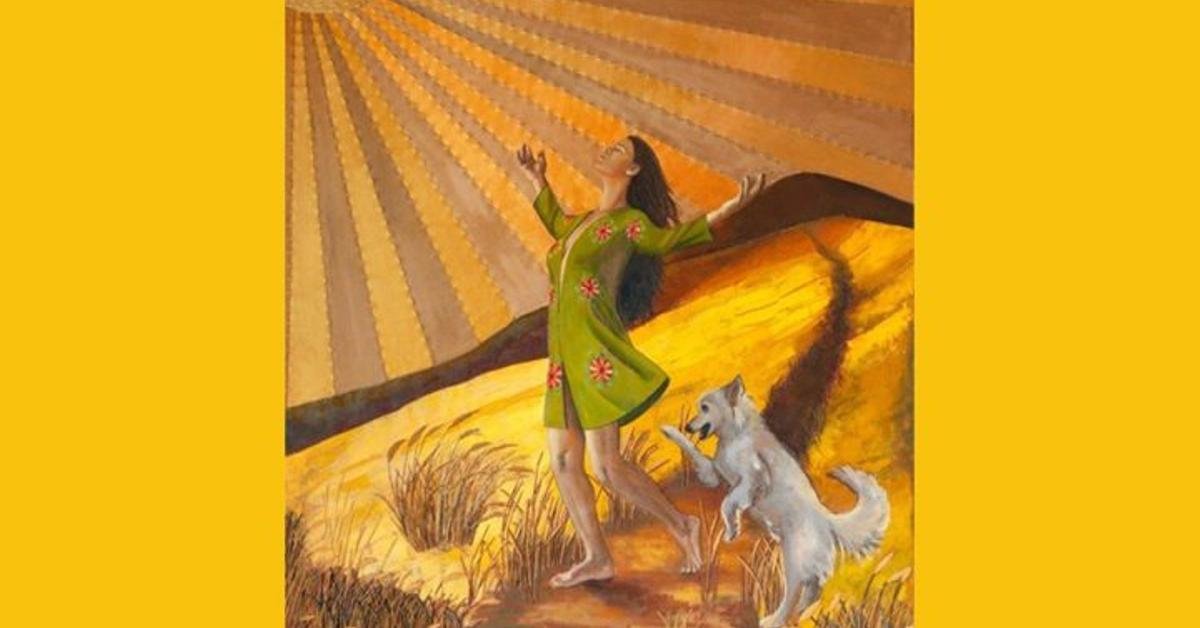
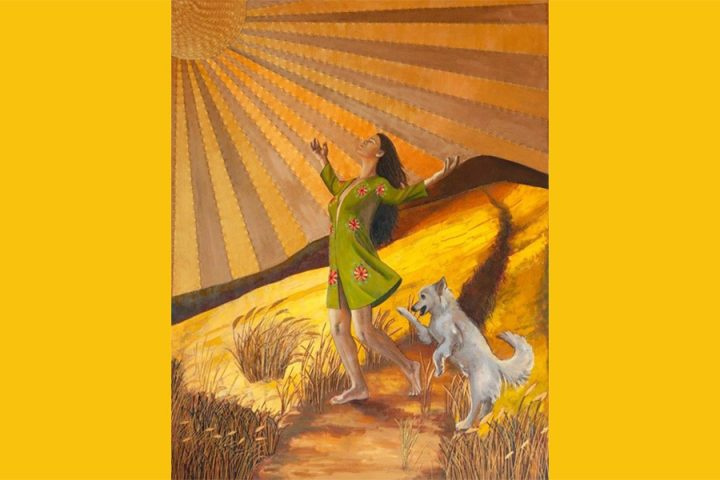
Adriana Pérez Mugía (Pinar del Río, 1985), graduated from the San Alejandro National Academy of Fine Arts, combines oil painting and embroidery on canvas. In works from his series The golden threadas The path of the madmanpart of her own image: she adopts a posture, photographs herself and subsequently transfers the figure to the canvas, where the embroidery intervenes and transforms the painting.
Nadia Díaz (Havana, 1982), also a San Alejandro graduate, works with photography, weaving and ceramics. In Trinity reinterprets Tarot figures—the Priestess, the Empress and the Queen of Cups—based on their astrological and numerological correspondences, while other pieces in the exhibition approach the phases of the Moon and the relationship between feminine experience, spirituality and creation.
For her part, Karla Betancourt (Sancti Spíritus, 1992), master in Heritage Conservation from the University of the Arts, directs her gaze towards nature and its deterioration. In submerged desert recreates coral reefs using glass beads, nylon and other materials, while in Sea fans reproduces shapes and textures of the underwater world. The paradox is deliberate: it uses glass and plastic, materials associated with the deterioration of ecosystems, to symbolically reconstruct threatened organisms.