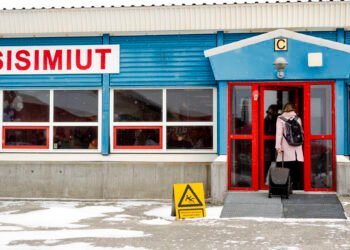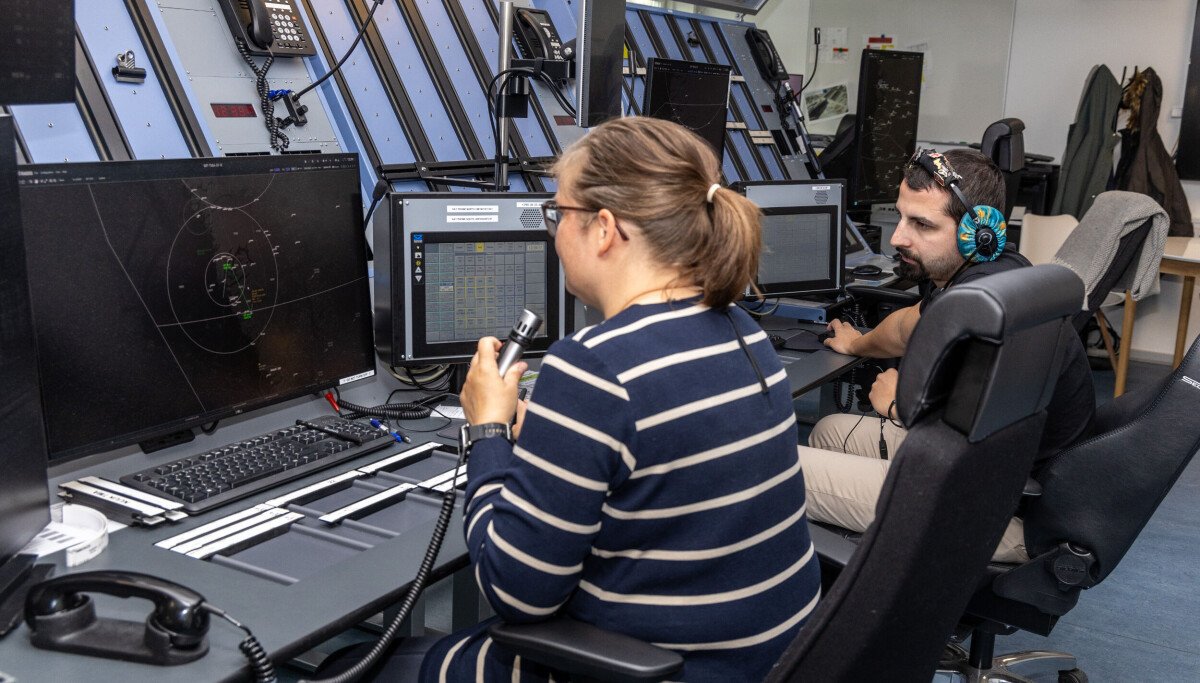
It’s hard not to be a little impressedwhen you enter the door of Naviair’s control center in Nuuk, where both the Nuuk Flight Information Center (FIC) and Nuuk Approach (APP) are located.
The two units – together with the AFIS units at the local airports – have complete control over all aircraft in Greenland below six kilometers altitude.
Even though there are many planes in the air and a lot to keep track of, it is quiet and calm. It’s a pretty normal day at the office.
The relatively small room is filled with computers, screens and so-called strip trays that help keep track of all the planes. The FIC operators work here, receiving regular status reports from planes and helicopters all over Greenland.
When things go wrong
If the planes do not report at the agreed times, it may be a sign that something serious has happened – and then the control center becomes the center of a search or rescue operation, because it is Naviair that coordinates all aircraft-related rescue operations in Greenland in close cooperation with the Arctic Command, the Greenland Police and the emergency services.
On 14 May 2026, some more employees moved into the room with the many screens, when air traffic control was introduced in a so-called TMA in the airspace above Nuuk Airport. TMA stands for Terminal Maneuvering Area and in aviation parlance covers a controlled airspace around an airport where air traffic controllers manage the arriving and departing air traffic.
When a plane is about 150 km from Nuuk Airport, Naviair’s air traffic controllers will get in touch with the plane, and from here they will ensure the necessary distance between the planes until shortly before the actual landing, when the AFIS operators in the tower at Nuuk Airport will provide the pilots with the last necessary information they need when they land and taxi into place at the airport.
The air traffic controllers decide
The big difference for the pilots is that the air traffic controllers decide where the aircraft should be in the airspace, while the AFIS and FIC operators only give advice and information to the pilots. This can, for example, be information about other traffic, wind, weather and whether all navigation aids are working as they should – and then it is up to the pilots themselves to make the decisions.
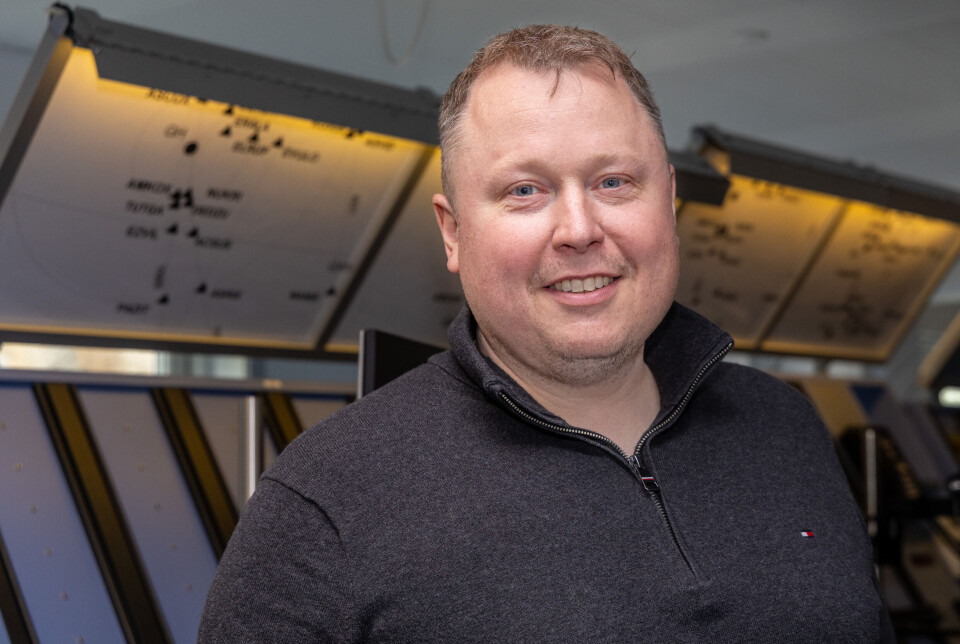
– It is specifically about ensuring adequate distance between the planes on their way in and out of Nuuk Airport. The new air traffic control around Nuuk has led to more planes being able to come in and out of Nuuk, and that was what the whole task was about, says Henrik Jensen, general manager of Naviair in Greenland.
The establishment of air traffic control meant that on 14 May 2026 the Swedish Transport Agency lifted the restrictions that previously existed at the airport in Nuuk, where only four flights per hour were allowed.
New nuummiut
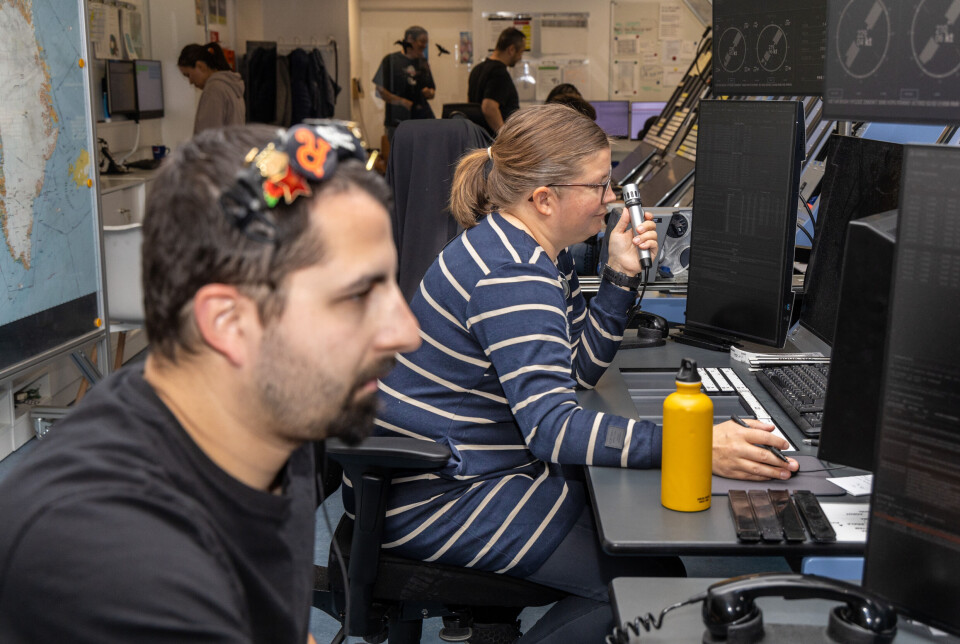
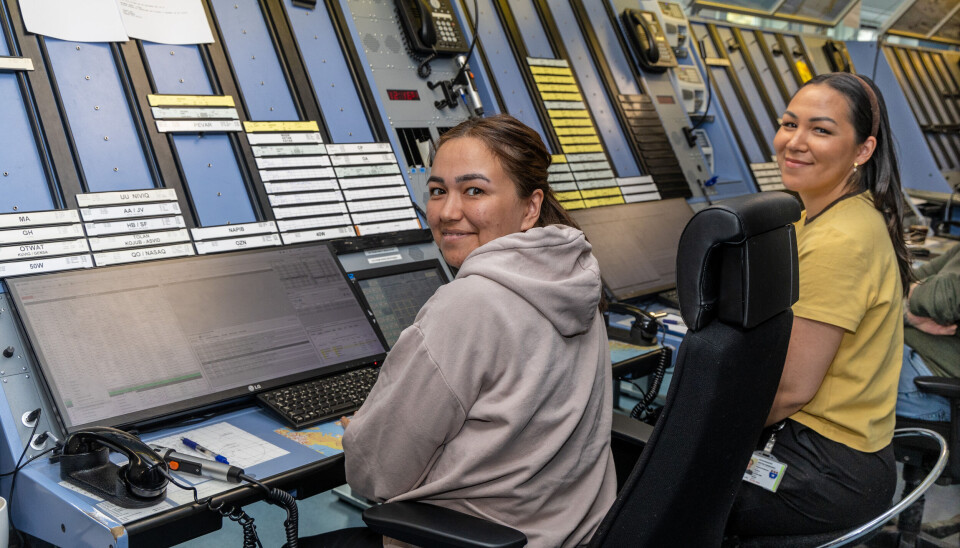
Naviair has employed six air traffic controllers to manage the airspace around Nuuk. When Sermitsiaq visited Naviair’s control center, the Finnish Nina Sandström and the Romanian Remus Raita were on duty. They have both moved to Nuuk to work.
– It’s exciting, because I love new challenges. Nuuk is a lovely city with exciting nature – and the people are so nice, says Nina Sandström.
Air traffic controllers have to be able to keep many balls in the air at the same time, but Nina Sandström and Remus Raita do not look particularly stressed – and they also have time to talk to the journalist.
– It’s something we’re trained for, so it doesn’t stress me out. We take care of the planes just as quietly when they are in the area – after all, it is our everyday life.
Now local air traffic controllers must be trained for the future.
– We employed six air traffic controllers to start with, and now we have recruited four air traffic controller aspirants from among our local FIC operators. The air traffic controller training can be seen as a form of superstructure on the FIC training, explains Henrik Jensen.
Without tower and radar
Most people expect air traffic controllers to sit in a tower at an airport looking at a radar screen, but they don’t actually need to.
– We base our flight management on the so-called ADS-B technique. Here, a transmitter in the plane communicates with a receiver on a satellite, and we then get that data into our system. Here they are presented on a screen that looks like a classic radar screen, says Henrik Jensen.
– You will see more of that system in the world, because it is a really good supplement to the existing radar systems. At the same time, the system is very suitable for Greenland in particular, because the many mountains in the area make it difficult to get proper coverage on the traditional radar.
– Currently, not all aircraft have installed the new ADS-B technology – and you must have that if you want to take off or land in Nuuk.
– So if one of the planes without ADS-B passing over Greenland wants to land in Nuuk, for example to refuel, they will be nicely directed to Kangerlussuaq instead of Nuuk, says Henrik Jensen.
There have been air traffic controllers in Kangerlussuaq for many years. There, the air traffic control is handled by Icelandic Avians, and here it is a traditional radar that gives the air traffic controllers the information for their radar screen.
Search and Rescue
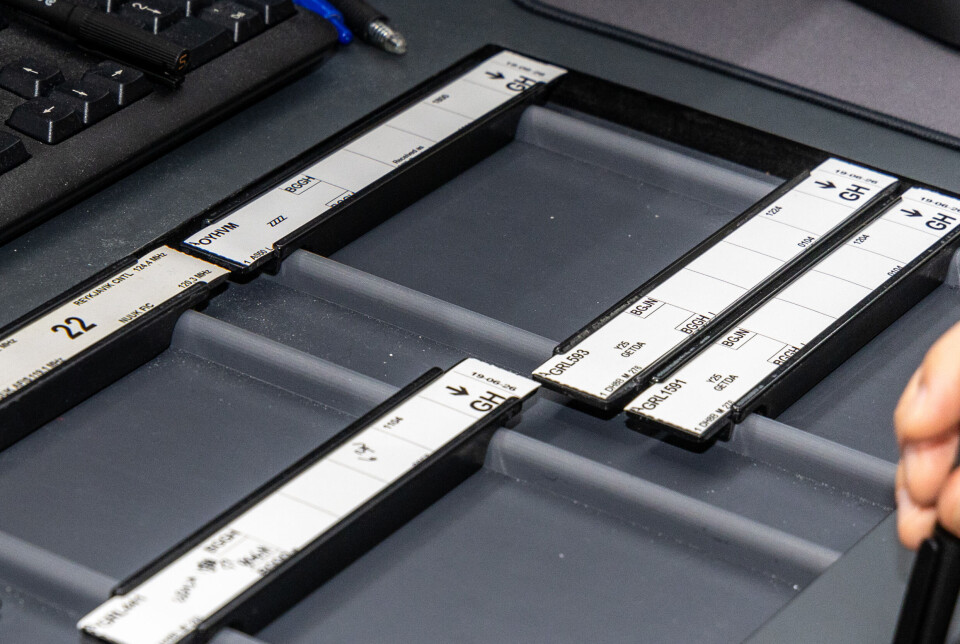
Although the atmosphere this Friday in Naviair’s control center is both cozy and relaxed, that can quickly change.
– Naviair is also responsible for SAR (Search and Rescue) and the rescue operations in collaboration with, among others, the Arctic Command, the Greenland Police, the emergency services and other authorities, if a plane crashes or disappears – and then the atmosphere will of course be different, says Henrik Jensen.
– If there is a SAR action, our Rescue Coordination Center unit (RCC) is activated, and this is done from our two RCC terminals, which are used in that connection. This gives more people to work in the control centre, but these are situations that we also train continuously, so that everyone knows what needs to be done.
– The training and exercises are important, because stress does not help in stressful situations, so we must avoid that, says Henrik Jensen, who believes that the location of Naviair’s RCC unit in the same building as Arctic Command is a great advantage in that context.
– In connection with rescue operations, the Arctic Command is our most important partner – and it is therefore a great advantage that we are housed in the same building, says Henrik Jensen.