If we talk about growth, there is a Buenos Aires suburban area that, like the northern zone, live a boom boosted mainly by the pandemic and increasingly consolidated: Canningthe large village south of the city of Buenos Aires.
Located 40 minutes from CABA, on Route 58, is located the green corridor which added a large amount of gated communities in recent years, chosen mainly by families looking for tranquility and security, and which today has new projects that little by little begin to take shape.
The growth of the area can be seen in the numbers: the population grows a lot. According to data from the last 2022 census, canning runnerwhich includes areas of several parties (Ezeiza, San Vicente, Esteban Echeverría and Presidente Perón), has around 18,500 inhabitantsbut in the 90s it barely had 4,100, according to Poblaciones.org. That is, the locality grew by 346.25% in just over 30 years.
The expansion of gated communities was a key factor in urban transformation and currently, the region is home to more than 60 urbanizationsincluding country clubs, gated communities and high-end condominiums. Besides, the optimization of Provincial Route 52/58 and the extension of the Camino del Buen Ayre They served as value catalysts guaranteeing good connectivity with the City.
Specialists in the area agree that today “there is a lot of interest and demand,” a fact that is evident in active sales. In this context, new ventures were developed, pre-existing ones were expanded and service and business proposals were added to consolidate the area.
The “Pillar of the southern zone”as the developers call it, replicates the northern corridor model of the early 2000s, with high-end gated communities that promote a comprehensive ecosystem of health services, education and first-class shopping centers.
“Canning has grown a lot in the last 20 years, like no other area in Greater Buenos Aires, and today it cannot keep up with the demand that exists for commercial premises, offices and medium-density residential apartments,” says Martín Boquete, director of Toribio Achával.
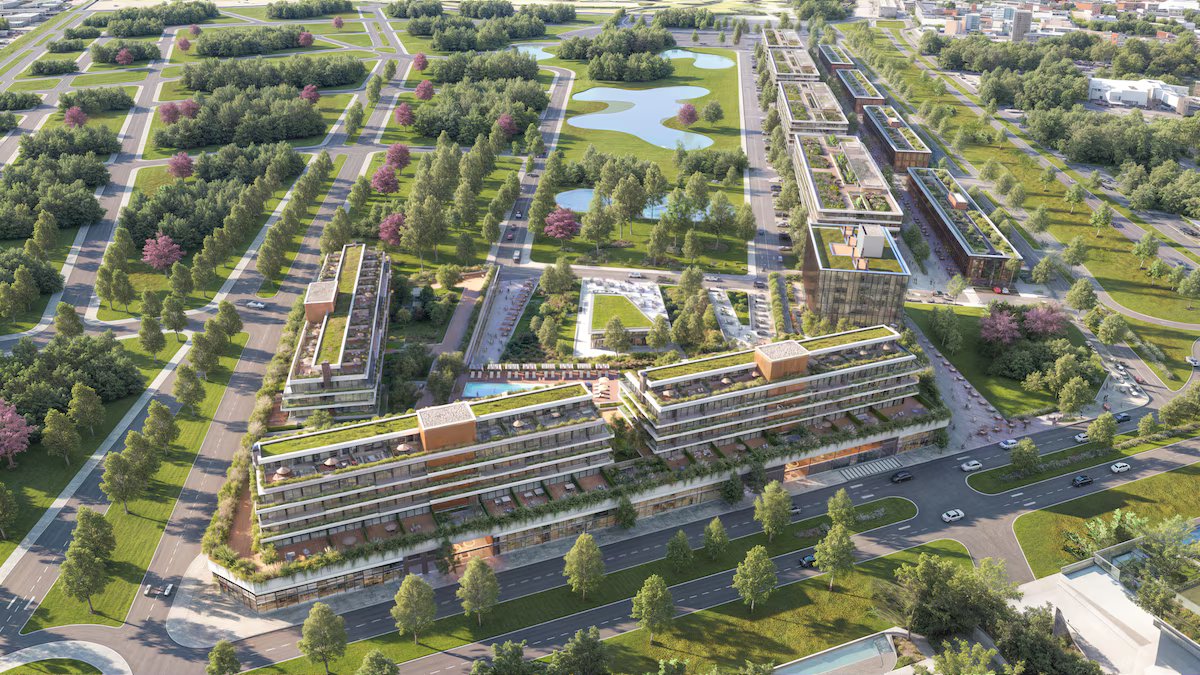
In this context, A new urban development joins the southern suburbs of Buenos Aires with a disruptive commitment. On a lot of 70 hectares – larger than Puerto Madero, which covers an area of almost 50 hectares – where there used to be an 18-hole golf coursethe Canning District is proposed, carried out by the developer Portland.
According to the developers, based on a study of public opinion and the analysis of the territorial dynamics of Canning, “The project responds to the transformations in the ways of living, working and connectingaccelerated in the post-pandemic context.”
From Toribio Achával they pointed out, as brokers of the project, that the new venture comes to solve many of the needs of unmet demand in the area due to the growth of recent years, “especially to offer a city where everything is close, the buildings are modern, public services are state-of-the-art and life develops with security and harmony. That is, like a first world city.”
But in addition to the urban approach, The project also has a strong symbolic load for its developers.. Gustavo Menayed, founder of Grupo Portland, linked the initiative to his personal history and his relationship with the south. “You always return to the place where you were happy.“, he noted during the presentation, remembering his childhood traveling from La Boca to Monte Grande. Along these lines, he explained that the venture seeks to pay tribute to the property and the communities that inhabited it, such as the Korean community.
Within the framework of the developer’s 25 years, Menayed stressed that the idea of this new urbanization was born with an eye toward the common good.: “We think about giving people housing and creating a place where they can be well, comfortable and enjoy themselves.” In that spirit, He defined it as an “aspirational and inspiring” development.which aims to build not only a new urban center, but also a better quality of life for those who live there.
The vision for Alan Mohadeb, partner at Grupo Portland, is clear: “Develop a open neighborhood with city scale, without physical barriers, oriented towards a smart city under a fundamental premise: a new way of inhabiting the contemporary world.”
The project of more than US$100 million investment will occupy a property where a golf course used to operate and will seek to preserve part of that natural heritage as the central axis of its design. It’s a open and mixed-use developmentdesigned to integrate housing, work, education and services in the same environment.
As explained by Nicolás Corvalán, project director of Grupo Portland, one of the pillars will be precisely “take advantage, care for and respect” the existing environment. Added to this is a strong focus on security and resolving historical deficits in the area: “The plan includes incorporating services that are scarce todaysuch as proposals for health, education, shops and quality gastronomy, in addition to generating an orderly public urban space with clear rules of coexistence,” he said.
The masterplan was carried out together with three architecture and urban planning studios: Aisenson, Oficina Urbana and BMA, and more than 25 professionals, in what the developers define as a “disruptive” project for the traditional suburban format.
The proposal is structured as an integrated ecosystem that will combine homes, offices, educational institutions (colleges and universities), commercial and gastronomic spaces, and essential servicesincluding a medical center.
Among the brands already confirmed are the Jumbo supermarket, Kansas, Banco Santander and the Otamendi Sanatoriumwhich anticipates a strong commitment to providing the area with infrastructure and urban life.
One of the differentials will be the creation of a new urban fabric with a focus on sustainabilitywhere mobility, green spaces and public spaces function as organizing axes. The project prioritizes walkability and community lifewith routes designed to connect different uses and encourage everyday encounters.
The first stage will include the development of Open Office and Open Residencesalong with a gastronomic shopping mall linked to Canning Mall and a commercial front on Route 58. In this initial phase, approximately 330 units of two, three and four rooms distributed in three residential buildings, two office buildings and four large-scale commercial warehouses. In addition, the first premium outlet in the southern zone is plannedmarking a turning point in the regional commercial offer.
The launch values of the units are distributed as follows: residences are sold from US$120,000the offices from US$125,000 and the commercial premises from US$150,000.
“Creating a city is not something that is done in a couple of years; however, we must begin to supply the short-term demand: that is why the project begins with these two ventures,” Boquete added.
According to the developers, the buyer profile is broad and diverse. “In the first instance, there was a strong participation of local investors attracted by the projected profitability margins. But, from the early stages, there was a growing demand from end users interested in inhabiting the project,” said Mohadeb.
He start of infrastructure and road works is scheduled for April and the residences and offices are expected to be delivered in 30 months, while the shopping center and commercial warehouses in 24 months.
“Complementarily, the central park, the commercial spaces on the ground floor, landscaping and parking areas will be key components in the consolidation of this first stage”concludes Mohadeb.
With this approach, Distrito Canning seeks to position itself as one of the more comprehensive developments in the southern zone, with a proposal that aims to redefine how people live in the Buenos Aires suburbs.