Portuguese companies need size to compete both at a European level and on a global spectrum, but there are still several obstacles when the emphasis falls on the size of the national business fabric.
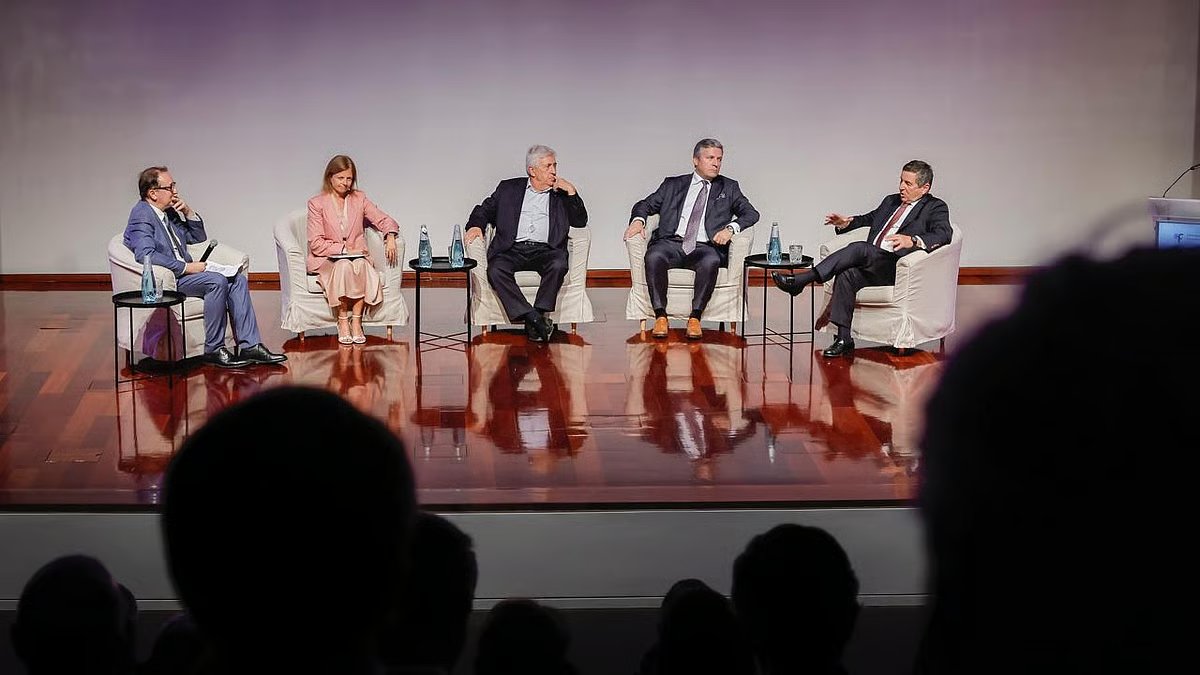
“There is a distrust of large companies, when they are the ones that pay the highest salaries and have the greatest capacity to innovate”defended this Monday, 15th, the CEO of the José de Mello group, Salvador Mello, at the Grande DN Conference, taking place at the Champalimaud Foundation, in Lisbon.
During his intervention on the panel “The Portuguese economy in 2026”, the businessman who leads the group that owns companies such as Brisa, Bondalti or CUF, pointed to taxation as one of the biggest disincentives to the growth of organizations in the country.
In matters of taxes, Marco Galinha had the same tuning fork. “What can make taxation easier? Get out of the way and let businesspeople generate wealth”, asked the president of the Bel group.
“Being successful in Portugal is very difficult, it’s like going the wrong way on the highway from Lisbon to Porto”, he further lamented.
The shareholder of Global Media, which holds DN, agreed that the size of a company is vital to boost the economic chain. “There is a need for us to have the strength to fight abroad, otherwise we will become extinct. If large companies in Portugal disappeared, many small and medium-sized companies would disappear”he warned.
The president and founder of the Vila Galé hotel group pointed to an obstacle in mentalities. “Anyone who has a company that is a little above average is already considered a criminal. We have a country that lives with ingrained envy, if a company grows too much, it is to be destroyed”, he exemplified.
Jorge Rebelo de Almeida also criticized the high bureaucratic burden that presents itself as a thorn in the side of businesspeople. “When someone has an idea to simplify a procedure, there are always three or four idiots who come and ruin it”he accused.
Still in the area of analyzing the size of the national business network, CGD’s executive administrator, Ana Carvalho, recalled that the survival of many SMEs is supported by organizations with a larger structure and criticized the support aimed at this segment as it manifests itself as a disincentive to growth.
“There are incentives that only apply to SMEs and many companies do not want to increase their turnover because, otherwise, they will lose this support”he maintained.
For the administrator, merger and acquisition (M&A) operations are structural and a good way to rejuvenate the management teams of smaller-scale organizations.