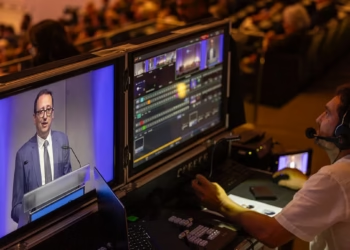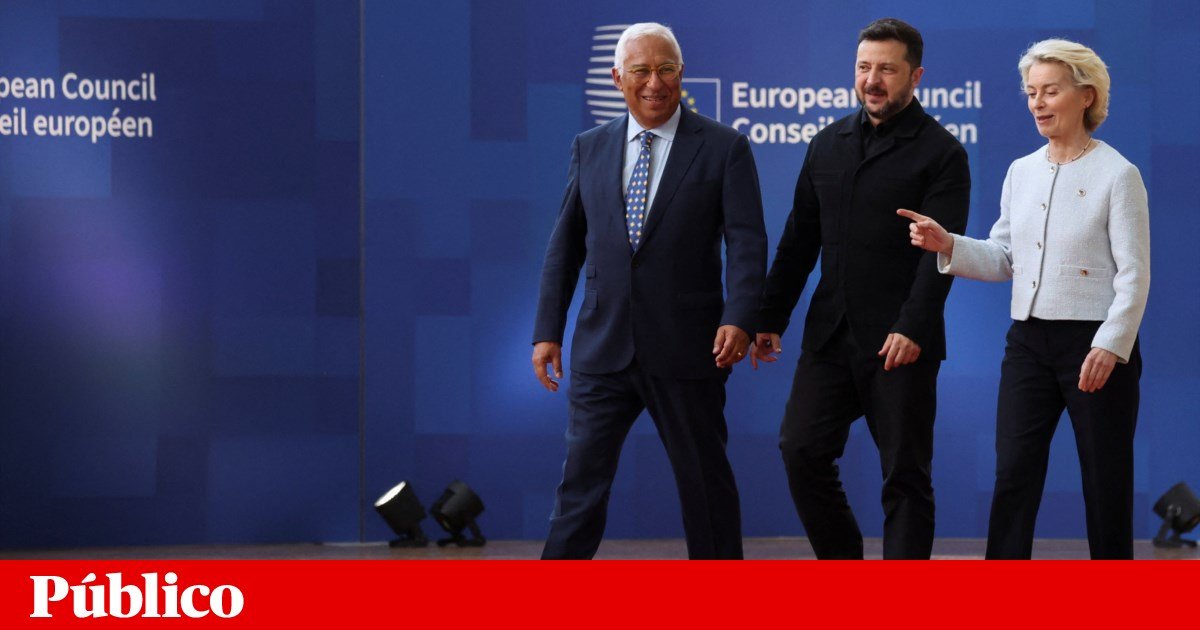
Closing a “historic week for Ukraine”, with the start of the technical negotiations of the accession process, President Volodymyr Zelensky came to the European Council meeting to ask the heads of state and government of the European Union to increase pressure on Russia to try to “bring Vladimir Putin to the dialogue” and to the negotiating table.
Encouraged by the “new impetus for a just and lasting peace in Ukraine” during the G7 summit, and by the statements from the President of the United States, Donald Trump, who promised to do “everything he can” to convince Russia that the time has come to “strike a deal” to end the war, Zelensky wants to involve EU leaders in peace negotiations – forcing them to do a “somersault” to review their official policy of isolating Russia, which left it on the sidelines of the US-led process.
After the large-scale invasion of Ukraine in February 2022, the EU severed all institutional diplomatic ties with Russia. But on the eve of the European Council, it became known that members of President António Costa’s cabinet began “brief contacts” with elements of the Kremlin “with the aim of opening communication channels” between Brussels and Moscow.
It was not a topic on the agenda. But the question of talking or not talking to Russia took over the agenda of the European Council: who will be the EU’s interlocutor?
António Costa’s initiative – which was motivated by the Ukrainian leader’s calls for greater EU involvement in the diplomatic process with Russia, which none of the 27 contest – did not go down well with the leaders of the Baltic countries, who advocate maintaining a hard line against the Kremlin.
“Recourse to diplomacy is only justified if there are clear and positive signals from Russia that indicate a willingness to establish a ceasefire or to enter into legitimate peace negotiations. So far, we do not see positive signs”, said the President of Lithuania, Gitanas Nauséda.
“It is too early to negotiate with Russia,” agreed Dutch Prime Minister Rob Jetten, who like others insists that it should be Putin, not the EU, who takes the first step. “That’s where it all starts”, he considered.
Upon arrival at the European Council, coming from a meeting of the Contact Group for the Defense of Ukraine, at NATO headquarters, Zelensky insisted that economic pressure is working, and that help from European allies and partners has placed Ukraine in a much more favorable position, both in the theater of war and in the corridors of diplomacy.
“The European Union remains determined to further increase pressure on Russia and continue to weaken the Russian war economy, so that it puts an end to its brutal war of aggression and enters into meaningful negotiations with a view to peace”, say the European Council conclusions on Ukraine, which this time no longer have an asterisk to note Hungary’s dissonant position.
“There is a new dynamic. The tide is turning. Ukraine is regaining territory. Russia’s economy is weaker than ever”, said the president of the European Commission, Ursula von der Leyen. “And we are all united, and working together, in the G7 and the EU, to put pressure on Russia”, guaranteed the president of the European Council, in brief statements before the start of the meeting.
The Prime Minister, Luís Montenegro, recalled that “he was one of the first, not to say the first, to support the idea that it was necessary and positive to open a channel of contact between the European Union and Russia”, with the “intent of helping Ukraine and Europe to resolve a conflict front that does not help anyone”.
“We will provide a good service to Ukraine and Europe if the European Union has a more active and proactive role in bringing the parties together, and that is what my expectation is,” said Montenegro, who does not have a “closed position” on the best “formula” and “methodology” for the dialogue process. As for the protagonists, the Prime Minister said he had “no problem” in stating that “there are some Portuguese personalities who would play this role very well” – without revealing which ones.
The working session with the President of Ukraine lasted almost two hours: Volodymyr Zelensky left without speaking to the press, while the leaders continued their discussion on the topic of enlargement. The Kiev Government, which on Monday officially began negotiations techniques for accession to the EU, with the opening of the first “cluster” of chapters relating to fundamental principles and rights, expects to extend the process to the remaining five “clusters” in the short term. “Ukraine has been working hard on reforms and we hope to be able to open up more ‘clusters’ in the summer”, said the president of the European Commission, who has already confirmed that the country meets the necessary requirements.