Try to imagine you that you could sit comfortably in front of the television at home in your own living room and watch “Three Greenlandic women’s monologues” with Aviana Steinbacher, Karina Møller and Else Danielsen, “The last sled journey” with Nukâka Coster-Waldau or “The Arctic summit” written by Kim Leine.
All three are performances with Greenlandic stories that have been performed on Danish theater stages, but which an audience in Greenland has not necessarily had the opportunity to experience.
The Danish theater producer Jesper Bo Rasmussen would like to change that. He is behind the idea for SCENEN+, a digital platform where professional theater performances must be recorded and made available, even long after the curtain has come down for the last time.
At the same time, the ambition is that Greenlandic performing arts should be able to reach a much larger audience, both in Greenland and outside the country’s borders. However, he emphasizes that this presupposes that Greenlandic theaters and performing artists themselves want to participate and have an influence on the design of the project.
When distances decide
For Greenlandic theatres, geography is a particular challenge. It is expensive to travel with actors, scenography and technical equipment between cities, and therefore many performances are performed only a few times. Audiences in other parts of the country may never get the opportunity to experience them, and when the last performance is over, the opportunity to see it also disappears.
This is precisely the limitation that Jesper Bo Rasmussen hopes to be able to do something about.
– Greenlandic performing arts must also be able to be recorded, preserved and disseminated and thus become accessible to people in Denmark and elsewhere, he explains to the AG in a written reply.
He imagines that the performances should be able to be seen both at home in the living room and used in schools, colleges, libraries and nursing homes. In this way, they can reach people who would otherwise not have the opportunity to experience them, while at the same time being preserved for future generations.
But the perspective goes further than overcoming geographical distances. Jesper Bo Rasmussen wants the performing arts to be able to move both ways between Greenland and Denmark and give the audience the opportunity to meet each other’s stories.
– I also believe that the performing arts can help create greater knowledge and understanding between people in Greenland, the Faroe Islands and Denmark. Not by erasing the differences, but precisely by giving us the opportunity to experience them and get to know each other’s stories better.
He points out, however, that the recordings must complement the live theatre, not replace it.
Who will pay?
But if the idea is to become a reality, someone has to pay for the professional recordings. It requires both technical equipment, production and agreements on rights, so that actors, playwrights and other actors are remunerated.
For Greenlandic theatres, which already have limited budgets and large transport costs, it can be difficult to find money for another assignment. However, Jesper Bo Rasmussen does not believe that the cost should be passed on to the individual theatre. He says:
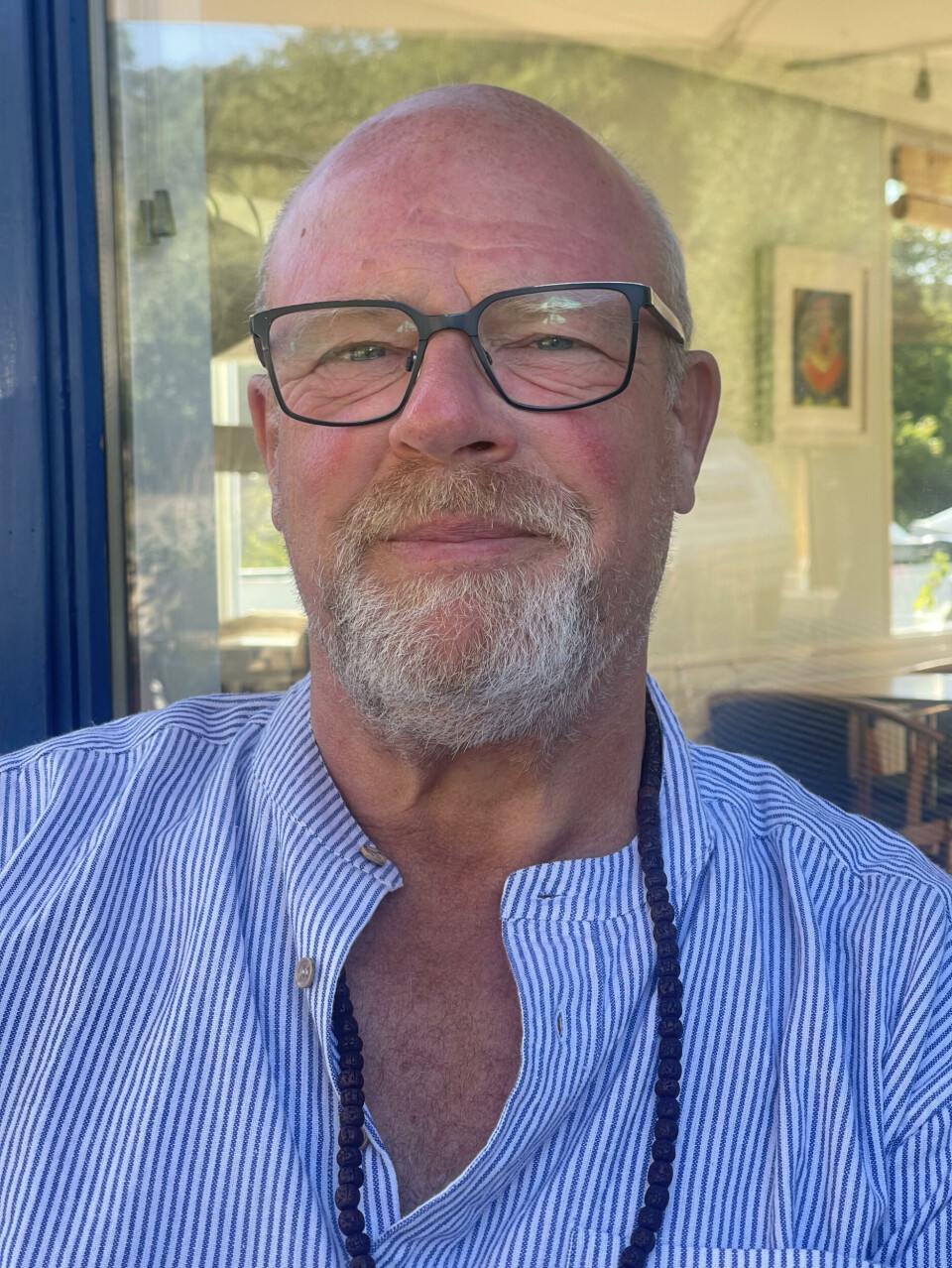
– My thinking is that SCENEN+ should be considered cultural infrastructure and not as an expense that the individual theater must bear.
He has sent a presentation to the Danish Ministry of Culture and is in dialogue with theaters and cultural organizations about how the project can be organized and financed. Various options are being worked on, including access through libraries and educational institutions, but it has not yet been decided whether the audience will have to pay to see the performances.
– If the aim is to give more people access to the performing arts, the economy must not end up creating a new barrier, he believes.
Greenland has not yet been asked
Although Greenland is included in the vision, Greenlandic theaters and performing artists have not yet been asked about their interest in the project. Jesper Bo Rasmussen has not yet been in direct contact with them.
He emphasizes that the project is still at an early stage and that he wants to involve Greenlandic cultural actors before the plans are finalized.
– If Greenland is to be part of SCENEN+, they must be invited in from the start, while the project can still be shaped – not when a finished Danish model is already on the table.
According to him, this means that Greenlandic theaters and performing artists must help discuss which performances are important to preserve, how they must be conveyed, and which linguistic and practical considerations must be taken.
For the time being, however, SCENEN+ is still a proposal without settled funding or agreements with Greenlandic theatres. Whether the idea becomes a reality therefore depends both on financial support and on whether the Greenlandic cultural actors want to be involved.
Jesper Bo Rasmussen hopes that the result will one day be a platform where the distance between the Greenlandic and Danish theater stages no longer determines who gets the opportunity to experience the performances.
– A young person in Nuuk must be able to access a performance from Copenhagen, Aarhus or Sønderborg – but a young person in Copenhagen must just as naturally be able to encounter a Greenlandic performance that they would otherwise never have the opportunity to experience.