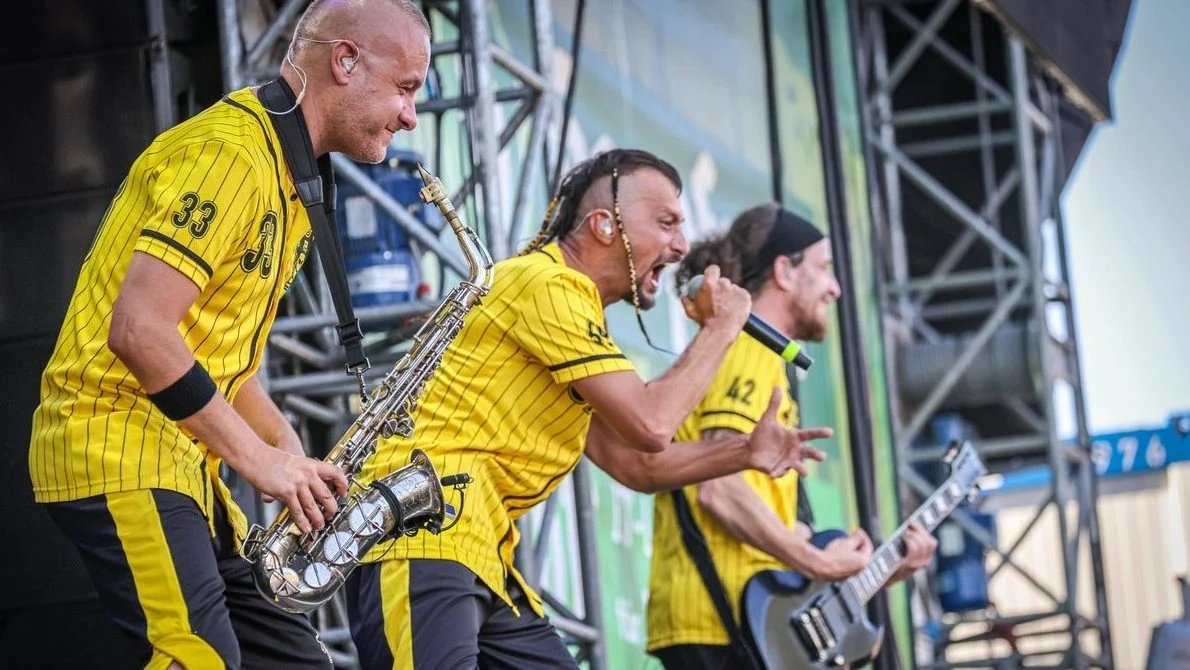
Dubiosa Collective proved once again that she can capture the spirit of the moment. The song that was created fifteen years ago as a satirical comment on emigration and the search for a better life has today become the unofficial anthem of the football team of Bosnia and Herzegovina before the appearance at the World Cup.
The band reworked their old hit “USA” and turned it into a fan song called “I Am From Bosnia, Take Me to America”, and the new video, shot in Sarajevo, has collected almost two million views on YouTube in less than three weeks. It joins the original version of the song from 2011, which has accumulated more than 26 million views over the years.
The song has outgrown this climate, and the whole world listens to this song, records videos on TikTok, because the satirical text about going to America, maybe the majority of the world who is looking for a better place under the sun, “far from their own sky” will recognize it.
Dubiosa Collective from satire to fan anthem:
The band’s bass player, Vedran Mujagić, says to APNews that it is interesting to observe how the song went through different transformations.
“It started as a satire on emigration and the American dream, and today it has become a kind of football anthem of the entire nation,” explained Mujagić.
Bosnia and Herzegovina’s road to the World Cup was anything but easy. The national team made it through dramatic games, including a late goal against Wales, a penalty shootout win and a triumph over Italy. This is precisely why the song has taken on a whole new meaning among fans.
The band members say that they did not expect that the audience would start unfurling banners with the lyrics of their song and singing them in the stands as a rallying cry. Keyboardist Brano Jakubović admits that he was particularly delighted by it.
“The most beautiful thing is when people take a song and give it a completely new meaning. Then it is no longer ours, but theirs,” said Jakubović.
While the original version talked about leaving the Balkans and the disappointment that often accompanies life abroad, the new version focuses almost exclusively on football. Unlike the original in English, the new song is mostly in Bosnian, so that fans can more easily accept and sing it.
However, the band did not give up their signature humor. Jakubović singles out a verse that looks back on a painful moment from the World Cup in 2014, when Bosnia and Herzegovina against Nigeria had a regular goal disallowed due to offside.
“It’s still a big national trauma, so I tried to heal it a little through the song,” he joked.
Behind the joke, however, there is a more serious story. Bosnia and Herzegovina still bears the consequences of the wars of the 1990s, political divisions and complex social relations, which is why Jakubović believes that football today has a much wider significance than the sport itself.
“At the moment, football is much more than a game. It is hope. In a political sense, it managed to gather people from all over Bosnia and Herzegovina, and that is not something that happens often,” he says.
It is interesting that the song talks about America, even though Bosnia and Herzegovina plays its first game in the championship in Canada. However, the national team will be based in the United States during the tournament, while some of the group stage matches will be played on American soil.
Mujagić reminds that many national team members were born in the diaspora – in America or other countries where their families immigrated.
“These are the children of people who left in search of a better life or as refugees. They experience this song and its lyrics completely differently than we do,” he believes.
Although the new version became a fan hit, members of Dubiosa believe that the original message of the song is still relevant. Even today, Bosnians and Herzegovinans go abroad in search of a better life, often facing prejudice and non-acceptance.
“It’s kind of a schizophrenic situation. You want to leave, but at the same time you know that there’s no ideal life waiting for you there either. That’s why this song works just as well today as it did fifteen years ago,” concludes Mujagić.
The Bosnian diaspora in America also confirms that the song found its way to people. In St. Louis, one of the largest centers of the Bosnian community in the US, fans regularly sing it at games and gatherings. However, as they admit, many still spontaneously return to the original verses that they have long since memorized.
Perhaps this is precisely the secret of this song: it was created as a satire, became a fan anthem, and along the way remained a story about leaving, belonging and searching for a place we can call home.
BONUS VIDEO: