Tuesday, May 5, 2026
    The GeoStrategic Consensus
    No Result
    View All Result
    • Login
    • HOME
    • AMERICAS
      • Argentina
      • Brazil
      • Canada
      • Chile
      • Colombia
      • Costa Rica
      • Cuba
      • Dominican Republic
      • Ecuador
      • El Salvador
      • Greenland
      • Guatemala
      • Honduras
      • Mexico
      • Nicaragua
      • Panama
      • Paraguay
      • Peru
      • United States
      • Uruguay
      • Venezuela
    • ASIA-PACIFIC
      • Australia
      • Brunei Darussalam
      • Cambodia
      • China
      • Federated States of Micronesia
      • Fiji
      • Indonesia
      • Japan
      • Kiribati
      • Laos
      • Malaysia
      • Marshall Islands
      • Mongolia
      • Myanmar
      • Nauru
      • New Zealand
      • North Korea
      • Palau
      • Papua New Guinea
      • Philippines
      • Samoa
      • Singapore
      • Solomon Islands
      • South Korea
      • Taiwan
      • Thailand
      • Timor-Leste
      • Tonga
      • Tuvalu
      • Vanuatu
      • Vietnam
    • CARICOM
      • CARICOM – Non-English
        • Haiti
        • Suriname
      • CARICOM Associates
        • Anguilla
        • Bermuda
        • British-Virgin-Islands
        • Cayman-Islands
        • Curacao
        • Turks-and-Caicos
      • CARICOM English
        • Antigua and Barbuda
        • Barbados
        • Belize
        • Dominica
        • Grenada
        • Guyana
        • Jamaica
        • Montserrat
        • Saint Kitts and Nevis
        • Saint Lucia
        • Saint Vincent and the Grenadines
        • The Bahamas
        • Trinidad and Tobago
    • EURASIA
      • Armenia
      • Azerbaijan
      • Balarus
      • Georgia
      • Kazakhstan
      • Kyrgyzstan
      • Moldova
      • Russia
      • Tajikistan
      • Turkmenistan
      • Ukraine
      • Uzbekistan
    • EUROPE
      • Albania
      • Andorra
      • Austria
      • Bosnia and Herzegovina
      • Bulgaria
      • Croatia
      • Cyprus
      • Czech Republic
      • Denmark
      • Estonia
      • Finland
      • France
      • Germany
      • Greece
      • Holy See
      • Hungary
      • Iceland
      • Ireland
      • Italy
      • Kosovo
      • Latvia
      • Liechtenstein
      • Lithuania
      • Luxembourg
      • Malta
      • Monaco
      • Montenegro
      • Netherlands
      • North Macedonia
      • Norway
      • Poland
      • Portugal
      • Romania
      • San Marino
      • Serbia
      • Slovakia
      • Slovenia
      • Spain
      • Sweden
      • Switzerland
      • United Kingdom
    • MIDDLE EAST AND NORTH AFRICA
      • Algeria
      • Bahrain
      • Egypt
      • Iran
      • Iraq
      • Israel
      • Jordan
      • Kuwait
      • Lebanon
      • Lybia
      • Morocco
      • Oman
      • Palestinian Territories
      • Qatar
      • Saudi Arabia
      • Syria
      • Tunisia
      • Turkey
      • United Arab Emirates
      • Western Sahara
      • Yemen
    • SOUTH ASIA
      • Afghanistan
      • Bangladesh
      • Bhutan
      • India
      • Maldives
      • Nepal
      • Pakistan
      • Sri Lanka
    • SUB-SAHARAN AFRICA
      • Angola
      • Benin
      • Botswana
      • Burkina Faso
      • Burundi
      • Cabo Verde
      • Cameroon
      • Central African Republic
      • Chad
      • Comoros
      • Cote d’Ivoire
      • Democratic Republic of the Congo
      • Djibouti
      • Equatorial Guinea
      • Eritrea
      • Eswatini
      • Ethiopia
      • Gabon
      • Gambia
      • Ghana
      • Guinea
      • Guinea Bissau
      • Kenya
      • Lesotho
      • Liberia
      • Madagascar
      • Malawi
      • Mali
      • Mauritania
      • Mauritius
      • Mozambique
      • Namibia
      • Niger
      • Nigeria
      • Republic of the Congo
      • Rwanda
      • Sao Tome and Principe
      • Senegal
      • Seychelles
      • Sierra Leone
      • Somalia
      • South Africa
      • South Sudan
      • Sudan
      • Tanzania
      • Togo
      • Uganda
      • Zambia
      • Zimbabwe
    • HOME
    • AMERICAS
      • Argentina
      • Brazil
      • Canada
      • Chile
      • Colombia
      • Costa Rica
      • Cuba
      • Dominican Republic
      • Ecuador
      • El Salvador
      • Greenland
      • Guatemala
      • Honduras
      • Mexico
      • Nicaragua
      • Panama
      • Paraguay
      • Peru
      • United States
      • Uruguay
      • Venezuela
    • ASIA-PACIFIC
      • Australia
      • Brunei Darussalam
      • Cambodia
      • China
      • Federated States of Micronesia
      • Fiji
      • Indonesia
      • Japan
      • Kiribati
      • Laos
      • Malaysia
      • Marshall Islands
      • Mongolia
      • Myanmar
      • Nauru
      • New Zealand
      • North Korea
      • Palau
      • Papua New Guinea
      • Philippines
      • Samoa
      • Singapore
      • Solomon Islands
      • South Korea
      • Taiwan
      • Thailand
      • Timor-Leste
      • Tonga
      • Tuvalu
      • Vanuatu
      • Vietnam
    • CARICOM
      • CARICOM – Non-English
        • Haiti
        • Suriname
      • CARICOM Associates
        • Anguilla
        • Bermuda
        • British-Virgin-Islands
        • Cayman-Islands
        • Curacao
        • Turks-and-Caicos
      • CARICOM English
        • Antigua and Barbuda
        • Barbados
        • Belize
        • Dominica
        • Grenada
        • Guyana
        • Jamaica
        • Montserrat
        • Saint Kitts and Nevis
        • Saint Lucia
        • Saint Vincent and the Grenadines
        • The Bahamas
        • Trinidad and Tobago
    • EURASIA
      • Armenia
      • Azerbaijan
      • Balarus
      • Georgia
      • Kazakhstan
      • Kyrgyzstan
      • Moldova
      • Russia
      • Tajikistan
      • Turkmenistan
      • Ukraine
      • Uzbekistan
    • EUROPE
      • Albania
      • Andorra
      • Austria
      • Bosnia and Herzegovina
      • Bulgaria
      • Croatia
      • Cyprus
      • Czech Republic
      • Denmark
      • Estonia
      • Finland
      • France
      • Germany
      • Greece
      • Holy See
      • Hungary
      • Iceland
      • Ireland
      • Italy
      • Kosovo
      • Latvia
      • Liechtenstein
      • Lithuania
      • Luxembourg
      • Malta
      • Monaco
      • Montenegro
      • Netherlands
      • North Macedonia
      • Norway
      • Poland
      • Portugal
      • Romania
      • San Marino
      • Serbia
      • Slovakia
      • Slovenia
      • Spain
      • Sweden
      • Switzerland
      • United Kingdom
    • MIDDLE EAST AND NORTH AFRICA
      • Algeria
      • Bahrain
      • Egypt
      • Iran
      • Iraq
      • Israel
      • Jordan
      • Kuwait
      • Lebanon
      • Lybia
      • Morocco
      • Oman
      • Palestinian Territories
      • Qatar
      • Saudi Arabia
      • Syria
      • Tunisia
      • Turkey
      • United Arab Emirates
      • Western Sahara
      • Yemen
    • SOUTH ASIA
      • Afghanistan
      • Bangladesh
      • Bhutan
      • India
      • Maldives
      • Nepal
      • Pakistan
      • Sri Lanka
    • SUB-SAHARAN AFRICA
      • Angola
      • Benin
      • Botswana
      • Burkina Faso
      • Burundi
      • Cabo Verde
      • Cameroon
      • Central African Republic
      • Chad
      • Comoros
      • Cote d’Ivoire
      • Democratic Republic of the Congo
      • Djibouti
      • Equatorial Guinea
      • Eritrea
      • Eswatini
      • Ethiopia
      • Gabon
      • Gambia
      • Ghana
      • Guinea
      • Guinea Bissau
      • Kenya
      • Lesotho
      • Liberia
      • Madagascar
      • Malawi
      • Mali
      • Mauritania
      • Mauritius
      • Mozambique
      • Namibia
      • Niger
      • Nigeria
      • Republic of the Congo
      • Rwanda
      • Sao Tome and Principe
      • Senegal
      • Seychelles
      • Sierra Leone
      • Somalia
      • South Africa
      • South Sudan
      • Sudan
      • Tanzania
      • Togo
      • Uganda
      • Zambia
      • Zimbabwe
    No Result
    View All Result
    Agentially
    No Result
    View All Result
    Home AMERICAS Panama

    The Watermelon Slice Incident, the first anti-American insurrection

    The Analyst by The Analyst
    May 4, 2026
    in Panama
    The Watermelon Slice Incident, the first anti-American insurrection


    On April 15, 1856, the first Panamanian popular insurrection against the North American presence took place. A fact of historical dimensions that has come to be known as The Watermelon Slice Incident, and which resulted in 14 Americans and one Frenchman dead, and 18 injured; while on the Panamanian side 2 people died, with half a dozen injured.

    READ ALSO

    How the Panama Canal is preparing for a possible ‘severe’ El Niño phenomenon in 2026

    Cannes: the prelude to the Oscar

    The event began when an American, named Jack Oliver, and nicknamed New York Jack, took a piece of watermelon from the stand run by local José Manuel Luna and did not want to pay for it. In response to Luna’s claim, Jack responded with the well-known Yankee phrase: “kiss my ass.” To which the fruit seller wisely told him: “Be careful, we are not in the United States here, pay me the real and we are up to date.”

    One took out his knife and the other his gun. People gathered from side to side, because that day there were nearly 1,000 Americans en route to California brought by the so-called “Gold Rush.” The brawl escalated and by evening it had become a small war, in which the people from the outskirts of the city, supported by the Panamanian gendarmerie, cornered the Americans at the railroad station, who, entrenched, responded with weapons of all calibers, including a small cannon.

    In the end, the people, the authorities and the national laws prevailed and the survivors were allowed to leave. But a judicial process with international overtones was opened that, over the years, ended with the payment of compensation to the United States government of more than 400 thousand dollars by the government of Colombia, of which Panama was a province.

    The key question regarding the Watermelon Slice Incident is: What factors came together to produce that social outbreak of the Panamanian people against the North American presence? The historian Aims McGuinness (“Those times of California” In Historia General de Panamá, edited by Alfredo Castillero Calvo, 141-159. Panamá: República de Panamá, 2004.) provides us with three decisive elements.

    Panamanians’ loss of control and the benefits of the trans-isthmic route

    Between 1845 and 1848, the United States expanded westward, swallowing half of Mexico’s territory at gunpoint. And, almost by chance, around 1848 important gold deposits were discovered in California, giving rise to the so-called “Gold Rush”, duly encouraged by the North American government, to force the migration of tens of thousands to colonize the Far West.

    California could be reached by crossing the North American territory, with all the difficulties that cowboy movies show. But there was a faster route, although not without difficulties through Nicaragua and Panama. So, the beginning of the Gold Rush produced a renaissance of the transit area. Tens of thousands of travelers began to arrive to our coasts, reactivating boat transportation along the Chagres River and mule transportation along the old Camino de Cruces.

    Countless testimonies from the time point out the inhospitable climate, the dangers of the road, the lack of accommodation and restaurants. But, despite it all, at the beginning the entire business, with its corresponding price inflation, was in the hands of the inhabitants of the Isthmus. This was changing, as North American businessmen realized that they could “make a killing” and began to open their own facilities. For example, it is said that the town of Chagres grew as two different towns, one on each bank of the river. The straw huts of the Panamanians, on one side, and a modern town with hotels, cantinas and casinos, on the other, controlled by Americans.

    The main control of the trans-isthmus route in the hands of North American companies occurred when in 1848 the government of New Granada signed the contract for the construction of a railway with the Pacific Mail Steamship Co., creating the Panama Railway Company. The work began in 1850, inaugurated in sections, remaining completely open by January 1855 (Araúz y Pizzurno. El Panamá Colombiano (1821-1903). 1993).

    So the main actors in the Watermelon Slice Incident are popular elements who felt displaced from the business by the Railroad Company. Aims McGuinness reports multiple complaints to the municipality, among them from the city’s boatmen who lost their business with the steamship Taboga, owned by one of these North American companies.

    The political consciousness of the suburbs and the liberal revolution

    Aims McGuinness provides us with another key element for understanding the events: the liberal revolution of the mid-19th century. The Revolution of 1848 in Europe had undoubted consequences in New Granada (Colombia), the main one being the emergence into the government of radical liberalism, also called “Draconian”.

    The liberal governments that followed one another at that time provided a series of social and political reforms with positive consequences: elimination of slavery, universal male suffrage, federalism, etc.

    In Panama, Colombian liberalism had an important stronghold, highlighting the figure of Justo Arosemena, the inspiration for federalism, not only Panamanian, but later extended to all of the United States of Colombia. But there were much more radical sectors, settled in the suburb of Santa Ana, which gave rise to the so-called “black liberalism”, whose historical leader was Buenaventura Correoso.

    According to McGuinness, this forged an awareness of their rights among the poor population of Panama City, and led to the holding of important public positions by people of “color.” Which clashed with customary racism and the contempt that Americans felt for the Isthmus population. Aims reports on a letter signed by hundreds of North American travelers complaining to the Colombian government because black or mulatto authorities forced them to comply with the country’s laws.

    Let us not forget that, at that time, the philosophy of Manifest Destiny ruled in the minds of the Yankees, by which North Americans believed they were called by God to bring civilization to the barbarians (today they call it “democracy”). And that the elimination of slavery in North America would still take about 20 more years.

    This clash between two different visions, between a marginalized population that had become fully aware of its rights and migrants loaded with prejudices, is another of the social fuels that ignited on April 15, 1856.

    Filibusterism and Latin American unity

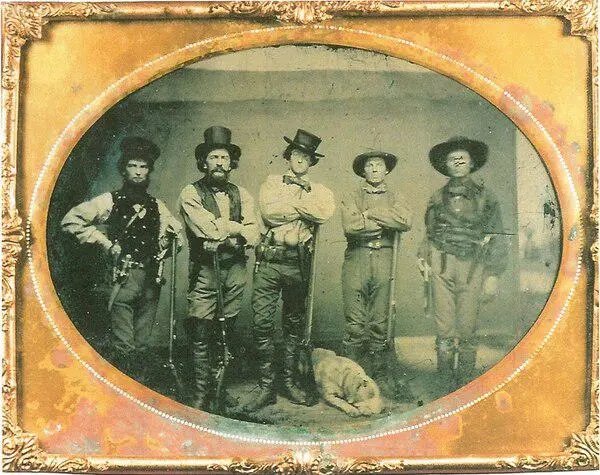
    One of the byproducts of the war against Mexico was the emergence of North American paramilitary gangs that began to act in the region to impose their interests by force. They were private bands, similar to what would today be the “security” companies, like Blackwater, that operate in Iraq and other countries. They were called filibusters.

    The best-known filibuster was William Walker, hired by North American businessmen to impose their control in Nicaragua, and who ended up proclaiming himself president of that country, precisely in 1855. Walker wanted Nicaragua to be annexed to the United States as another state. Which he did not achieve, being overthrown in 1856 and later executed around 1860 in Honduras.

    The fight against Walker had revived Latin American feelings of unity and, in fact, it is the unified struggle of the Central Americans that overthrows him and expels him from Nicaragua. The historian Aims McGuinness affirms that the concept of “Latin American” as opposed to “Anglo-Saxon” dates from this era, and a renewed feeling of Hispanic unity against North American domination, which had fallen asleep after the failure of Simón Bolívar. The Panamanian Justo Arosemena would be one of the first to appeal to this idea in the mid-19th century.

    The issue is relevant because a little-known element in Panama is that the filibusters played a relevant role in the Watermelon Slice Incident. According to Aims, on April 15, 1856, about 40 filibusters were in Panama heading to Nicaragua to reinforce Walker’s illegitimate government. The Panamanian press had warned of their presence, fearing that they could attempt an adventure here similar to that in Nicaragua.

    And those who believed this were not wrong, since subsequent judicial investigations report that the filibusters played a central role in the confrontation. One of them, Joseph Stokes, who died at the railroad station, led the armed resistance against the Panamanian authorities. Which was recognized by Horace Bell, another of the filibusters, who would become a reporter in the city of Los Angeles, California.

    The strength demonstrated by the Panamanian people during the “incident” was not simply a response to Yankee marginalization and racism, but was a conscious fight against any annexation attempt by the Americans, an act of solidarity with the brother people of Nicaragua, and a gesture towards Latin American unity.

    Today we must commemorate that feat, not as an unusual event in our history, but as the first in a long list of generational struggles, to which are added the Tenant Strike of 1925, the Anti-Base Movement of ’47, January 9, 1964, etc., for Panamanian sovereignty and Latin American unity which, in the end, are the same thing, since one is impossible without the other.

    The author is a sociologist. Professor and researcher at the University of Panama

    Social Thought (PESOC) is made up of a group of Social Sciences professionals who, through their contributions, seek to promote and satisfy needs in the knowledge of these disciplines.

    Its purpose is to present to the population analysis topics on the main problems that afflict them, and contribute to the strategies of solution programs.
    Source link

    Related Posts

    How the Panama Canal is preparing for a possible ‘severe’ El Niño phenomenon in 2026
    Panama

    How the Panama Canal is preparing for a possible ‘severe’ El Niño phenomenon in 2026

    May 5, 2026
    Cannes: the prelude to the Oscar
    Panama

    Cannes: the prelude to the Oscar

    May 5, 2026
    69 years at the service of public faith and national development | The Panama Press
    Panama

    69 years at the service of public faith and national development | The Panama Press

    May 5, 2026
    Olmedo Beluche
    Panama

    Olmedo Beluche

    May 5, 2026
    Cost of living grows four times more than salaries in Panama between 2019 and 2025
    Panama

    Cost of living grows four times more than salaries in Panama between 2019 and 2025

    May 4, 2026
    The ILO warns of ‘significant restrictions’ on freedom of association in Panama
    Panama

    The ILO warns of ‘significant restrictions’ on freedom of association in Panama

    May 4, 2026
    Next Post
    Cost of living grows four times more than salaries in Panama between 2019 and 2025

    Cost of living grows four times more than salaries in Panama between 2019 and 2025

    POPULAR NEWS

    Justin Bieber fans flood Coachella festival for headlining show – Entertainment

    Justin Bieber fans flood Coachella festival for headlining show – Entertainment

    April 20, 2026

    Over 600 flee homes as Army, NPA clash in Negros Occidental

    April 21, 2026

    Ex-DPWH exec recalls P800-M ‘delivery’ to Zaldy Co 

    April 20, 2026

    Former PM Paluckas suspends party membership, to waive immunity over criminal probe

    April 24, 2026
    Pres. Ali challenges CARICOM to transform into health research powerhouse

    Pres. Ali challenges CARICOM to transform into health research powerhouse

    April 23, 2026

    EDITOR'S PICK

    Whipps: Allowing Starlink Now Risks $50M Debt Burden on Palau

    Whipps: Allowing Starlink Now Risks $50M Debt Burden on Palau

    April 16, 2026
    What has changed in the order of currency transactions?

    What has changed in the order of currency transactions?

    May 5, 2026
    ‘We hope for a positive resolution in the coming days by Moisés Caicedo,’ says Francisco Egas, president of the FEF | Soccer | Sports

    ‘We hope for a positive resolution in the coming days by Moisés Caicedo,’ says Francisco Egas, president of the FEF | Soccer | Sports

    April 25, 2026
    Who is Kujtim Koçi, wanted in Switzerland and France, who is suspected of “causing general danger” in Kosovo?

    Who is Kujtim Koçi, wanted in Switzerland and France, who is suspected of “causing general danger” in Kosovo?

    May 4, 2026

    Recent Posts

    • Two-way linguistic traffic? No problem! – The Irish Times
    • Staff at a major Dublin hospital opting to quit following ‘exponential increase’ in anti-social behaviour
    • Salmonella is detected in PVD steaks “Bajoru”.
    • G. Žibėnas took the blame for the defeat: “Maybe my thoughts were somewhere in the wrong place”

      © 2026 Agentially - Navigating shifting sovereignties and global risk .

      Welcome Back!

      Login to your account below

      Forgotten Password?

      Retrieve your password

      Please enter your username or email address to reset your password.

      Log In
      No Result
      View All Result

        © 2026 Agentially - Navigating shifting sovereignties and global risk .

        This website uses cookies. By continuing to use this website you are giving consent to cookies being used. Visit our Privacy and Cookie Policy.