The Cannes International Film Festival, a project that emerged in 1946, is one of the most important competitive events dedicated to the world’s seventh art.
Its 76th edition will be from May 12 to 23, 2026, and it promises, as usual, to show the best of the best from directors such as Pedro Almodóvar, Jeanne Herry, Léa Mysius, Rodrigo Sorogoyen, Pawel Pawlikowski, Marie Kreutzer, Ira Sachs, Arthur Harari and many more.
All filmmakers will be excited to be in a competition that is on par with other category A festivals such as Venice, Berlin, San Sebastián, Locarno, Shanghai, Mar del Plata or Montreal.
Although there is another powerful reason for them and their colleagues to be happy to be in this French city during those May days.
Over the years, the Cannes International Film Festival has been a perfect showcase to promote these productions, particularly the more independent ones, which then aspire to receive nominations for the Oscar, that coveted award given – since 1929 – by the Hollywood Academy of Motion Picture Arts and Sciences.
In each version, Cannes presents between 20 and 22 productions in its official selection, plus another 60 or 70 out of competition or distributed among the Un Certain Regard, Critics’ Week and Queer Palm sections.
Its impact on the so-called Mecca of Cinema was gradual. In the 1990s its influence was reduced and it was in the following decade when its impact was much greater, until reaching the present day, when being in Cannes is a great promotional incentive for any film that aspires to be taken into account by the voting members of the Hollywood Academy.
Currently there is a 20% chance that the titles previously selected by Cannes will be nominated for the golden statuette.
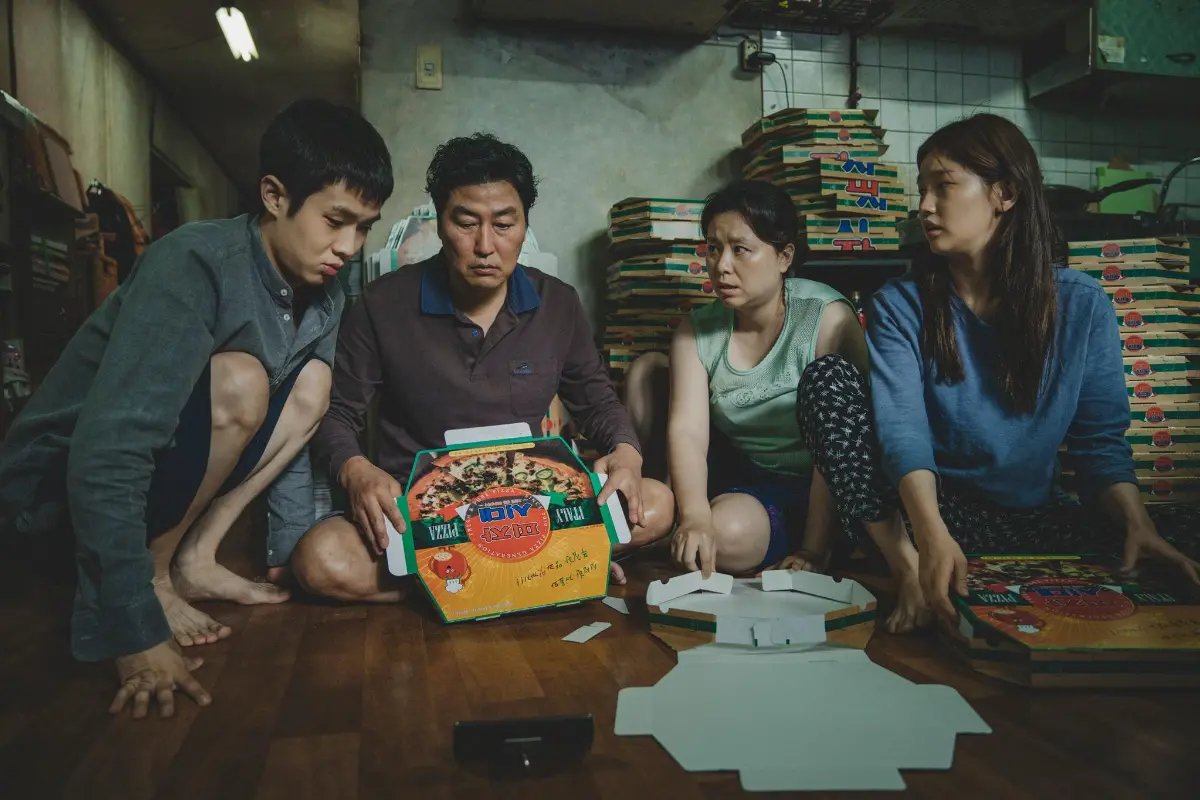
The bet of being in Uncle Oscar’s pool increases – up to 40% – if the films win the festival’s highest distinction (the Palme d’Or) as happened with Parasite, Triangle of Sadness or Anatomy of a Fall.
How to verify this evolution? Several factors were recorded that allowed this development. On the one hand, the Hollywood Academy has had a wide opening in recent years, which allowed it to welcome dozens of new members from various countries into its ranks each year and with this the institution had a greater number of voters who leaned towards different and more risky aesthetics.
It all started specifically in 2016 when the #OscarSoWhite controversy was uncovered, in which something that had been happening for too long was denounced: it was more common for white artists to be nominated than creators, equally valuable, of other skin colors and origins. To heal this injustice, since then, new voters from Africa, Asia and the Old Continent have increased.
Cannes itself expanded its concept of a festival only dedicated to a certain way of understanding experimental art and that openness to other languages and cinematographic narratives resulted in it accepting films that could interest those new academics I talked about in the previous paragraph.
While the producers of the award-winning films were no longer only submitting their films to be part of the programming of festivals within the United States such as Sundance, Tribica, SXSW, New York, Seattle, Atlanta, Chicago and Santa Barbara. Now they were also striving to ensure that their films were among the cream of the crop at European and Asian festivals.
That hooking the films that are in Cannes with the golden statuette began, in an increasingly evident way, from the 1990s with feature films that won the Palme d’Or as The Piano (1993, 8 Oscar nominations and won in the categories of actress for Holly Hunter, supporting actress for Anna Paquin and original screenplay), Pulp Fiction (1994, obtained 7 nominations and won in the original screenplay category) and Secrets & Lies (1996, 5 nominations and won original screenplay).
They also won the Palme d’Or and did well at the Oscar for The Pianist (2002, best director, actor and adapted screenplay), Love (2012, best international film), Parasite (2019, best film, director, original screenplay and international film) and Anora (2024, best film, direction, original screenplay, editing and lead actress for Mikey Madison).
There are titles from that time that passed through Cannes (without winning the Palme d’Or) and later had action at the Oscar such as Cyrano de Bergerac (1990, 5 nominations, won best costumes), Il Postino (1995, 5 nominations, won best soundtrack), Shine (1996, 7 nominations and won best actor for Geoffrey Rush), Life Is Beautiful (1998, 7 nominations and statuettes for actor Roberto Benigni, most foreign films and music) and All About My Mother (1999, best foreign film).
Others visited Cannes and were nominated for an Oscar, although they came away empty-handed at both ceremonies as Farewell My Concubine (a nomination), Three Colors: Red (three), The Sweet Hereafter (two) and Central Station (two), among others.
Between 2000 and 2009, films such as Dog loves (foreign film nominee), Babel (original screenplay won), Pan’s Labyrinth (6 nominations, Oscar for cinematography, art direction and makeup), The Diving Bell and the Butterfly (4 nominations) and Waltz with Bashir (foreign film nomination).
From 2010 to 2019 it is the case of love (Palm d’Or and Oscar for best international film), The Great Beauty (Oscar for best international film), Biutiful (2 nominations), Midnight in Paris (Oscar for original screenplay), The Artist (Oscar for best film, director, actor for Jean Dujardin, soundtrack and costumes) and Nebraska (6 nominations), among others.
All category A film festivals give prestige and free positive publicity. Although, among them, a kind of specialty has ended up being created in specific areas when it comes to their connection with the Oscar award.
The industry that drives Toronto makes it the strongest, since it is the ideal place to close distribution agreements because it brings together the largest number of studio representatives, digital platforms and agents.
The one in Venice is the ideal space for the actors who stand out there in the Colpa Volpi (dedicated to acting), to later have a good chance of repeating that experience with the members of the Hollywood Academy, as happened to Joaquin Phoenix, Cate Blanchett, Sean Penn or Emma Stone.
Do you want to know more about these other film festivals? That’s a different analysis.
The author is a member of the International Federation of the Cinematographic Press (Fipresci).