Tuesday, June 23, 2026, 11:59 p.m
1886 readings

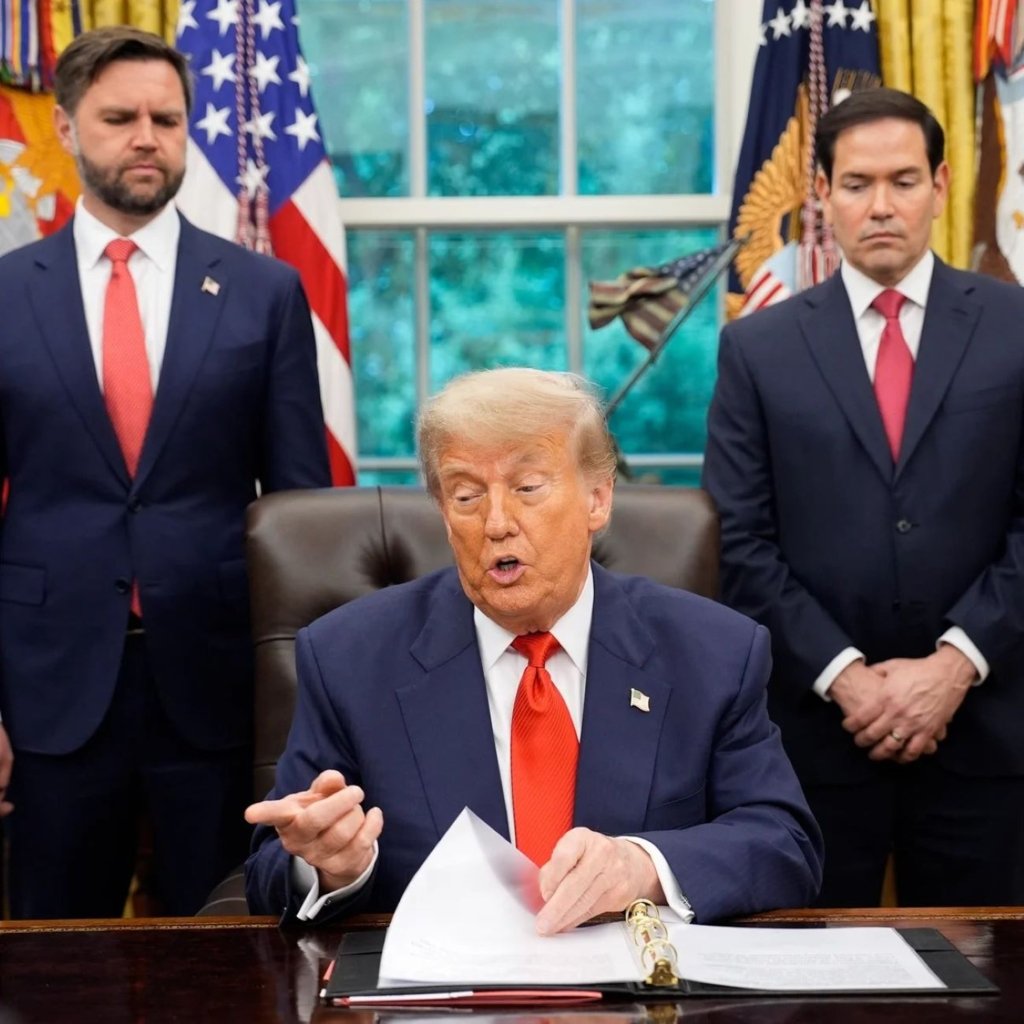
President Trump and his main collaborators, Vance and Rubio – PHOTO: Hepta
Senate USwith a Republican majority, voted on Tuesday for a resolution aimed at halting US military action against Iran, but it was not immediately clear how it would affect the war, as the president’s administration Donald Trump is negotiating a peace deal with the Islamic Republic, Reuters and The Associated Press report.
The Senate voted 50 to 48 in favor of the joint resolution, which was passed by the House of Representatives earlier this month, reflecting growing concern even among some Trump Republicans about the unpopular standoff that began on Feb. 28.
The vote was almost along party lines, but four Republicans — Lisa Murkowski of Alaska, Susan Collins of Maine, Rand Paul of Kentucky and Bill Cassidy of Louisiana — joined all but one Democrat, John Fetterman of Pennsylvania, in voting in favor of the resolution. Plus, two Republicans didn’t vote, and that made the difference. They are Sen. Mitch McConnell of Kentucky, who was recently hospitalized for an undisclosed reason, and Sen. Dave McCormick, Republican of Pennsylvania, who was also absent from the vote. Their absence left the Republican Party without the majority needed to block the initiative, with the four Republican senators who voted in favor having done so on other occasions.
It’s the first time the Senate has managed to pass a war powers resolution aimed at blocking US military action against Iran, as lawmakers warily watch President Donald Trump’s efforts to resolve a conflict the administration single-handedly started and now needs funding from Congress for. But it was the tenth time the Senate had tried to stop the war, and the result, achieved by a vote of 50 to 48, was a surprising reversal from previous efforts. While the resolution is largely symbolic and lacks the full force of law, it reflects growing concerns among a number of elected Republicans in both the House and Senate about both the war and Trump’s Iran deal to end it.
The House of Representatives had approved the resolution earlier this month.
The vote also came at a time when the Pentagon is asking Congress for $80 billion, mostly for the war with Iran, to replenish ammunition stocks and reserves.
The resolution requires Trump to withdraw US military forces from hostilities with Iran, but it is likely to remain just a token vote. In accordance with the War Powers Act of 1973, the measure is not being sent to the White House for Trump’s signature. But the White House has insisted that the legislation is not constitutional and therefore not binding.
Legal experts say this remains a contested legal matter that will likely be settled in court.
“The executive branch will probably ignore it on constitutional grounds, but it’s not clear who might have standing to sue to enforce it,” said Scott Anderson, a senior fellow at the Brookings Institution and editor-in-chief of the online legal publication Lawfare.