The resumption of traffic through the Strait of Hormuz and the evacuation of thousands of sailors stranded since the outbreak of war between Iran and Israel marks the first concrete signs of de-escalation of the conflict in the Gulf. While Washington rejects any attempt by Tehran to impose transit taxes on one of the world’s most important energy routes, negotiations over Iran’s nuclear program and the future of the region remain marked by major differences.
International Maritime Organization (IMO), agency UN responsible for maritime safety, announced on Tuesday the start of implementation of the evacuation plan “in close cooperation with Iran, Oman, all other riparian states in the region, United States and the maritime industry”.
It’s a relief for these maritime workers stranded for months after the conflict broke out on February 28 following Israeli-American attacks on Tehran that killed thousands, mainly in Iran and Lebanon.
Iran and the United States last week signed a protocol of agreement for the cessation of hostilities, which provides for the reopening of the Strait of Hormuz, through which 20% of the world’s oil and LNG normally transit. Tehran’s closure of the strait has rocked the world economy and caused oil prices to skyrocket.
On Monday, maritime traffic in this strait reached a record level since the end of February, with 37 ships carrying raw materials, according to data from the specialized platform Kpler.
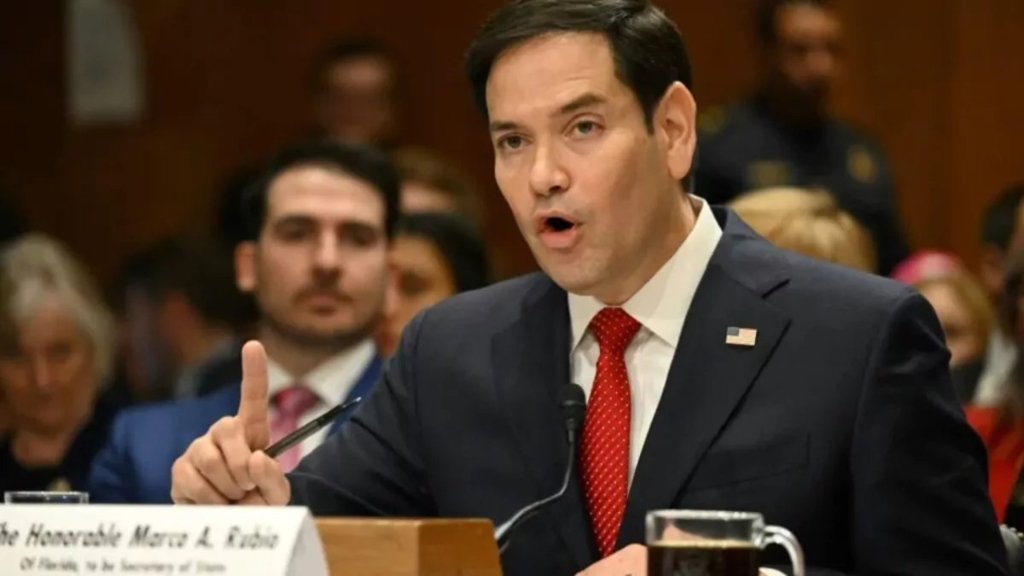
Marco Rubio, categorically about the Strait of Hormuz
Now is the time for consultations, under the mediation of Pakistan and Qatar, to try to reach a final agreement within 60 days, which can be extended. But differences remain evident on hot topics. And among the most important is the fate of the Strait of Hormuz.
The head of American diplomacy Marco Rubio, who has just arrived in Abu Dhabi for a delicate visit, which will run until Thursday to the Gulf countries – allies of the United States and heavily targeted by Iranian missile and drone fire during the war -, reaffirmed that Washington will accept neither tolls nor royalties for this “international waterway”.
Iran had already announced a cost analysis for managing the strait
Earlier, the team of Iranian negotiators, led by Parliament Speaker Mohammad Bagher Ghalibaf, traveled to Oman, specifically to discuss the management of the strait.
In a joint statement, Oman and Iran said they would review the “costs” of services related to managing the strait, stressing their “sovereignty over territorial waters”. Ghalibaf reiterated that this crossing would not regain its pre-war free operation and would remain “administered” by his country.
Iranian President Massoud Pezeshkian, in turn, began a state visit to Islamabad, accompanied by the head of diplomacy. “If the missiles we have for our defense did not exist, Israel and the United States would have wiped Iran off the face of the earth, as aerate“, said Pezeshkian, excluding this arsenal from being on the agenda of the negotiations.
Iran opposes IAEA inspections
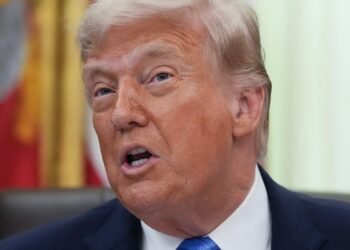
Regarding its nuclear program, Iran explained on Tuesday that it did not intend to allow the International Atomic Energy Agency (IAEA) to inspect its main nuclear facilities, bombed by Israel and the United States, a position apparently contradicted by the US president, who said Tehran had “fully and completely accepted” inspections of its nuclear facilities “at the highest level”. And Donald Trump reiterated this on his Truth Social platform on Tuesday, assuring that “this will guarantee ‘nuclear honesty'”.
Since then, doubts have been looming over the status of the Islamic Republic’s stockpile of highly enriched uranium. Tehran has always denied that it is pursuing an atomic bomb, but remains adamant about its right to operate a full civilian nuclear program.
The round of negotiations that began this weekend in Switzerland is fueling hopes for a lasting solution to the conflict and has pushed the price of Brent crude oil in the North Sea below $78 a barrel, where it stabilized on Tuesday, far from the more than $126 reached at the height of the war.
Kind gestures from US
Pressured to end a war that is eroding Americans’ purchasing power, Washington has stepped up its goodwill gestures toward Tehran.
As for oil, the Islamic Republic’s main resource, “all transactions” related to the production, sale and transportation of hydrocarbons of Iranian origin “are authorized until August 21,” according to the US Treasury.
Regarding a possible unblocking of Iranian funds, the governor of the Central Bank of Iran on Tuesday refuted Donald Trump’s claims, which suggested that they should necessarily be used to purchase goods “exclusively from the United States”, but did not rule out the idea of sourcing American products.
The first 12 billion dollars released will be used to purchase “essential goods and medicines”, said the governor, Abdolnaser Hemmati.
Attacks resumed in Lebanon
On the Lebanese front, on Tuesday, the first Israeli strikes in the country’s south since Saturday left two dead, according to Lebanese authorities, while Israel says it targeted “armed terrorists”.
The pro-Iranian Hezbollah engaged Lebanon in the war in early March. Attacks by Israel, whose army still occupies part of the country’s south, have since left more than 4,100 dead, according to Lebanese authorities.
The Shiite movement on Tuesday denounced a “flagrant violation” of the truce and demanded a full Israeli withdrawal according to a precise timetable.
These shootings took place as the fifth round of direct negotiations between Israel and Lebanon opens in Washington, which Hezbollah opposes.
According to the Iran-US agreement protocol, a so-called conflict management cell must be established to end the fighting between Israel and Hezbollah.