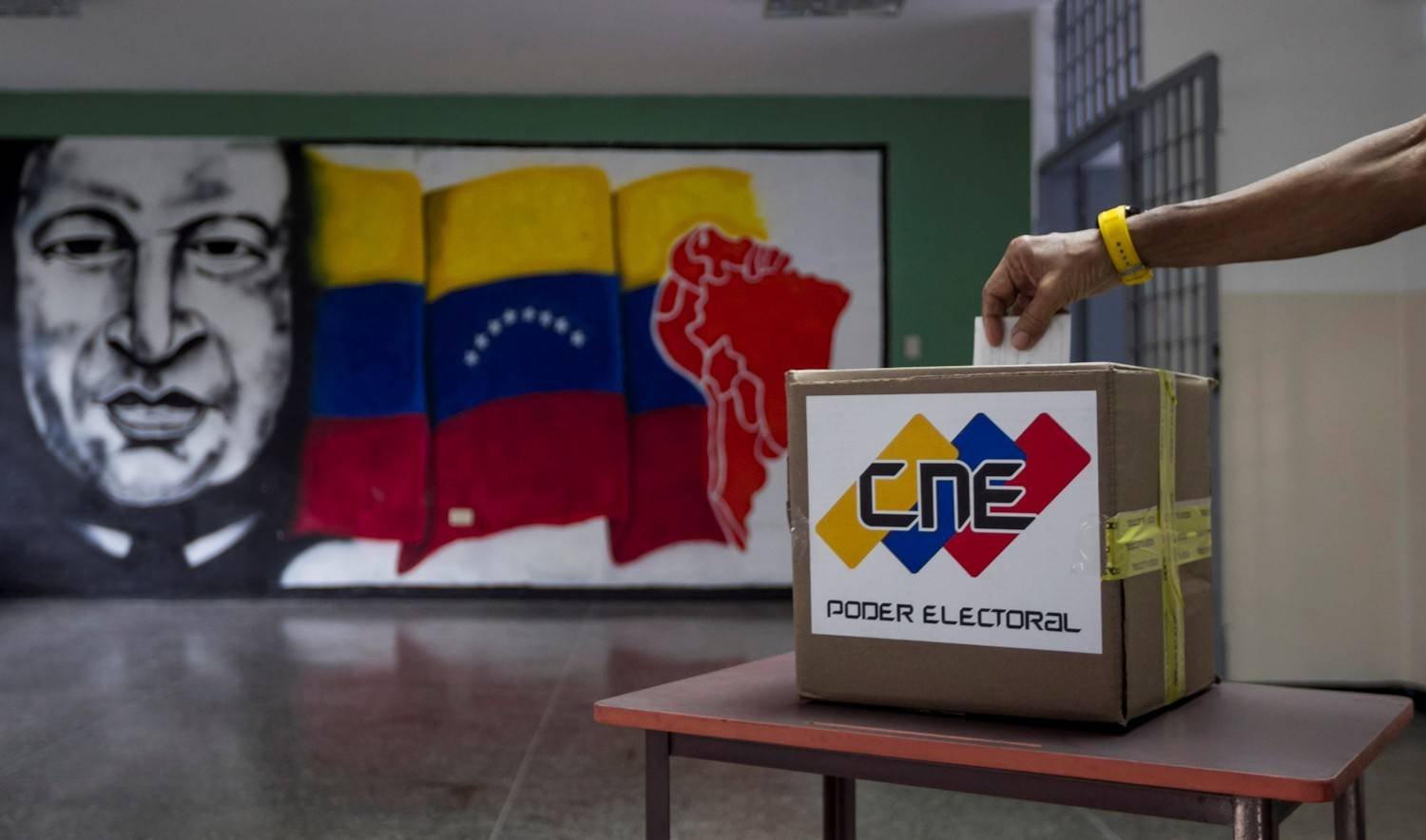
The United States considers that the political solution to the Venezuelan crisis must include elections, but insists on that the holding of elections will not be enough to guarantee sustainable democracy. This was stated this Thursday by State Department spokesperson Tommy Pigott, who defended the need to rebuild institutions and ensure conditions for transparent political competition.
When explaining Washington’s strategy for Venezuela, Pigott recalled that it contemplates three stages: “stability, recovery and transition.” The last phase foresees the calling of elections as part of a broader process of political transformation.
“That transition includes elections,” responded the official when asked if the elections are part of the official US position regarding the future of the country.
Pigott also referred to conversations between representatives of the National Assembly elected in 2015 and sectors of the interim governmentwith which we seek to advance towards an electoral scenario. However, he warned that the United States’ objective goes beyond organizing a vote.
“We don’t just want to see an election, we want to see a lasting republic,” he said.
To move in that direction, he pointed out that Venezuela needs guarantees that allow votes to be counted reliably, opposition parties with the capacity to organize, and free media. These conditions, he maintained, are necessary so that political competition can develop with transparency and so that democracy has continuity beyond an election.
Oil as part of US strategy
Pigott also addressed the oil agreement announced between Washington and Venezuela and defended its possible economic benefits. The spokesperson described the understanding as a “win-win” formula and assured that the oil fields that, according to the US version, were under the control of Nicolás Maduro and his allies – among them Iran, China and Russia – would generate resources destined directly for the Venezuelan population.
The official also supported the privatization of oil fields as a way to increase production and expand crude oil reserves available to the United States. According to him, this increase in supply could help keep gasoline prices low in the US market, while income from energy activity would benefit Venezuela.
Pigott also related the use of oil resources to the prospects for political change in the country. In his opinion, the income derived from the energy sector can help create the conditions to move towards a democratic transition.
“When we talk about a long-term partnership with the Venezuelan people,” said Pigott, it is also about creating the conditions to move towards that process.