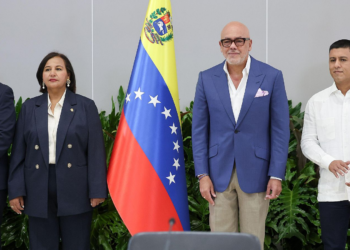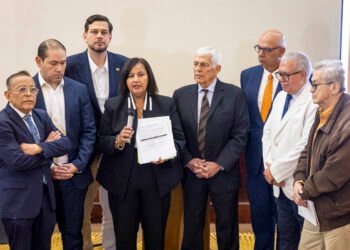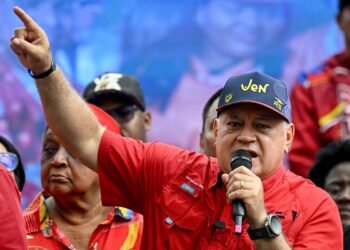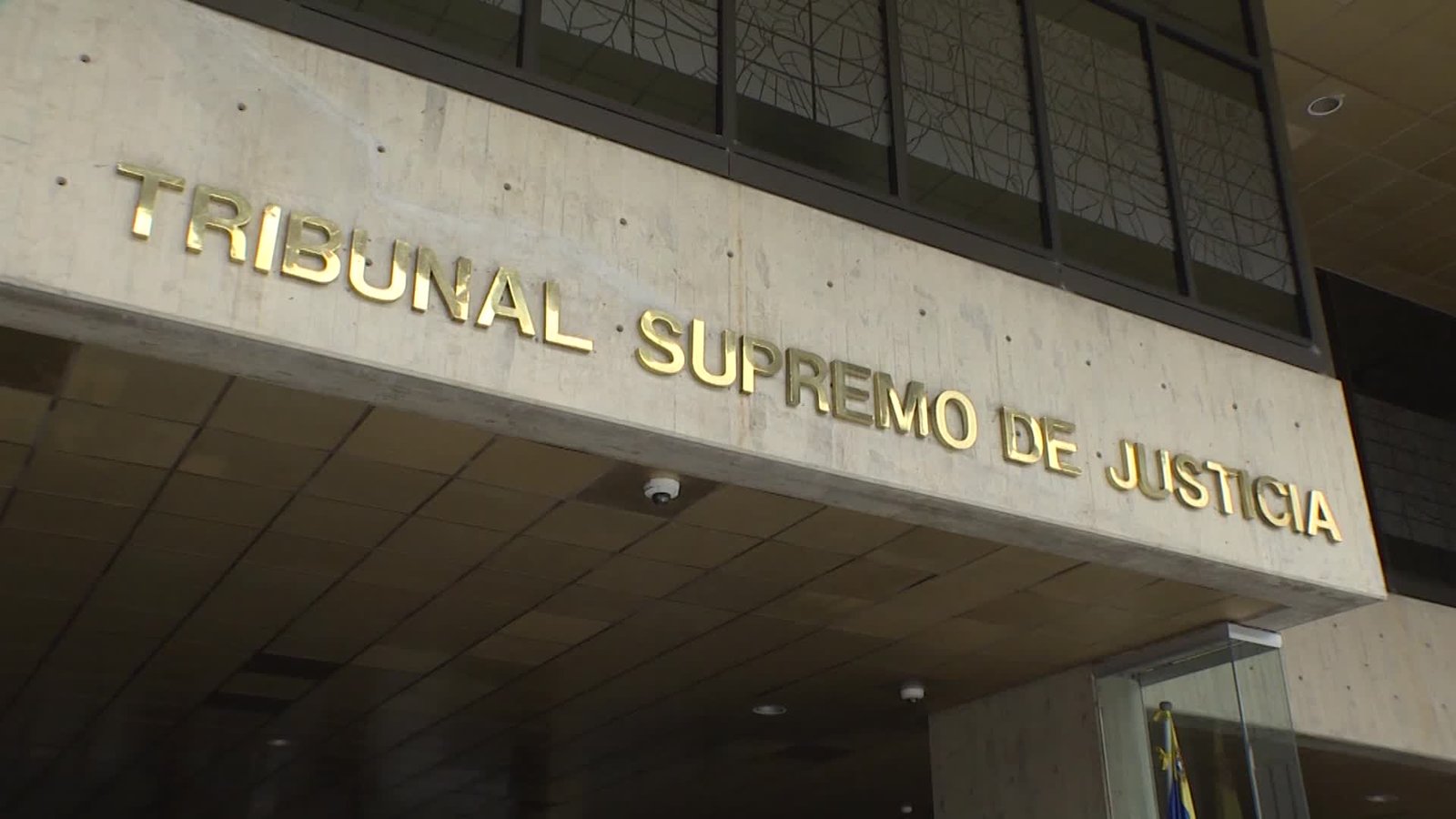
He Supreme Court of Justice (TSJ) It eliminated the specialized jurisdiction in terrorism from four control courts that operated in Caracas and distributed the knowledge of these cases among ordinary courts of first instance in control functions throughout the country. The measure modifies the judicial organization of these processes, although it does not mean the disappearance of all the courts that hear terrorism cases, warned Alí Daniels, co-director of the organization Acceso a la Justicia.
The decision is contained in a resolution approved by the Plenary Chamber of the highest court and signed by its president, Caryslia Beatriz Rodríguez Rodríguez. The document, approved on October 13 and released this Friday, aims to avoid undue delays, guarantee due process and optimize the administration of justice.
The 30th, 49th, 52nd and 13th courts in control functions, assigned to the Criminal Judicial Circuit of the Metropolitan Area of Caracas, lost their special powers in this matter. The Judicial Commission of the TSJ was authorized to notify the immediate cessation of the jurisdictional functions of the judges assigned to those instances.
As of the reorganization, the state control courts will equally assume cases related to the Organic Law against Organized Crime and Financing of Terrorism. The files will be assigned through an automated random system and the procedures will be governed by the ordinary provisions of the Organic Code of Criminal Procedure (COPP).
The resolution establishes a temporary exception for cases that involve covert operations, controlled deliveries or active telephone interceptions. In these procedures, the abolished courts will retain jurisdiction for a maximum of 15 business days to complete urgent procedures. Confidential proceedings must remain in separate and sealed notebooks, while the delivery of the files to the new courts will be done in person and immediately.
Access to Justice questions the legality of the courts
Alí Daniels clarified that the decision does not eliminate all the courts specialized in terrorism, but rather it withdraws the control powers that were concentrated in Caracas and distributes them among the state courts.
“The terrorism courts are not being eliminated. What happened is that the control courts that were concentrated in Caracas lost their jurisdiction over terrorism and that jurisdiction was transferred to the state courts,” the co-director of the court explained to Efe. organization.
The lawyer argued that these courts should not exist because, in his opinion, they were not created by a law, but by a provision of lower rank. In that sense, he questioned the legality of its origin and the compatibility of its operation with the principle of legality in the organization of the courts.
Daniels stated that the organization has requested that the processes processed before these instances be reviewed and that the nullity of the corresponding trials be declared.
“What we have asked is that all those trials carried out by those illegal and unconstitutional courts be null and void,” he said.
Despite his objections, the representative of Access to Justice considers it favorable that the relatives of people investigated for alleged terrorist crimes no longer have to travel to Caracas to attend to the actions corresponding to the initial and control phase of the process.
“It is a positive measure, but it is not even remotely a decision close to justice or one that solves the problem of the anti-terrorism courts,” he noted.
Background and questions about terrorism accusations
The judicial reorganization occurs more than a decade after the creation of the specialized courts in this matter, in 2012, and in the midst of conversations between representatives of Chavismo and a sector of the oppositionn that include possible institutional changes, including in the justice system.
The actions of these courts have been questioned by organizations and lawyers, especially due to the use of the criminal figure of terrorism in proceedings against people. detained after the 2024 presidential elections. In that period, numerous detainees were accused of crimes related to vandalism and violence, while the then attorney general, Tarek William Saab, described them as terrorists in the midst of the post-election crisis.
That year, lawyer Joel García told Efe that the detainees were charged “equally” with the crime of terrorism, without individualizing the conduct attributed to each person. As he explained at the time, this practice contravened the legal principle of individual criminal responsibility.
García also described the accusation of terrorism as “a systematic and widespread pattern” against dissidents of the government of Nicolás Maduro. Likewise, he questioned the scope of Venezuelan legislation on terrorism, which he considered too broad for including conduct of a different nature.