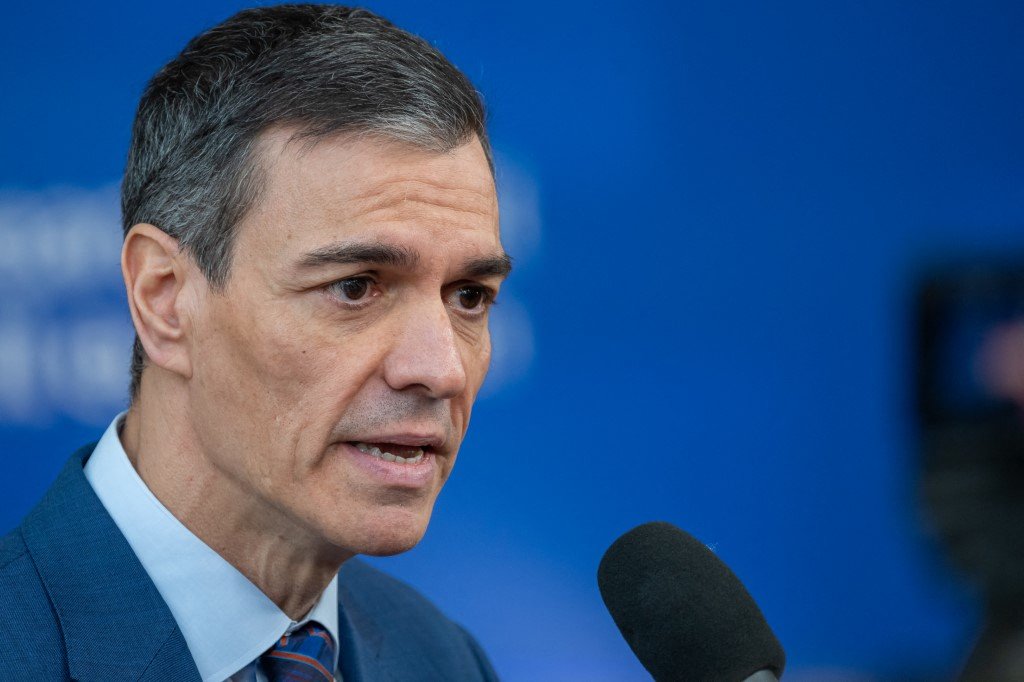
He advance of general elections in Spain summoned by the president of the government, Pedro Sanchezfor the next November 29marks the beginning of a decisive stage in Spanish politics. Although the Executive assures that this responds to the rejection of housing decrees in Congress and looking to get one “broader progressive majority”the Spanish journalist and political analyst Jose Javier Esparza assures that this decision is due to the need to anticipate a scenario that threatens to become more unfavorable in the short term.
“Pedro Sánchez calls elections now because, from this moment on, everything can only get worse. Whether due to the accumulation of corruption cases that are being processed at an accelerated rate in the courts, due to all the information that will come out regarding Shoemaker and the financing of the party, or due to the obvious distrust of its legislative partners, who are beginning to play ‘every man for himself’,” explains the analyst.
In this context, the judicial cases that affect the personal and institutional environment of President Sánchez have accentuated the pressure on the Executive. Fronts such as the investigation opened into Begoña Gómez, the procedures regarding her brother David Sánchez and the investigations linked to the management of public contracts during the pandemic are part of a set of judicial factors that have complicated the stability of the government. Added to this is the deterioration of the socioeconomic situation, which led the socialist leadership to advance the electoral appointment as a containment measure.
The “Maricarmen effect” and the housing crisis
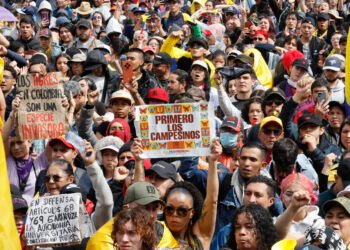
The recent trigger for social tension in the streets of Madrid has been the so-called “Maricarmen effect”named after the high-profile case of an 87-year-old woman evicted from the home in which she had been rented for decades. The event served as a fuse to unleash massive protests organized by platforms such as the Tenants’ Union and led to a prolonged encampment in Puerta del Sol, where hundreds of protesters demanded to stop evictions and regulate the price of rents.
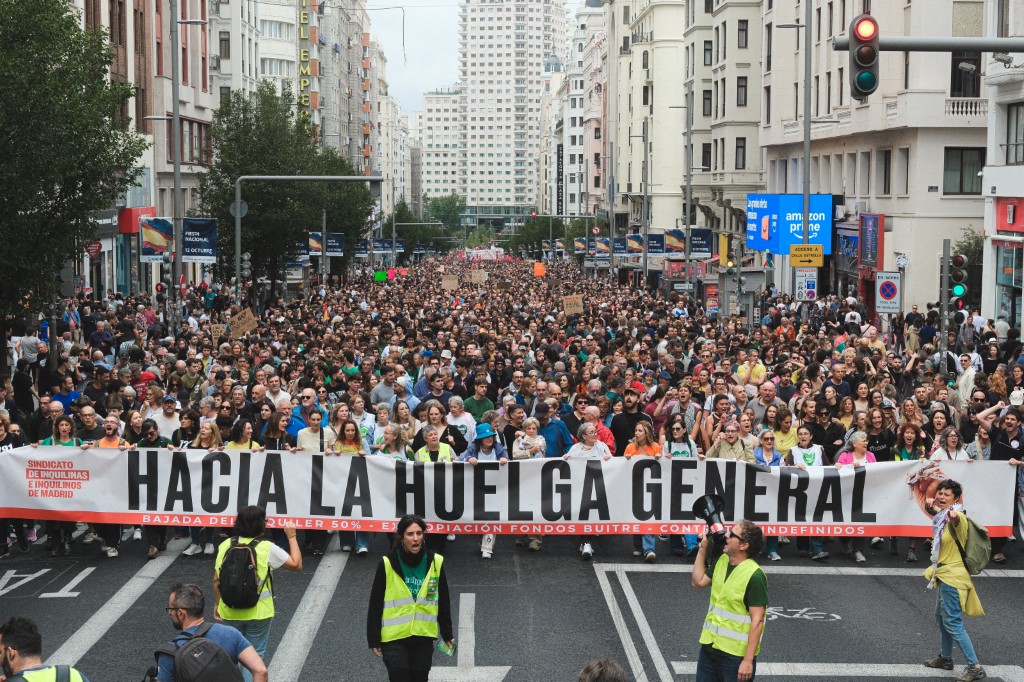
Faced with this environment of pressure on the street, the government promoted two decrees that consisted of stop evictions and block purchases by investment fundsin addition to imposing forced two-year extension of rental contractslimit price increases and regulate room and seasonal rentals.
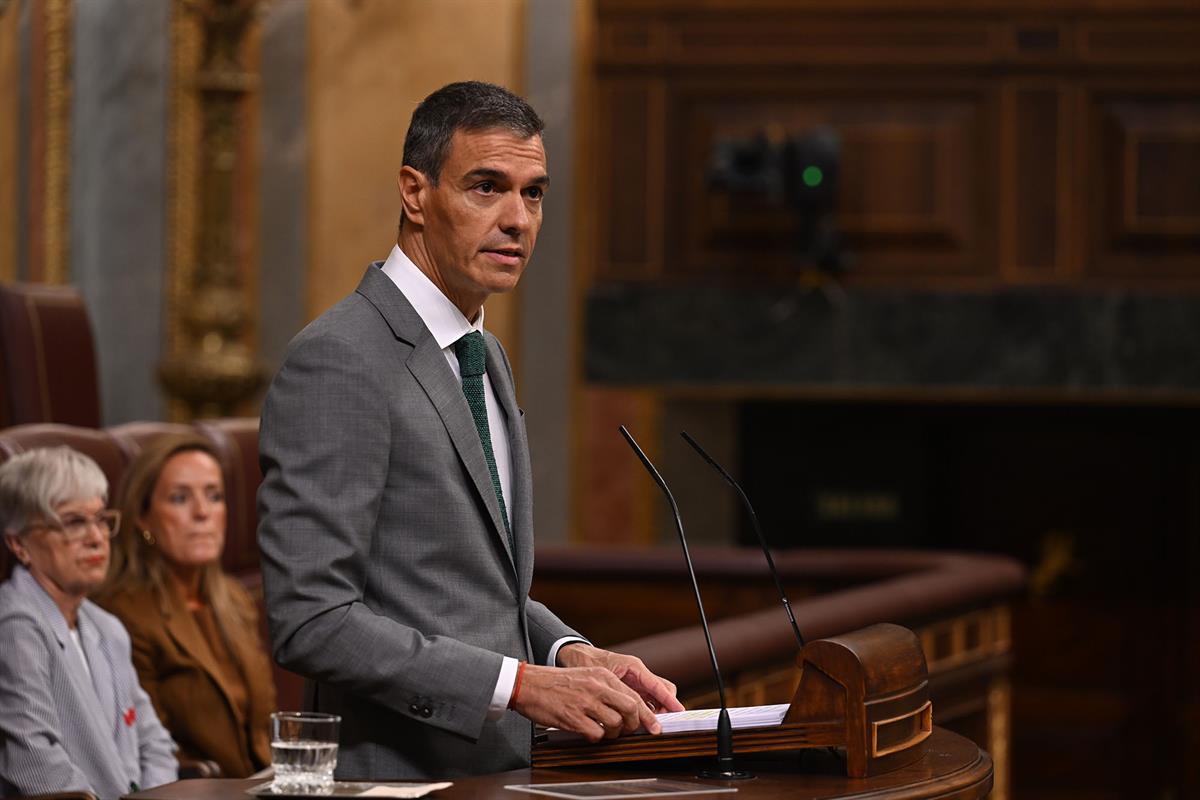
However, the Congress of Deputies overturned both initiatives as the Executive did not have the necessary parliamentary support. After confirming the lack of a majority and facing the impossibility of carrying out his legislative agenda, Pedro Sánchez decided to dissolve the Cortes and call early elections.
With the Chambers dissolved and the Congress dismantled, the Executive’s strategy now involves trying to validate these decrees through the Permanent Deputation.
Parliamentary blockade as an electoral strategy
However, for the analyst José Javier Esparza, the treatment that the Executive has given to the crisis of access to housing and the announcement of these decrees processed in the Permanent Deputation do not seek to solve an underlying problem, but rather act as a strategy to reactivate the progressive electorate in the middle of the electoral pre-campaign.
“The entire controversy around housing has been entirely artificial, manufactured by the government to try to mobilize the social base of the left. That is the only option left to remain, if not in power, at least with optimal results,” says Esparza.
The analyst considers that the usual voter of the left bloc showed a progressive demoralization, so the Executive required an argument with high public visibility and emotional content to stop the flight of votes: “They needed a flag that would galvanize them, and also under the guidance of Pedro Sánchez. The decrees are an instrument: they would not succeed because, from the constitutional and legal point of view, they are completely senseless. Their only function is to serve as an electoral trump card to mobilize their bases.”
In his opinion, describing these legislative initiatives as an immediate solution is a “trompe l’oeil.” Esparza maintains that the restrictive legal conditions contained in these decrees will generate the opposite effect in the real estate market, increasing legal uncertainty and causing the supply of apartments for rent to be drastically reduced.
Likewise, Esparza maintains that the “Maricarmen effect” has acted as a distractor in the face of the migratory and institutional crisis registered in Ceuta. In his opinion, the call seeks to cushion the impact of these events on his own militancy: “Sánchez calls elections after having provoked the so-called ‘Maricarmen effect’, which on the other hand is a gigantic scam. I insist: he does it with the sole purpose of mobilizing his base as much as possible. He needs people on the left to vote for him. His problem was not to convince an undecided electorate, but to convince his own militants to go to the polls, because they all like him. “The accumulation of corruption cases and the humiliating addition of the invasion of Ceuta is shameful.”
Division in the left block
In the social sphere, Sánchez’s management faces criticism not only from the right-wing sector, but also from the left. The leader of the political party Can, Ines Monteroquestioned the Executive’s initiatives and assured that these measures did not solve the underlying housing crisis. “People want solutions, no more cheating decrees with housing”said Montero in his account on the social network Instagram.
Added to these actions is the call for Tenants Union to a general strike in Novembermaking the labor and real estate protest coincide with the electoral campaign period. However, Esparza dismisses the ability of these organizations to decisively condition the outcome of the elections.
“The Tenants’ Union is an ultra-minority organization, backed fundamentally with transnational money from people like Soros and with 3.7 million euros from the Spanish public treasury itself. That is, It has zero representation and the general strike would be laughable“argues the analyst. Regarding the representativeness of the camps, he adds: “Some young people from Sol are my same age; That is to say, I would greatly relativize the social and political representativeness of these groups.”
In Esparza’s opinion, the media and institutional perception of the country does not reflect the state of mind of the majority of citizens, where there is widespread fatigue with respect to the government’s public management. “There is absolute satiety with this government everywhere. I do not disdain the left’s capacity for mobilization or the manipulation of its bases, but the popular climate in general is one of absolute satiety.”he states.
Electoral expectations and the opposition scenario
Regarding the probable outcome of the elections, projections within the PSOE would not be oriented towards a victory by absolute majoritybut to minimize the loss of seats. According to the Spanish journalist, the party’s goal is to maintain a number of representatives similar to that of the Popular Party (PP) in order to subsequently try to articulate governability pacts with other forces in the parliamentary arc.
“They assume that they are not going to win in any way. There is no opinion study that gives them victory. What they say within the Socialist Party is that, if there is good mobilization on the left, it is possible that the number of seats for the PSOE will not be much lower than that of the Popular Party.“, comments Esparza. At the same time, he expresses reservations about the development of the scrutiny: “I think that right now the Socialist Party has all the hope that the adjustments and irregularities of the census will give it between 8 and 10 key deputies to save the furniture.”
For its part, the conservative opposition faces the challenge of consolidating an alternative government. Unlike readings that indicate that the division of the right between the PP and Vox harms their options, Esparza maintains that the Spanish electoral system does not punish when both parties maintain a relevant percentage of votes, as various pacts in autonomous governments have shown.
“The experience of recent years shows that the division of the right-wing vote into two large parties has not been detrimental; on the contrary. In fact, the regional coalition governments in Valencia, Aragon or Andalusia are the fruit of precisely two strong right-wing parties: one more majority, the PP, and another more to the right, Vox. For the Spanish electoral system, from a certain point, the division of the vote does not harm, but can benefit a coalition between first and third, which is exactly what would happen now,” he points out.
Regarding the electoral panorama of the progressive forces, the analyst points out the complexity of recomposing their historical alliances: “In the case of the left, They will eventually need to rebuild, if they can, that kind of ‘Frankenstein majority’ that unites the extreme left and the separatists. “I don’t know to what extent this is going to harm Sánchez or if, faced with a Manichean option of ‘good versus evil’ proposed by himself, the useful vote of the left will end up going massively towards his candidacy.”
The rise of the right in Europe and the reconfiguration of the conservative map
Regarding the possible change of political cycle and the reconfiguration of the right-wing space, the analyst points out that Vox’s growth responds to the structural erosion of the traditional center-right model in Europe.
“The Popular Party has traditionally been the alternative to the PSOE in the current system, but it faces a growth crisis similar to that of all the Christian democratic or liberal parties in Europe. This greatly limits its growth expectations. In reality, the firm opposition has been led by Vox,” he comments.
In addition to this, Esparza highlights that the traditional parties of the European consensus are in crisis, and the PP is no exception. “That’s why many people in the conservative electorate have stopped seeing a real alternative in the PP and opt for Voxwhich is the only party that has questioned critical issues such as immigration or agrarian policy from the beginning,” explains the Spaniard.
The journalist concludes that the challenge that Spain faces in the event of a possible change of government should not be limited to a simple alternation of ministers, but to a profound review of the institutional structure.
“The path of institutional deconstruction of these years has been lethal. The point is that the right-wing government that takes office must be aware that it is necessary to start a new path; it is not enough to change some ministers for others. In Spain, a ‘third transition’ is needed. The first was in ’76, from Francoism to democracy; the second was promoted by Zapatero by breaking the constitutional pacts to agree with the separatists. That second stage is ending up involved in scandals of corruption, with Zapatero questioned and ministers in jail. A third transition is needed to turn Spanish democracy into something viable, sensible and decent,” concludes Esparza.