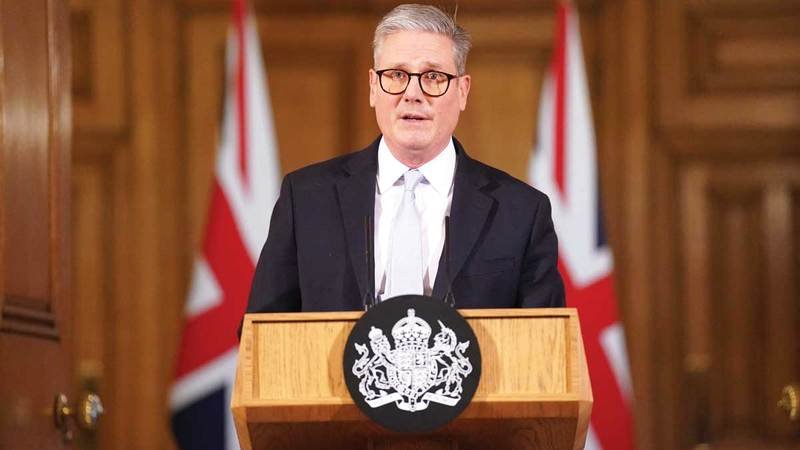
Andy Burnham returned to the British Parliament as a representative of the Labor Party, after his strong victory in the by-elections in the Makerfield constituency, and it appears that he is preparing to challenge for the leadership of the party against Prime Minister Keir Starmer.
While it is still possible that Starmer will be able to keep his job, it seems likely that Britain will have a new prime minister before long.
Much of the discussion about possible differences between Burnham, or any other competitor, and Starmer has focused on the approach to dealing with pressing domestic issues, especially the cost of living, economic growth, public services, and immigration, with the issue of relations with the European Union emerging intermittently in the future.
Olivia O’Sullivan, director of the Britain section of the Global Program at the British Royal Institute of International Affairs (Chatham House), says in an analysis published by the institute that “these issues are extremely important,” but Starmer’s period as prime minister was largely consumed by foreign policy files, and any new prime minister will find himself facing a continuous stream of international issues and challenges.
She added that the matter is not only a result of unexpected external crises, despite their many occurrences, but is also related to the fact that Britain’s most important relations since World War II, with the United States and Europe, are currently undergoing a transformational phase.
Sullivan asserts that positive lessons can be drawn from Starmer’s performance in office so far, “but his government has struggled to deal with deeper strategic questions and provide the necessary resources to keep pace with this fundamental transformation and its implications for defense and security, and any new prime minister will have an opportunity to reset course, in the face of the United States’ increasing reluctance to bear the burdens of European security, the intensification of the US-Chinese rivalry, and the growing threats facing the United Kingdom as a result.”
Sullivan believes that Starmer succeeded in managing a complex relationship with US President Donald Trump through his careful understanding and careful dealing with the extreme sensitivity of the “Make America Great Again” (MAGA) movement towards what he considered to be European arrogance. He also refused to be drawn into public confrontations with the US administration when that did not serve British interests.
In addition, the exchange of official visits between the two countries was managed successfully, and Starmer sought to benefit from the lessons of the past by setting the limits of the British role in the American-Iranian war, in recognition of the lessons learned from the Iraq war, “with regard to the exhaustion of limited British resources on American missions that lack a clear strategic goal.”
Starmer also emerged as a reliable European ally, as he continued the approach of previous British governments in supporting Ukraine in the long term, with a realistic view, and realized that his country’s security priority must remain in Europe. He also coordinated effectively with European partners, signed a new security treaty with Germany, and renewed the existing agreement with France.
Sullivan stresses in her analysis that any British Prime Minister must focus on finding long-term and innovative solutions for collective defense financing with the European Union, and that joining the “Security Action for Europe” program, or any similar formula in the future, should be considered only a first step towards enabling European countries to jointly finance their military capabilities.
O’Sullivan concludes at the end of her analysis that the British people deserve to receive a clearer explanation of the nature of the changing international environment, “as the effects of these transformations extend to defense spending, security, and trade policies, and determine the options available to the United Kingdom.”
“Explaining these facts to public opinion, honestly and clearly, is a necessary part of preparing the country for a different strategic phase, and should top the list of priorities of any new prime minister.”