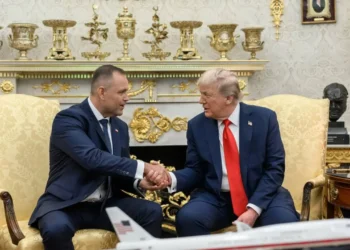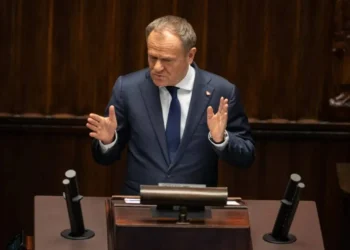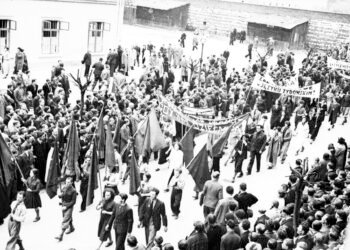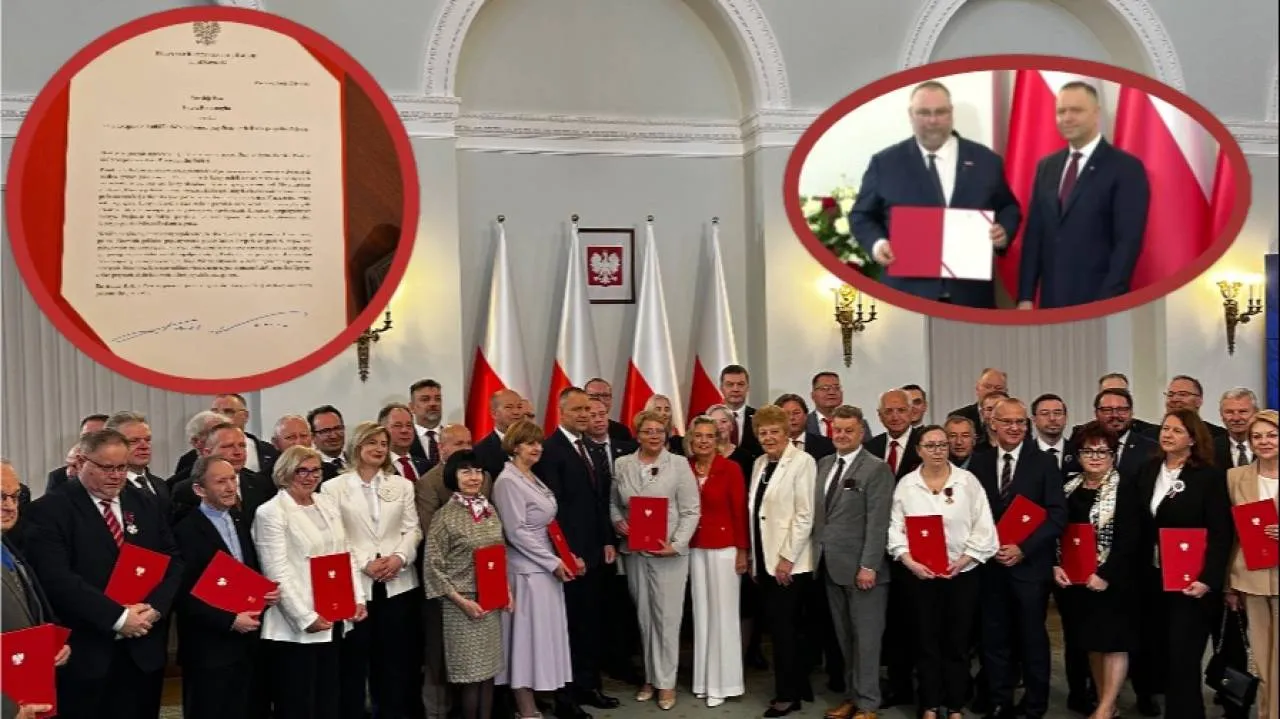
President Karol Nawrocki today presented official appointment acts to members of the newly established Council for the Polish Diaspora and Poles Abroad operating under the President of the Republic of Poland. Among those appointed are individuals associated with the Free Speech Zone (Strefa Wolnego Słowa), including Tadeusz Antoniak and Paweł Piekarczyk. During the ceremony at the Presidential Palace, the head of state also awarded state decorations to representatives of the Polish diaspora and Poles living abroad.
State Decorations for Representatives of the Polish Diaspora
Today at the Presidential Palace, a مراسم took place during which state decorations were presented to representatives of the Polish diaspora and Poles abroad, alongside the official appointments of members to the Council for the Polish Diaspora and Poles Abroad.
The Council will be chaired by Ambassador Konstanty Radziwiłł. His First نائب will be Ambassador Anna Maria Anders. The Second Deputy Chair will be Tadeusz Antoniak, Chief Commander of the Association of Polish Army Veterans in America, head of the “Gazeta Polska” Club in Philadelphia, and chairman of the Smolensk-Katyn Committee.
Another appointee to the Council is Paweł Piekarczyk, coordinator of Gazeta Polska Clubs abroad. The body also includes Sławomir Wróbel from the Gazeta Polska Club in London and Andrzej Woda from the Club in Paris.
President’s Address
During the ceremony, President Karol Nawrocki delivered a speech:
“A certain foundation lies, on the one hand, in our attachment to national symbols, including the beautiful white-and-red flag, and on the other, in our attachment to fundamental values—our language, cultural heritage, and our shared ability to experience the history of the Polish nation. All of this gives the national community a kind of immortality which, even in the 19th century, did not require a state in order to survive. Today, it does not look at borders but operates across all latitudes. This is the deep strength of the Polish nation built on fundamental values. In this context, Poland is not merely a place on the map, but a community of people scattered across the globe. This community has been shaped over at least the past three centuries,” the president said.
He recalled that “the first wave of migration occurred in the 19th century, when Poles deprived of their state were forced to leave their homeland; another wave came during World War II, in the 1940s, when Poles were compelled to leave a Republic occupied by Germany and the Soviets.”
“Then there are those Poles who never left their homeland, but due to arbitrary border shifts remained Polish in the places where their ancestors were born. Those pushed out in the 1960s and 1970s, and after the imposition of martial law, wanted to stay but had the courage to fight for freedom and solidarity. This was something the communists could not forgive them. Regardless of whether we look to the 19th century, World War II migrations, or the 1980s—and regardless of whether these were political or private decisions—one thing unites you all: love for Poland and attachment to our national symbols,” he said.
Addressing the award recipients and Council members, he added:
“Poland is deeply rooted in your hearts, regardless of how many generations you have lived outside the Republic. This is what determines today’s honors and what was also most important in the creation of the Council for the Polish Diaspora by Minister Agnieszka Jędrzak, for which I sincerely thank her.”
He also recalled the late President Ryszard Kaczorowski:
“He used to say that whenever he visited institutions in the United Kingdom and saw the white-and-red flag while living in exile, he felt as if he were in Poland. In that flag, he saw all the most important values. It allowed him, despite being far from a Poland dominated by communists, to remain close to it. Thanking you for your commitment, I ask that in this respect you always be like President Ryszard Kaczorowski—that you remain aware that wherever the white-and-red flag is, there is Poland.”
Strategic Vision for the Future
The president also spoke about the need for a strategic approach to Poland’s future:
“Beyond emotions—our great inclination and love for Poland—there is also what we must accomplish together. Roman Dmowski, in Thoughts of a Modern Pole, wrote about expanding the horizons of national thought. He argued that regardless of where we are, we must remember where we come from. This is, of course, a defining trait of those honored and of the members of the newly established council. Dmowski guided us toward building the homeland abroad while respecting the countries in which we live.”
“Expanding the horizons of national thought is crucial today for the modern Republic and its future. The fact that one-third of the Polish nation lives outside Poland is not a burden—it is a great asset that we want to harness together. Poles around the world today are often doctors, intellectuals, lecturers, entrepreneurs, workers—people who shape the potential of the Republic of Poland,” he added.
According to the president, “our task is to ensure that the one-third of the nation living abroad never becomes disconnected from the two-thirds residing within Poland. This is our most important mission.”
“I am very pleased that this new council has been established. It shows that the Polish state will never abandon Poles living abroad. We demonstrate this every day. During all my foreign visits, I advocate for the interests of Poles outside Poland. A strategic challenge lies ahead. Among the 20 million Poles abroad, there are still those who hesitate whether to return to their homeland, and those who are ready to do so. Within the Council for the Polish Diaspora, we must do everything possible to create legal and tax mechanisms that will encourage Poles abroad to return to Poland,” he declared.
The president concluded his speech with the words:
“Long live Poland. Long live Poland within the Republic, and long live the Polish nation beyond its borders.”