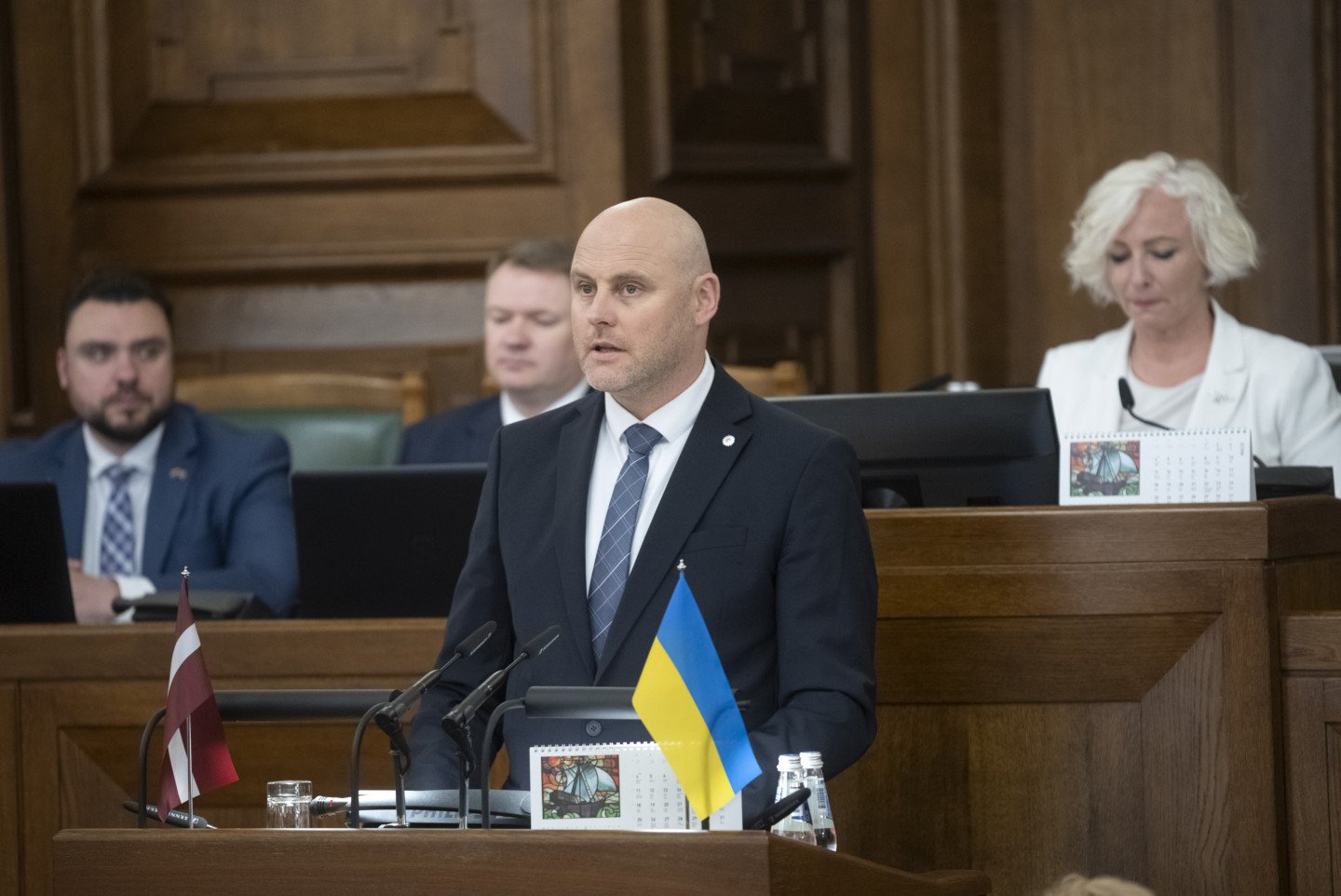
Andras Kulberg’s new government has been facing fairly sharp criticism in the public space since the first days of its existence. No hundred-day “grace” period is observed. This is also easy to explain, because the elections are very close, but nowadays it is no longer hidden that some political commentators themselves have become active participants in the political process and are fans of certain teams.
The closeness of the election is not the only reason for criticism. Kulberg’s government has started work in a relatively unusual style. The new prime minister already at the first government meeting, holding up three color folders, announced that so much work had accumulated (785 unfinished works of the previous government) that from now on government meetings would be held twice a week (previously once). Not a few days passed when he already announced that the number of government meetings would be increased to three times a week.
Some “experts” immediately Kulberg criticized that it is not the frequency of government meetings that characterizes the efficiency of government work. These “experts” may be right, but only if government meetings are perceived as bureaucratic ceremonial rituals, in which ministers “work out a number” for the public, while the “real” decisions are made quietly, without the presence of prying eyes somewhere else.
Kulberg’s style of behavior as Prime Minister to some extent resembles the behavior of a car mechanic, who was transferred from the government garage to the head of the Cabinet of Ministers and tries to introduce the prevailing laws and virtues to the collective of garage workers. Namely, speaking in simple, direct language without the uncertainty and embellishing platitudes of bureaucratic language. In the times of the USSR, it was called the “proletarian-peasant” style of expression, which aroused class disgust in the intelligentsia of the “old regime”.
Now, in a new spiral of development, we have come to something similar. Kulberg publishes a short video review of the day’s work every evening. In addition, this review is in simple, unpolished, and therefore in some places grammatically rough language, which makes fans of the “old regime” wrinkle their noses for insufficient literary sophistication (what is wrong with the prime minister for such poor communication?).
But in reality, Kulberg’s main advantage is precisely this striking contrast with the “subtle style” of the heroine of the BBC series Mrs. Burkās, who ruled Latvian politics for many years and was assigned as a behavior model for “adults in the room”. In reality, this “grown-up-in-the-room” model was a style of doing nothing, sweeping problems under the bed and postponing solutions “for later”, which was once introduced to European political fashion houses by former German Chancellor Angela Merkel. This fad was all well and good while the real problems continued to fester.
Kulberg offers a different model. At least stylistically, because Kulberg’s political opponents quite openly threaten that nothing will happen to him because he simply “doesn’t understand the rules”. It must be admitted that this is the main disadvantage of Kulberg’s government. That underwater rock he might trip over. It is precisely this “minus” of Kulberg that the entire bureaucratic apparatus of the state administration, which is focused on one thing – to change nothing, has focused its main attention.
Let’s remember the former minister of education, the late Roberta Kīlis, who planned a wide-ranging reform of the education system. Kīlim had a well-rounded background approved elsewhere in the world, a good base of academic knowledge and a sincere desire to transform the Latvian education (especially higher education) system into the most exemplary one in the world.
But what could Kīlis, who had never managed anything big, do against the impressive body of university rectors? When the well-paid, self-confident leaders of huge (thousand-strong) collectives (including professors) sat opposite Kiel with their ambitions, wishes and demands, Kiel’s good intentions met with cool, polite restraint. Kiel’s ideas were easily “dismissed”, turning them into the naive efforts of a minister who “does not understand the situation” to transfer the “wisdom of books” to “practical land”.
There is no doubt that Kulberg’s intended changes (at least for the time being mostly stylistic) will be met with exactly the same method: he will hear advice tirelessly from all sides: dude, stop whining. You just don’t understand the system. There are rules that have been developed for years, and everyone plays by them. If you want to play by other rules, break the system, then you can be sure – they will break you. It will be a fool, a dumiki, who overestimated his strength and thought he was very powerful.
Objectively, Kulberg’s government has really great political potential, but, as is known, he who rises high may fall low. In other words, the Kulberg government can both gain great popularity and fail with a bang. Considering Evikas Silinas the plunging nature of the collapse of the government, the new government (regardless of who would have led it) has excellent opportunities to “climb high”. But as you know, the higher the legs of the chair, the more people bustle around them with saws in their hands.