In recent years, news about bears in Latvia has become more and more frequent. They are recorded in forest cameras, spotted near farms, and sometimes mushroom pickers and berry pickers also report encounters with this impressive animal. According to experts’ estimates, several dozen brown bears currently live in Latvia, and their number is gradually increasing, and this makes many people ask a very practical question – what would happen if you had to meet a bear face to face in the forest?
And more importantly – is it even possible for a person to escape from a bear? The answer from scientists and wildlife experts may surprise many.
A bear might not be the smartest choice of opponent for a running race, but if you’re trying to outrun a bear, what are your chances? The short answer is not good, according to Discover Wildlife. The longer answer is still not good, but it depends on the bear.
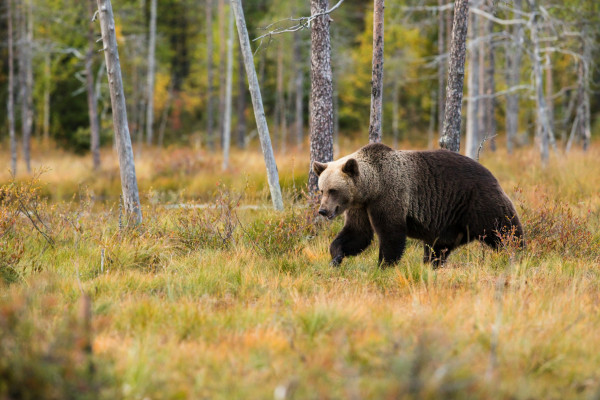
There are eight different species of bear, and perhaps it will come as no surprise that the three largest are also the fastest.
According to the Guinness Book of World Records, the fastest bear ever recorded was a polar bear that hurtled down a road in Churchill, Canada at a speed of 64 kilometers per hour.
Brown bears (including grizzly bears and Kodiak bears) and black bears may be smaller, but they too have a top speed of over 30 miles per hour.
Panda bears may be known for their docile nature, but when in danger, they too can pick up the pace. Over short distances, these bamboo-eating beauties can travel at a speed of 40 kilometers per hour.
While most bears would struggle to maintain top speed for any great distance, only a fool would attempt to outrun them. Instead, if you come face to face with an angry bear, experts warn against relying only on the well-known “rule of three bears”.
It says, “If it’s brown, lie down; if it’s black, fight back; if it’s white, it’s midnight.” The problem is that coat color can be deceiving. Black bears can be brown, and grizzly bears can appear black. Instead, it is best to react to bear behavior.
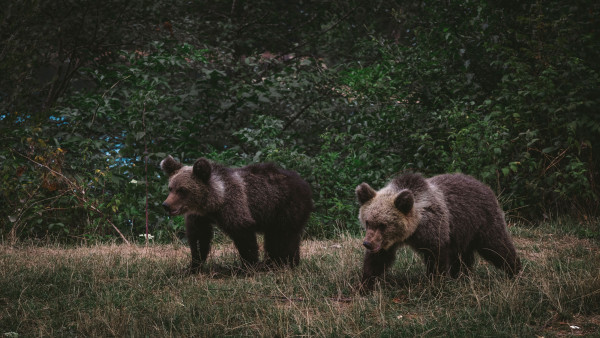
Attacks when a bear lunges at you are best prevented by remaining calm. Back away slowly, speaking loudly and confidently in a calm voice. This should convince the bear that you are human and pose no threat.
Running is not recommended because it can trigger an aggressive attack, which, although less common, is much more dangerous. Warning signs of an aggressive attack include panting by the bear or chattering of its teeth while stamping its front paws on the ground. Only when the bear starts attacking is it time to obey the three-bear rule.
The National Park Service advises: “If a black bear attacks you, fight back with everything you’ve got. If a grizzly/brown bear attacks you, pretend to be dead. Do not fight back.”
And if that all sounds too scary, just be glad we’re not living in the last ice age of the world’s biggest bear. Reaching a height of more than four meters, the carnivore Arctotherium angustidens weighed up to 2,000 kilograms, which makes it more than twice the size of even the largest polar bear.