
There were days of uncertainty, while the electoral records from abroad were being counted. The elusive victory of Keiko Fujimori, on her fourth attempt, became a reality vote by vote. There was cautious optimism in the cafes of Upper Angamos; Dasso’s Trumpists, on the other hand, feared the worst. First there were messages through WhatsApp channels, combative groups such as Patriots on Vigil or Communism Never Again, which transmitted the alerts. Then, some private security companies – with ‘intelligence’ information – set off more alarms. Hordes of communists from the ‘interior’ (that other country bordering Lima), with a high capacity for mobilization, would not allow the triumph of Fuerza Popular to be consecrated. (Did you think that the hats were going to stay with their arms crossed?). Maps of the national road system were shared with red markings of alleged highways, streets and squares. Private technological initiatives created mobile applications, Google Maps, as a patriotic alert. The tidbits of consultants knowledgeable about the communist threat were filtered out and they certified the scenarios that predicted our humble democracy in danger. In the end, July 28 arrived without their people leaving for the peace of ours; The specter of communism was nothing more than a scare and the new government positioned itself smoothly, without any obstacles or stones in the way.
The rejection of the left, in any of its forms – fear, contempt, disgust – is a historical institution in our country. Those who carry the anti-communist identity have reasons for this. Some fair; others not necessarily. The same thing happens with the aversion to Fujimorism. Without a doubt, the greatest damage caused to our country in the last century was the outdated revolutionary imprint. More than doctrine, the stubbornness that power can be achieved with the gun, which captured the minds and hearts of thousands, perhaps millions of compatriots. The most extreme ones were in charge of turning the theory into blood. Not coincidentally, one of the few provincial factions of the entire party and factional tree of the left (Sendero Luminoso) was the one who carried out the madness. The terrorist destruction caused by Marxism-Leninism-Maoism-Gonzalo thought should not be forgotten or justified. I repeat, there are reasons to be anti-communist. But anti-communism cannot become the identity layer for the political exclusion of those who propose the State and redistribution in exchange for the market and trickle-down. Nor to continue strengthening the hierarchies of dominance and discrimination that are at the base of our social structures.
When anti-communism becomes sociological reductionism, the just pay for the sinners. It goes from being a sensible position to a tool of social exclusion. Any legitimate social protest, postponed political claim, historical disagreement is simplified into stereotypes that expel social sectors from collective belonging, from the sense of ‘we’. If the southern Andean votes differently than Lima, it is because “they are communists”; the same if a peasant patrol raises an environmentalist flag or a group proclaims its sexual pride other than heterosexual. Green is red; the rainbow, too. In this reductionist grammar, the reasons for social discontent are not due to social inequality or poverty, but to minds possessed by any variant of Marxism (Mao and Gramsci, included). Since social dissatisfaction would not be material but rather ideational, the protest is not only not justified but is immoral, it is an act of “betrayal of the country” (sic). Thus, the social pyramid is transformed into a moral pyramid.
This dishonest anti-communist variant is not created or expanded naturally. It also has its own cultural industry (such as anti-Fujimorism). These are spontaneous social scientists, highly ideologized, right-wing radicals, who are in tune with the most authoritarian and conservative common sense of this part of the political spectrum. They produce their own popular literature, in a ‘cultural battle’ format; their own consultancies financed by those who seek to corroborate prejudices rather than unravel. They are the speechwriters of separate communications; They are ghostwriters and ghostbusters. They generally do not have academic training, but they do have expertise. They practice easy terroqueo. They distort the understanding of Peruvian social reality; degrade the analysis. They have become a cheap sociology alternative, taking advantage of the discredit of traditional schools of social sciences. The response to the ideologization of essayistic (and non-scientific) production in Peruvian universities did not come from other faculty, but from ‘labs’ and ‘start-ups’.
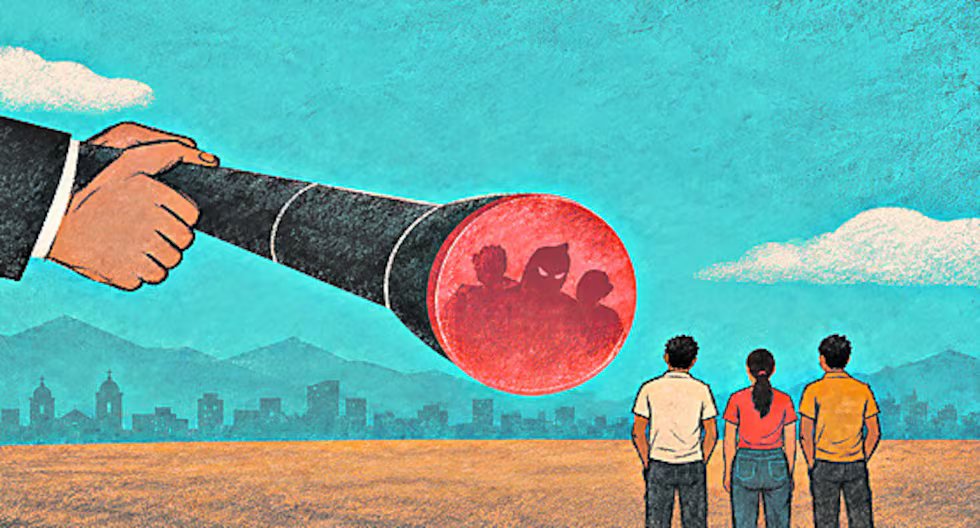
When this type of light anti-communism reaches decision makers (public and private), all possibility of national reconciliation evaporates. For the understanding of the elites, the behavior of ordinary Peruvians is no longer understood by rationalities to be unraveled but by ideologies to be unmasked. Great unknowns of our reality such as informality and state weakness remain out of focus from the attention they deserve. That way, public policymaking will never hit the mark. Above all, in a government that lacks its own doctrine beyond its holy trinity of Albertism, the Constitution of ’93 and pragmatism. We are trapped by the inability to construct our own interpretations of our society, beyond the spyglasses that anti-Fujimorism and anti-communism disseminate. Those who stand up to point out the culprits of our underdevelopment, on both sides of the ideological continuum, are the ones who contribute the least to getting out of the hole.