Yenderlin Cabarza arrived with fractures to the emergency room from the area hardest hit by the devastating earthquakes in Venezuela that left at least 188 dead. His mother did not survive. Neither did her uncle who protected her from the collapse with his body. The teenager, 13 years old, waits alone for medical attention, like dozens of minors.
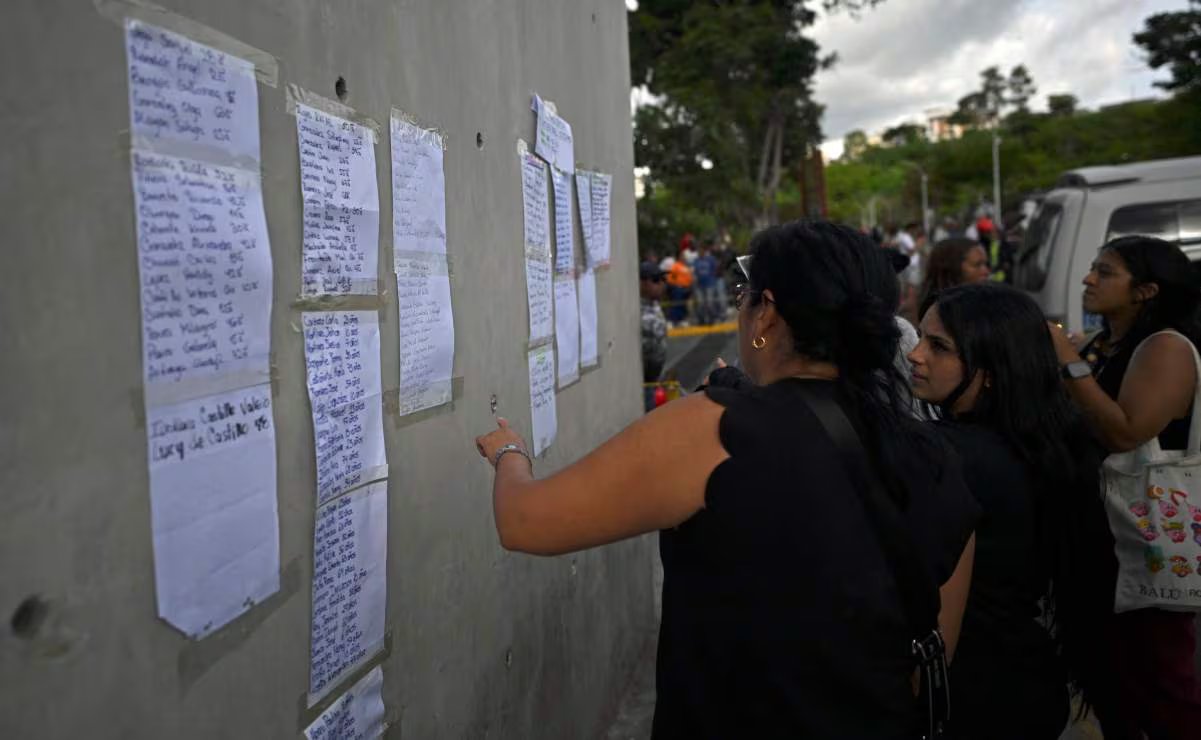
Ambulances constantly break into the hospital entrance Sunday Lucianiin the east of Caracaswhere anxious people on Thursday reviewed long lists taped to the walls of the medical center to find their loved ones.
Names and handwritten names appear on these lists, including those of 22 children and adolescents between 4 and 19 years old.

Rescuers transport minors from devastated areas while their loved ones try to place them in different hospitals. (06/25/26) Photo: AFP
These injured minors were rescued in La Guairathe coastal town that suffered the attacks of two earthquakes of 7.2 and 7.5 of magnitude.
The telluric movements They reduced entire buildings to rubble and on Thursday they were still causing anxiety in Venezuela.
Cabarza was transported in an ambulance from this area, which authorities described as “disaster zone“.
“She came out with her two little arms dancing around her, they couldn’t rescue her because the debris was falling on top of her,” Rolando, a family friend who prefers to identify himself only by his first name, tells AFP.
“She went up alone in the ambulance, then we went up” from La Guaira to this hospital, says the man, who accompanied the girl’s father. “We knew she was here because they notified at that time that they would transfer her to this place.”
Cabarza’s father entered the emergency room and learned that his daughter came out of the operating room after undergoing surgery for fractures in both arms. The rest of his relatives, those who survived, were waiting outside the medical center.

The emergency leaves dozens of families separated while the number of injured and missing people grows. (06/25/26) Photo: AFP
“Several of the children arrive alone because they are brought quickly from the place where they are rescued,” explains a doctor who preferred anonymity because he was not authorized to testify.
Some “give us their names,” others arrive “identified with a strip (adhesive tape) on their arm,” adds a doctor, also under anonymity.
“The majority do not have family members, they arrive alone and what the paramedics tell us is that they take them out of the rubble, put them in the ambulance and bring them here because in La Guaira The hospitals are very ‘full,'” he says.
The authorities estimate that there are about 1,520 injured and almost two hundred missing due to the tragedy.
In the waiting room of the Sunday Luciani Families and friends of those injured in the earthquake are waiting.
Among the most common injuries are facial, thoracic or abdominal trauma, and fractures in the upper and lower limbs.
“Family members should be in the waiting room,” a hospital worker shouts into a megaphone. “You must clear the area, it is prohibited to be here,” near the emergency room.

Hospitals are concentrating care for the injured while hundreds of people continue searching for missing relatives. (06/25/26) Photo: AFP
Meanwhile, the woman with the megaphone calls from time to time to relatives of the internees, who say they are “lucky” to know they are alive.
In the hope of locating their relatives, many new arrivals photograph the lists of the wounded.
The images with dozens of names spread like wildfire on social networks.
“I came from the Pérez Carreño hospital and I didn’t find my sister there either,” he laments. Zoraida Hernandez52 years old, who has been looking for her since Wednesday after learning of the collapse of her house in coastal Catia la Mar.
A stretcher bearer He told AFP that the hospital morgue is full.
The strength of both earthquakes was such that they felt even in Colombiawhere some alarms sounded. Since then, more than 130 replicas.
desa/rmlgv