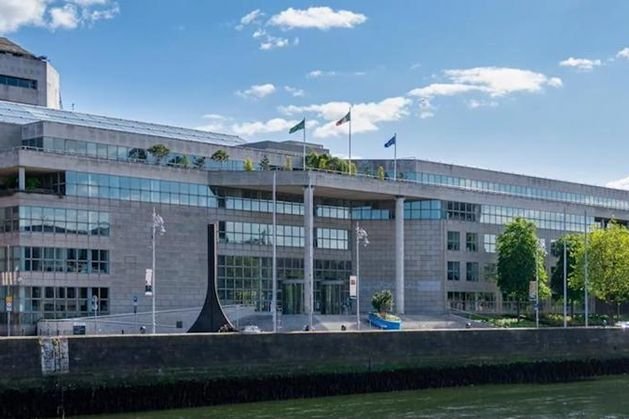
In the council’s capital programme for this year to 2028, which was presented to councillors earlier this month, €10.3m has been earmarked for renovations, energy-efficiency improvements, security upgrades and more for the existing civic offices on Wood Quay.
This is despite the council’s intention to demolish the complex and replace it with housing when staff move to a new building in Camden Yard.
Plans have been outlined to build a four-block, 530-unit apartment scheme on the Wood Quay site.
For the next three years, €3m has been ring-fenced for renovations to the offices, €2m for energy efficiency and €1m each for fire upgrades, corporate estate costs and electrical services.
Security upgrades, lift replacements and mechanical and electrical capital upgrade works have been designated €600,000 each, while €500,000 has been reserved for office upgrades.
By comparison, DCC has allocated less in its capital budget for footpath repairs (€9m) and its flagship climate project, the €8m Dublin District Heating System, than for the Wood Quay refurbishments.
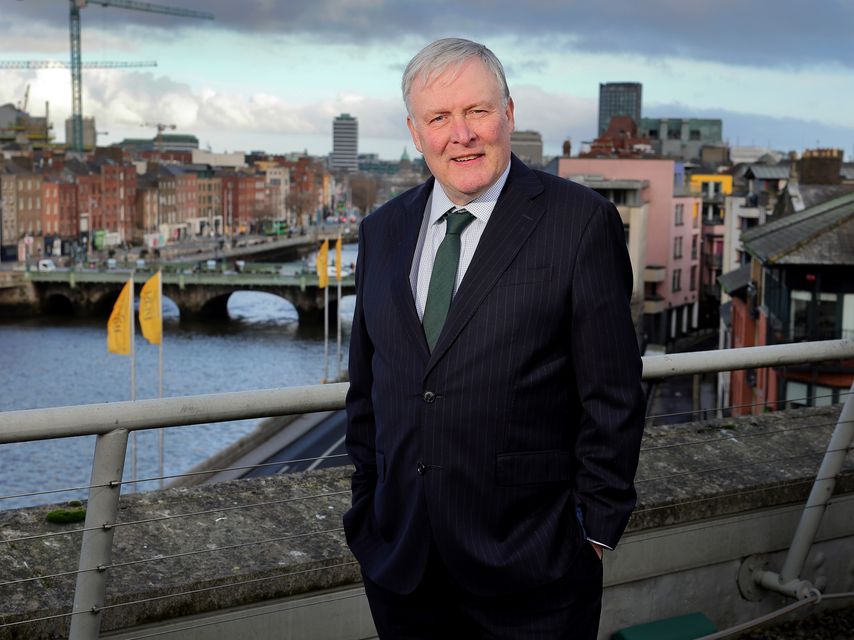
Dublin City Council chief executive Richard Shakespeare. Photo: Frank McGrath
Green Party councillor Michael Pidgeon queried the planned spend during the council’s last monthly meeting.
He suggested a cut-off date beyond which no further investment in the soon-to-be defunct building would take place.
A spokesperson for DCC said the refurbishment budget “relates primarily to sinking-fund allocations for the existing civic offices”.
“These are standard capital reserve provisions for a building of this scale and age and are maintained to ensure that the building can continue to operate safely and effectively should upgrades or replacements be required,” the spokesperson said.
They added that the inclusion of the budget “does not imply that the funding will necessarily be spent”.
“As the council progresses the Camden Yard project and plans for a future relocation, it is hoped that most of these reserves will not need to be drawn down,” they said.
“However, until that transition is completed, the council must retain appropriate contingency provisions in respect of the existing civic offices.”
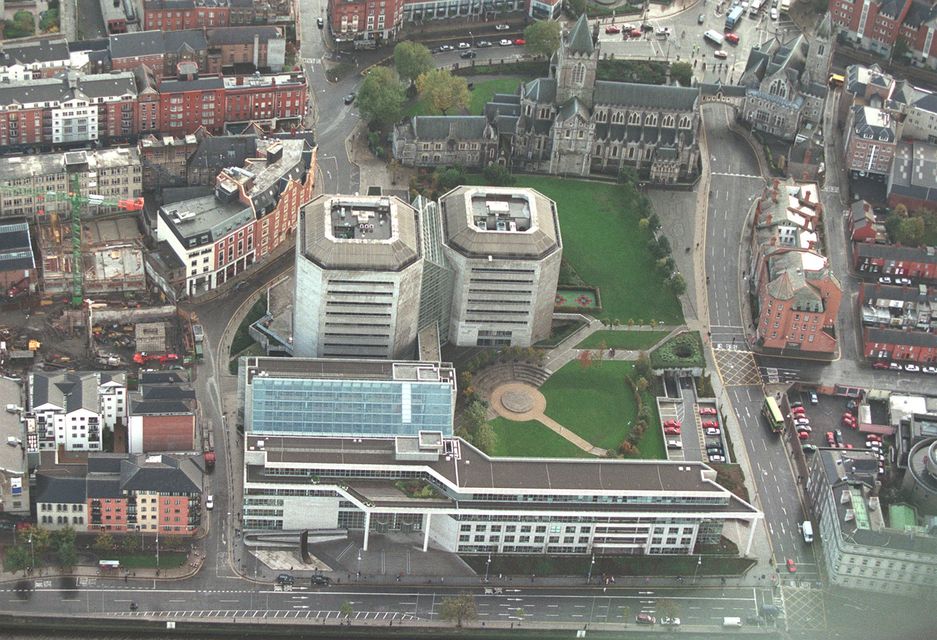
Wood Quay
DCC chief executive Richard Shakespeare signed the contract to acquire the Camden Yard site last month.
He said the move was a way of increasing the efficiency of DCC’s offices while providing extensive additional housing.
The council estimates that the site, which has been partially built but was abandoned several years ago, will cost €581m to develop.
Up to 14 storeys high, the six-block scheme will have spaces for up to 4,000 staff; 2,800 of the spaces will be reserved for the council, with the remainder to be sublet. There will be around 300 apartments.
DCC hopes to secure ministerial approval to tender for developers for the site by the end of the year, with two years of construction to follow.
The Wood Quay offices attracted significant controversy when they were being built, as an archaeologically significant Viking settlement was discovered at the site.
Despite a public campaign against building there, the council did not relent and the offices were completed in 1994.
Funded by the Local Democracy Reporting Scheme