The Arctic is changing, which is why the EU has drawn up a new strategy focusing on stronger security, robust infrastructure and economic opportunities. One of the goals is to bring Greenland closer to the EU, says Denmark’s EU Commissioner.
European Commission has today presented a new strategy for the Arctic.
The strategy presents a new framework for political cooperation between like-minded partners with people, security, climate and prosperity as central focal points.
It has four priorities: strengthening security and resilience, dealing with climate change in the Arctic, prosperity and opportunities for people and communities in the Arctic.
– The Arctic is Europe’s northern neighborhood – close by, closely connected to us and crucial for our future. And the area is changing. New shipping routes and resources create increased strategic competition.
– With our new strategy, we are investing in stronger security, robust infrastructure and economic opportunities. For the benefit of the people who have their homes in the Arctic and for our common area, says the President of the European Commission, Ursula von der Leyen.
Arctic security is European security
More than half a million EU citizens live in the Arctic. The Kingdom of Denmark, Finland and Sweden are Arctic EU member states, and the EU has close relations with Norway, Iceland, Great Britain, Canada and the United States. Therefore, developments in the Arctic have a direct impact on Europe’s security, climate and prosperity.
Kaja Kallas, the EU’s High Representative for Foreign Affairs and Security Policy and Vice-President of the European Commission, states that Arctic security is European security.
As Russia and China increase their presence and ambitions, the Arctic has become a frontline in the global superpower competition. Our revised strategy reflects this new reality and places safety at the center, she says.
The Arctic is changing rapidly. The area is warming almost four times faster than the global average, affecting ecosystems and changing the living conditions of the population and local communities.
The new strategy aims to promote a stable and future-proof Arctic in close cooperation with Arctic partners and local communities, including indigenous peoples, and for their benefit.
Dan Jørgensen: Arctic strategy must tie Greenland closer to the EU
One of the goals of the strategy is for Greenland to move closer to the EU. This is according to Denmark’s EU Commissioner for Energy and Housing, Dan Jørgensen.
– There is no doubt that this Arctic strategy shows that we are linking the EU and Greenland closer to each other for mutual benefit and mutual respect, says Dan Jørgensen to Ritzau.
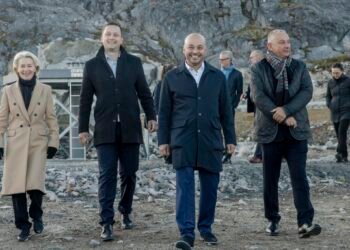
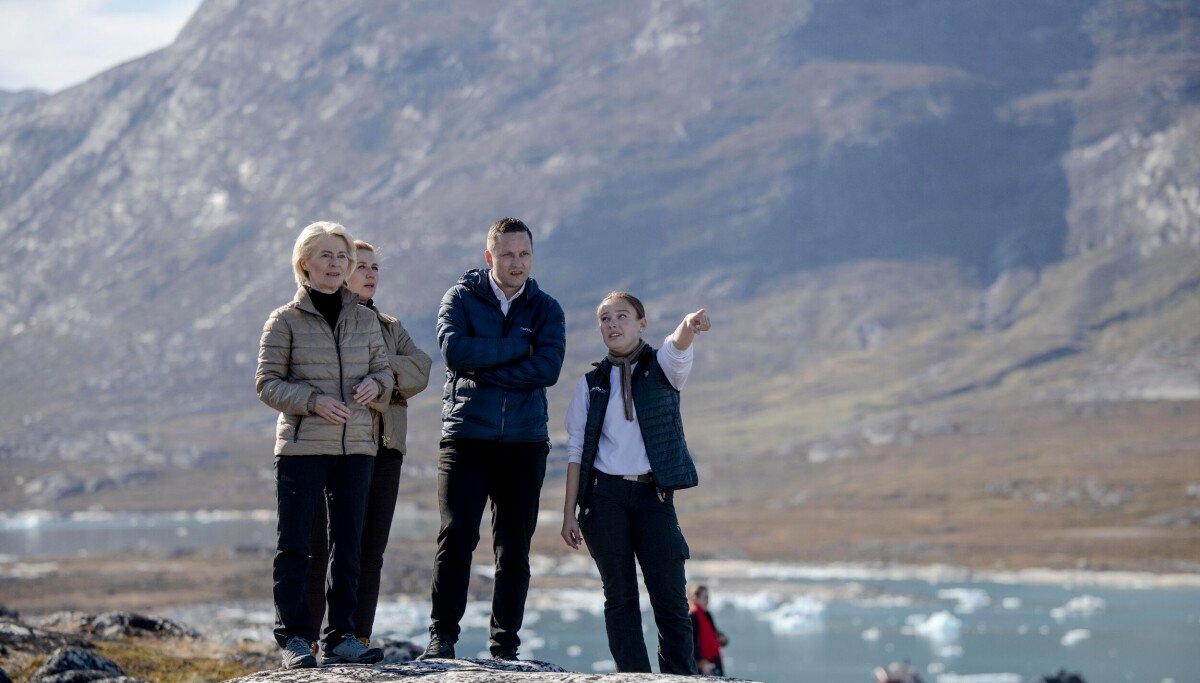
In September, the chair of the EU Commission, Ursula von der Leyen and the chair of Naalakkersuisut, Jens-Frederik Nielsen, and the Danish Prime Minister, Mette Frederiksen, signed a joint declaration on strengthened cooperation, which was supported by an EU investment of DKK 1.5 billion in, among other things, digital infrastructure in Greenland.
– It shows that we mean it seriously. We will collaborate on digitization and green energy and, on the whole, are of the clear opinion that in the future it is both in the EU’s interest, but also in Greenland’s interest, that we become closer to each other, says Dan Jørgensen.
The new strategy recognizes Greenland’s right to independence.
– From the EU’s side, we are concerned that we form close ties, but the issue of independence is decided by Denmark and Greenland.
– It is not something that we on the EU’s side interfere in. And the money does not come with conditions that bind Greenland in the future, says Dan Jørgensen.
The EU Commission’s strategy also recognizes the recent agreement between Greenland, Denmark and the USA, which, according to the EU Commission, “strengthens common security in the Arctic”.