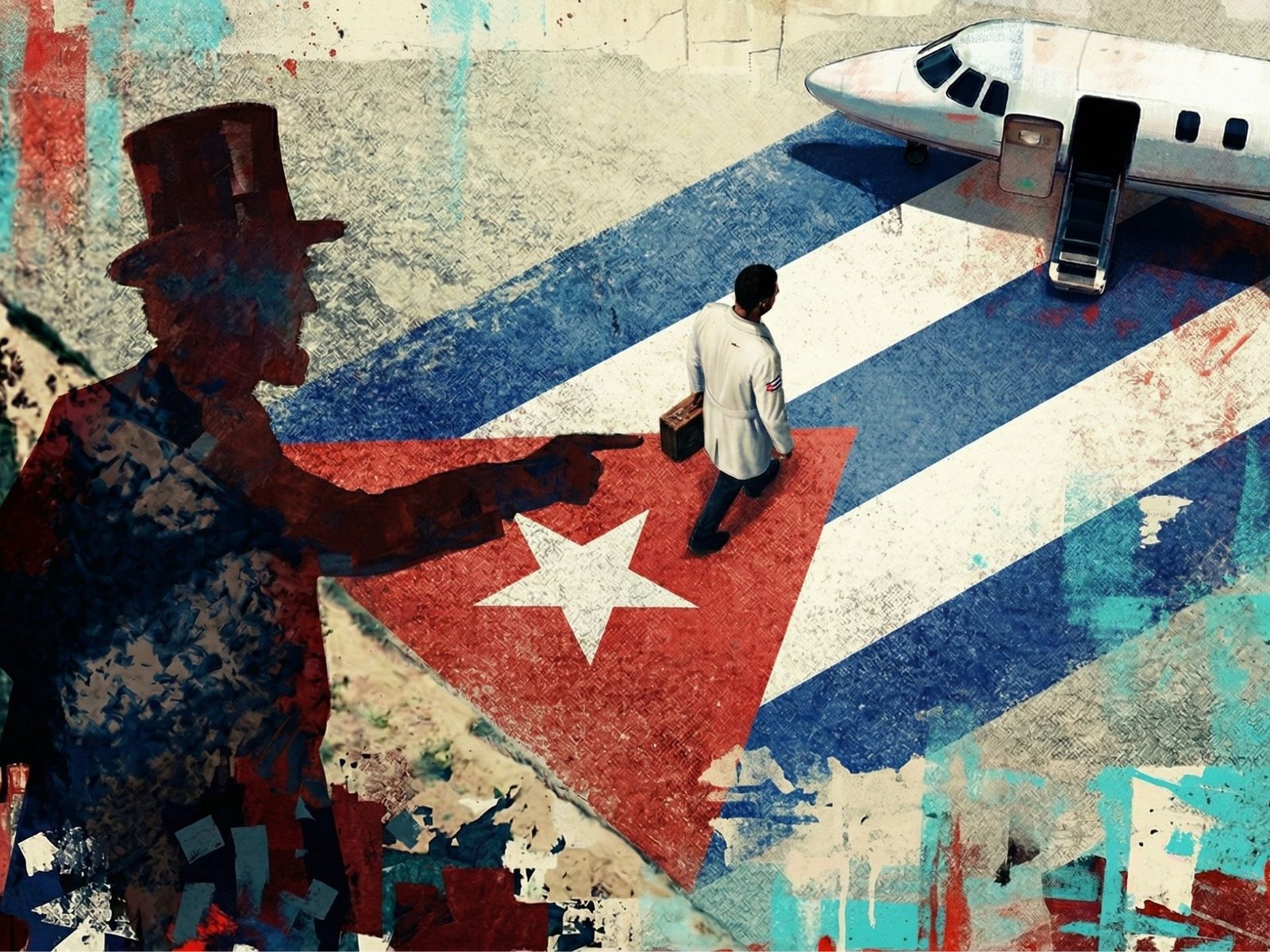
The map of Cuban medical cooperation in Central America and the Caribbean is rapidly blurring. What for decades was considered the “crown jewel” of Cuban diplomacy, faces an accelerated withdrawal marked by pressure from the United States, complaints of labor exploitation, forced labor and “modern slavery.”
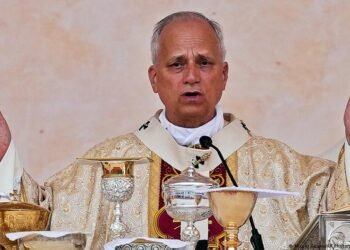
The Secretary of State of the United States, Marco Rubio, has been the architect of the North American offensive. During his tours of the region in 2025 and early 2026, he accused the Cuban regime of enriching itself with this program, which he describes as “exploitation and forced labor“, and advertisement the suspension of visas for several Central American officials linked to the island’s medical services export program.
“What is happening is that doctors are not paid, in many parts of the world, the Cuban Government is paid and the Government decides when it decides to give them anything, they take away their passports, basically they function as forced labor,” Rubio said.
In defense of the Cuban program, the island’s foreign minister, Bruno Rodríguez, denounced on March 24, 2026 that the United States exercises a intense “pressure” and “blackmail” mechanisms” on the countries of Latin America and the Caribbean “to ensure that the Cuban Medical Brigades leave all the countries in the region where they are located.”
Rodríguez assured that the main people affected by the withdrawal of Cuban doctors are the most vulnerable sectors of the region that for decades received assistance from the island’s health workers. He admitted that the US objective is also to “continue cutting off sources of income from our economy,” although he remained silent on the allegations of exploitation and forced labor.
The international Cuban assistance mission began in 1963 with a delegation of 50 health workers in Algeria, due to the departure of French doctors after Algerian independence. Since then, more than 600,000 Cuban professionals have provided services in 165 nations, according to official data.
The withdrawal from Central America and the Caribbean
The latest withdrawal of Cuban doctors from Central America began in January 2026, following the inauguration of Honduran President Nasry Asfura, a right-wing politician whom US President Donald Trump supported during the 2025 election campaign. Asfura announced the opening of an investigation into alleged irregularities in the Cuban medical cooperation program, such as the inclusion of people who were not health workers.
Then, in February 2026, the medical cooperation program between Cuba and Honduras ended. The last brigade 172 doctors in that Central American country returned to the islandafter more than thirty years of cooperation.
Guatemala took a similar path. On February 10, the Government of Bernardo Arévalo announced that it would gradually end its collaboration with Cuban doctors. Thus, the 412 Cuban doctors who remain in Guatemalan territory will have left the country by December 2026.
The Guatemalan authorities did not make any negative accusations against the Cuban doctors, as they did in Honduras, but they justified the measure by arguing a strengthening of the national medical personnel and reinforcement of the public health system.
Jamaica also announced the suspension of the program with Cuba at the beginning of March 2026. The Caribbean country noted that it was not possible to agree on working conditions that met local standards for individual hiring, while the Cuban Ministry of Foreign Affairs responded that the decision was “unilateral” and the product of pressure from the United States.
Also, Bahamas and Antigua and Barbuda dispensed with the services of Cuban doctors at the end of 2025. While Grenada and Dominica have announced alleged changes in the hiring system for doctors.
Other Central American countries that hosted Cuban medical brigades, but that have already cut their agreements with the island are El Salvador and Panama. In El Salvador, the collaboration was canceled in 2019, after the Board of Surveillance of the Medical Profession (JVPM) warned of alleged irregularities in access to the professional practice of doctors.
In Panama, Cuba’s statistical yearbooks record that there was medical collaboration until 2009. In addition, in 2020, a Cuban medical brigade traveled to that country to address the Covid-19 pandemic and eight months later it withdrew.
Cubans left Nicaragua in 2018
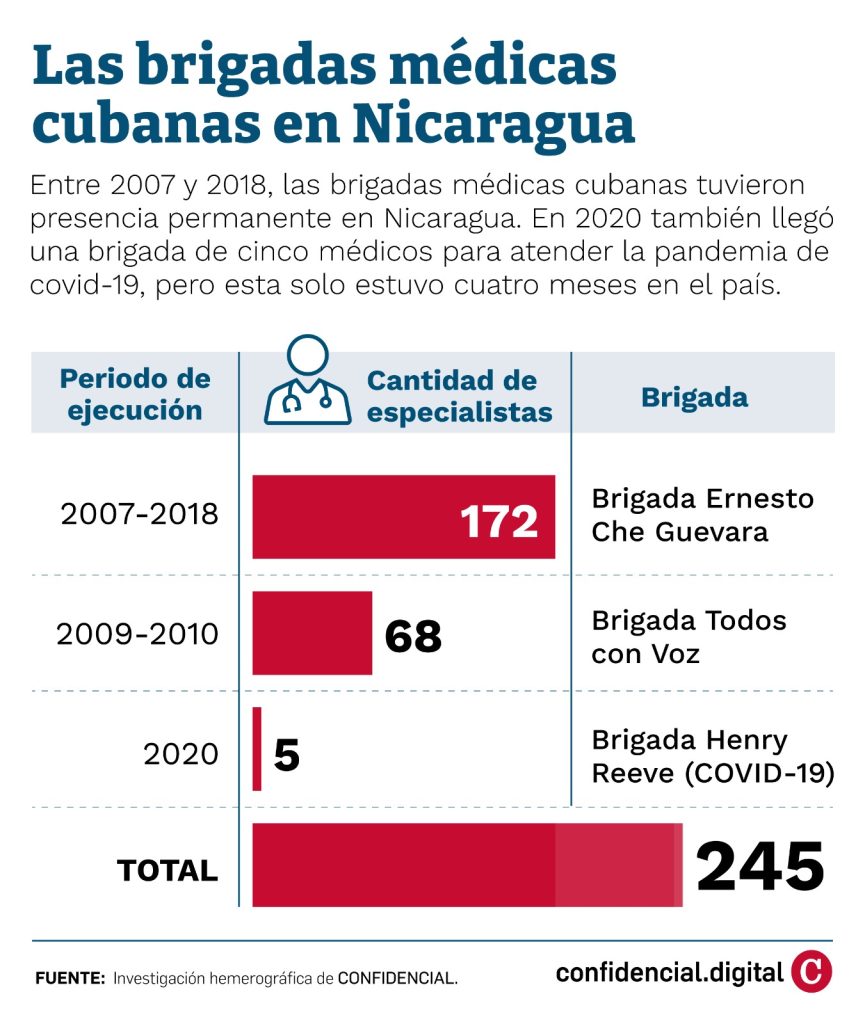
Contrary to the countries of northern Central America, Nicaragua – which boasts of being an ally of Cuba in the region – has not had Cuban medical brigades in its territory since 2018. Since 2007, the island has sent approximately 245 doctors to the country and contributed to the training of around 1,700 Nicaraguan doctors through the Latin American School of Medicine (ELAM).
The last medical brigade in the country, called Ernesto Che Guevarawas made up of 172 Cuban doctors, 43 of them assigned to the Operation Miracle program. The group maintained a permanent presence in Nicaragua between 2007 and 2018. During that time, it provided medical assistance, general and eye surgeries, and advice to the Ministry of Health (Minsa).
Also, between 2009 and 2010, there was another brigade of 68 doctors called Everyone with Voice. This arrived in the country to carry out a diagnosis of people with disabilities and provide specialized care to this vulnerable population.
After leaving in 2018, there was a short-lived return in 2020, when the Henry Reeve brigade, made up of five Cuban specialists, arrived in the country to advise the Minsa during the covid-19 pandemic. But the latter only spent four months in Nicaragua and then returned to the island.
The Cuban medical missions withdrew from Nicaragua in silence. There were no official announcements or diplomatic slamming of doors. They just left. According to medical sources, the withdrawal occurred for “mutual convenience,” but neither regime gave details.
However, although there is no longer Cuban brigades active in Nicaragua, the “Operation Miracle” and “Everyone with a Voice” programs, initiated with Cuban support, continue to be carried out with Nicaraguan personnel. The situation contributes to the persistence in the social imagination of the idea that there are still Cuban doctors in Nicaragua, although there are none.
According to the Minsa, through Operation Miracle 364,566 ophthalmological surgeries were performed between 2007 and 2025. Meanwhile, Everyone with Voice It provided 7.3 million services to people with disabilities between 2009 and 2023.
A system of “modern slavery”
Data of the Health Statistical Yearbook 2024from Cuba, indicate that until that year the international medical brigades were made up of 23,000 doctors, nurses and technicians, distributed in 56 countries.
The organization Prisoners Defendersbased in Madrid, has gathered more than 1,400 testimonies from doctors who point out irregularities, including mistreatment, excessive workload and ridiculous salaries. The testimonials have led United Nations rapporteurs to denounce the system of exporting Cuban services.
The Special Rapporteur on contemporary forms of slaverythe Inter-American Commission on Human Rights (IACHR) and the European Parliament They have considered Cuban medical missions as a form of “modern slavery.” As proof, they cite Resolution 168 – 2010 of the Ministry of Foreign Trade and Foreign Investment of Cuba, which imposes duties and obligations on employees abroad that “violate human dignity and the most basic and fundamental human rights.”
In addition, the Cuban Penal Code punishes all officials who do not complete their missions or who decide not to return to Cuba with eight years in prison.
Likewise, Human Rights Watch has indicated that this system constitutes human trafficking in the form of forced labor, because doctors have their passports confiscated upon arriving in the destination country, they cannot socialize freely or leave the mission without facing criminal punishment in Cuba and the Cuban State keeps most of the salary, which violates international conventions of the International Labor Organization (ILO).
The report “Cuban medical missions: how many, where and why?published by DW in 2020, indicates that a specialist doctor in Cuba earns an estimated monthly salary of 1,850 Cuban pesos, while a first-degree doctor 1,740 pesos, a specialist nurse 1,220, and a senior nurse 1,030 (at the official exchange rate, these salaries are equivalent to between 70 and 40 dollars).
However, the salary of a Cuban doctor on a “mission” varies depending on the country where he is located, but they only receive between 20% and 30% of that total. The rest is collected by the Cuban State, which assures that it is used to finance the health system on the island.
The IACHR complaint: “Violation of labor rights”
The IACHR denounced the “violations” of the “labor, union, and human mobility rights” of the professionals who make up Cuba’s medical missions abroad, in its report. “Labor rights of health personnel in medical missions from Cuba”published April 7, 2026.
The report was prepared jointly with the Special Rapporteur on Economic, Social, Cultural and Environmental Rights (REDESCA) of the IACHR, and coincides with a pressure campaign by the United States on Cuba, including its medical missions and other sources of foreign currency.
The document includes testimonies from 71 people who served as health professionals on international medical missions. The researchers spoke with them between June 2024 and June 2025 and collected complaints about “differential treatment and working conditions characterized by remuneration levels that could be insufficient.”
The text details that doctors also face the “absence of a contract or ignorance of working conditions, freedom of association; as well as working conditions that do not ensure the dignity of the worker.”
The members of the Cuban missions also report that they have experienced “income withholding practices, long working hours, and the assignment of tasks unrelated to health work.”
However, the IACHR also recognizes the relevance of the work of the Cuban health personnel of these mechanisms “in the provision of essential services for populations in vulnerable situations.”
Medical brigades oxygenate the island’s economy
In the face of criticism, Michael Cabrera, former director of Cuba’s Central Medical Collaboration Unit, has defended the missions as a means to finance the public health of the islandcontribute to family income and the country’s economy.
According to Washington, Havana receive about $4.9 billion a year from sending medical workers abroad. However, the Cuban Government has not published official figures on the income generated by these missions.
Despite this setback in Central America and the Caribbean, Cuban medical brigades maintain a high profile of acceptance in other latitudes. In Italyspecifically the region of Calabria, remains a European exception, with active brigades that are used by the Cuban Government as an example of success and solidarity in the face of criticism of “modern slavery.”
Meanwhile, the Pan American Health Organization (PAHO), which in the past supported the mobilization of Cuban doctors to countries like Brazil, as part of the program More Doctorsmaintains a cautious position, after audits and legal lawsuits in that country.