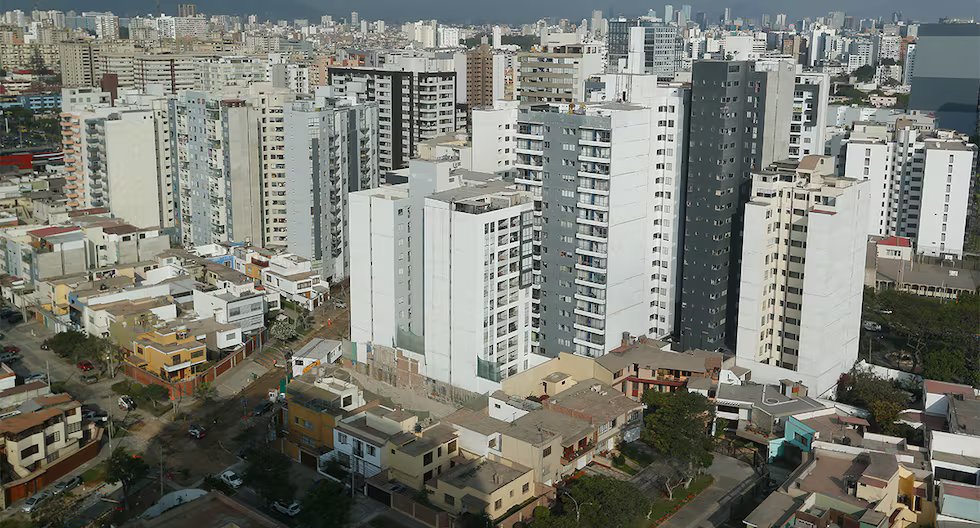

When we talk about the housing deficit in Peru, the first reaction is usually to think that we need to build many more homes. And it’s true. We have a gap of close to 1.9 million homes and formal production that reaches, at most, about 50,000 units per year.
However, before building a home, several things have to happen. There must be urban land with services and a family that, in addition to needing the property, can access financing to acquire it.
A few days ago, Nexo Summit, an event organized by the Confederation of Real Estate Developers of Peru (CODIP), had the wisdom to put several of these problems on the table. More than 200 companies in the sector, authorities and specialists discussed not only how to build more, but what conditions we need to do so on a much larger scale.
One of the themes was financing. As an alternative, it was discussed that the State provide resources to partially guarantee mortgage loans and facilitate their granting to families with difficulties accessing the system.
The Colombian experience, for its part, is interesting, because it shows a housing financing system where, in addition to banks, financial cooperatives, specialized entities and the National Savings Fund participate. For Peru, this opens an interesting discussion about how to expand the channels through which families can access credit.
In this context, it is worth asking ourselves if municipal funds could assume a greater role. Due to the type of clients they already serve and their experience evaluating profiles different from those of the traditional dependent worker, they could be a relevant piece to expand housing financing.
But there is another problem, even prior to financing: the city.
A GRADE study, presented during the meeting, analyzed some 135,000 new buildings between 2017 and 2024 in eight cities. 68% of these constructions appeared outside areas that had water infrastructure.
The mechanics contemplate, first, occupying the territory and, then, trying to bring them services.
According to the study, under this ‘reactive model’ of construction, obtaining water and sanitation can take an average of 12 years. Furthermore, a connection executed later, through public investment, can cost around three times more than under a preventive scheme.
We are spending more to be late.
A piece of land within a city is not necessarily land prepared to produce housing. Water, sanitation, access and urban regulations determine what can be developed, how much it costs and how long it takes.
Therefore, it is interesting to reverse the order. Instead of waiting for the city to appear and then bring infrastructure to it, we must anticipate where it will grow and prepare those areas before they are occupied.
Something similar happens with financing: previously creating the conditions so that more families can responsibly access credit.
The State does not need to become a builder to play a decisive role. It can anticipate infrastructure, plan, establish clear rules and finance guarantee mechanisms. For its part, the private sector can invest, develop and assume the business risk of producing housing.
If we want to close the housing gap, perhaps we have to start well before building homes.
First we have to build a city.
*El Comercio opens its pages to the exchange of ideas and reflections. In this plural framework, the Diario does not necessarily agree with the opinions of the columnists who sign them, although it always respects them.