
The Constitution Commission of the Chamber of Deputies resumed this Thursday – at 4:10 p.m. – the debate on the request for legislative powers of the Government, after the presentation of a “consensus” substitute text that proposes granting the request, but for 90 days and only in two matters: citizen security and the El Niño phenomenon.
At the beginning of the session, the prediction of the president of the commission was rejected What do you recommend? Send the entire Executive request to the file. The text obtained 5 votes in favor and 15 against.
Roxana Rocha, from Renovación Popular, calls on Fuerza Popular and Together for Peru to approve the new text.
Romina Uribe, from the Good Government Party, emphasizes the text and the consensus formed by Renovación Popular, Ahora Nación, Obras and their bench. “Now that is in the hands of two political forces, specifically Fuerza Popular and JP. Put the country first beyond a narrative of obstructionism or not,” he exclaimed.
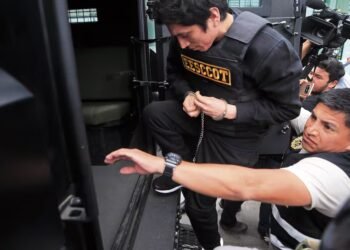
Heber López, from Obras, says that the DINI (National Intelligence Directorate) already exists and that it is not necessary to enter a prison with “tanks”, but rather to act with intelligence in a consistent manner to confront crime.
Deputy Arturo Alegría (Fuerza Popular) considered the scope of the new text “insufficient.” He pointed out that the request for powers proposed granting the DINI intelligence mechanisms, budget and other resources to carry out its work. However, he states that those criteria were withdrawn.
He indicated that it was also eliminated that the Armed Forces could take temporary control of penitentiary centers “that are infested with internal corruption.”
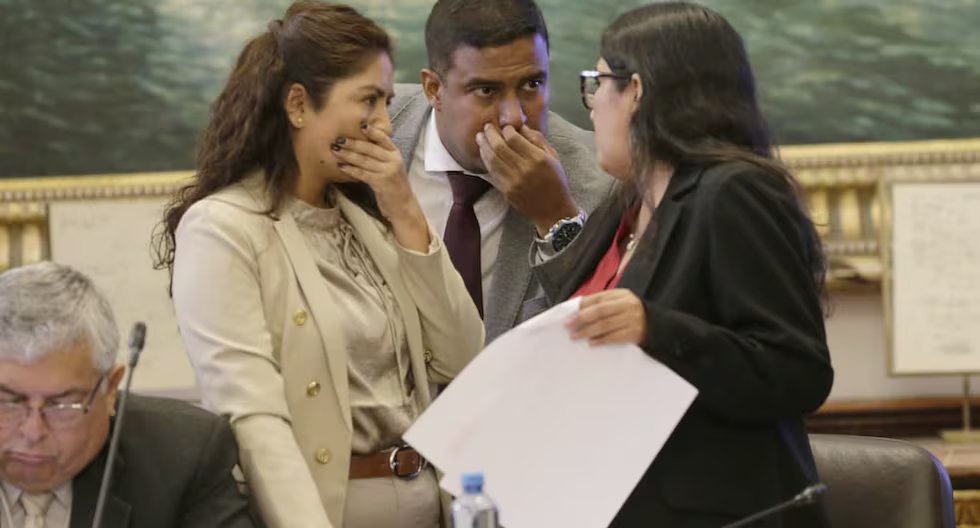
At 2:45 p.m., the president of the Constitution Commission, Gianinna Avendaño (Together for Peru)suspended the debate for “30 minutes.” This after claims from Fuerza Popular and requests from other parties to give them time to read the replacement text.
Less than an hour before the session began, at 2 pm, some members of the Constitution Commission had physically received the new replacement text.
Avendaño tried to immediately put the proposal to a vote, but without analysis or prior debate. This generated questions from the Fuerza Popular deputies because, as they indicated, they did not know the text they were going to vote on. Additional time was also requested from other benches, such as Renovación Popular and Partido del Buen Gobierno.
Wednesday’s session went into an intermission (pause for further analysis) after the presentation of three substitute texts: Popular Renewal to approve the delegation of powers in 10 subjects; Works with five subjects; and the Good Government Party in two matters.
“We have diverse proposals and we must reach an agreement. We are going to go to an intermediate room to see what formula to adopt,” explained Gianinna Avendaño, president of the working group.
The debate on the negative opinion takes place a month after the government of Keiko Fujimori will request special powers to legislate, for a period of 120 calendar days on 66 points. Precisely Fuerza Popular has harshly criticized the proposal to reject the entire request and it was announced that a minority opinion will be prepared.
Meanwhile, from the Executive, the Prime Minister, Luis Galarreta, asked the deputies to “reconsider” and the allies to “fight the political battle” to move forward with the issue.
The Fujimori administration seeks to legislate on issues related to criminal matters, criminal procedure, criminal execution, police, citizen security, internal order, penitentiary and immigration; as well as in micro and small businesses; labor and employment promotion; administrative simplification, elimination of bureaucratic barriers, regulatory quality and digital transformation.
The order also includes matters related to productive development, innovation, agriculture and irrigation, water resources, hydraulic infrastructure, fishing, aquaculture, mining, tourism, hydrocarbons, electricity, environmental issues, natural resources and industrial productive infrastructure.
Likewise, it includes tax, customs, trade facilitation and implementation of trade agreements; structural reform, organization, modernization of the State and civil service; in addition to housing and sanitation.
As reported, the prediction indicates that although requests for the delegation of powers made by governments have been repeated in the last 25 years, “it does not necessarily mean that their results have been favorable for the purposes of constitutional democracy.”
“Nor can it be assumed that the granting of these powers is a right of the Executive or an obligation of the Legislature. The right to propose a delegation initiative is not equivalent to there being an automatic right for the delegation to be granted,” the document indicates.