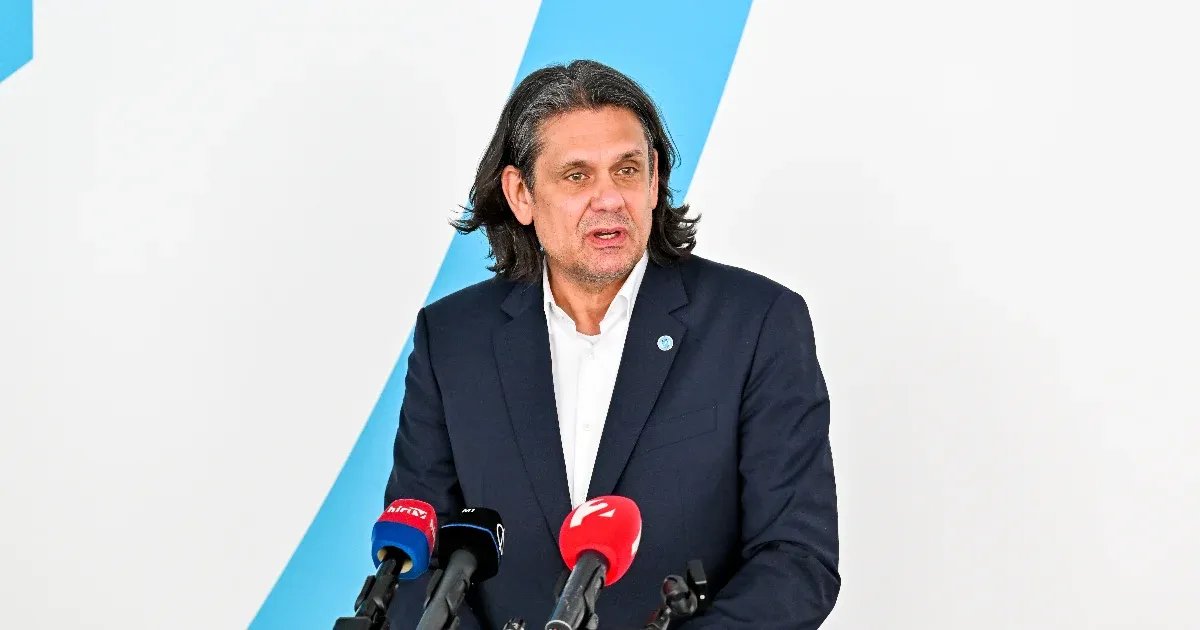
“We are initiating the immediate termination of the Article 7 procedure against Hungary,” announced Tamás Deutsch, a member of the European Parliament of Fidesz on Facebook.
Deutsch said in the video that the EP fraction of Fidesz and KDNP officially initiated “the LIBE Committee of the European Parliament to prepare and present to the plenary session of the EP the resolution proposal in which the European Parliament initiates the immediate termination of the Article 7 procedure against Hungary”.
The “Article 7 procedure” is a procedure initiated on the basis of Article 7 of one of the basic EU treaties on the observance of EU basic values. This procedure concerns the suspension of certain rights arising from EU membership.
This was also previously initiated in the case of Poland, but this was finally withdrawn by the European Commission when it saw that it had become redundant after measures such as Poland’s accession to the EU prosecutor’s office. Currently, a seven-article procedure is currently underway only against Hungary, which has been in effect since its launch in 2018 neither forward nor backward did not progress. This was not initiated by the European Commission, but by the European Parliament, so based on the only example so far, the representative body could also abolish it.
The current EP responsible (rapporteur) of the case, Tineke Strik, who stated at the press conference held after the Hungarian parliamentary election, “the procedure was not initiated against Orbán, but because of the shortcomings of the system in the EP”.
Strik also hinted that the change of government and promises alone (such as Tisza’s promise that Hungary will join the EU prosecutor’s office) will not be enough, and he called the restoration of the rule of law an amazing amount of work. He emphasized that the seven-article procedure is broader than the others, for example, he also mentioned the distortions of the electoral system following the Venice Commission. The second Orbán government also consulted with this advisory board on the basic law.
Led by Strik last November a report on the proceedings has been compiled and this may provide clues as to the board’s terms of reference. Among other things, the adopted text of the EP accused the Orbán government of not adequately protecting the rights of citizens, threatening the freedom of academic life, and systematically weakening the National Judicial Council. He saw further problems with politically motivated business practices, the constitutional ban on Pride, and the handing out of government advertising to pro-government media outlets. He noted investigation by the European Commission also in the case of alleged Hungarian espionage against EU institutions.
According to the plans, the EU governments will next listen to the Hungarian in this procedure in June.
On what steps the newly formed Hungarian government must take to bring EU funds home, and what is the seven-article procedure that is treated separately from them and does not directly affect the funds, we wrote more in this article.
In his Wednesday login, Tamás Deutsch said it was clear that the seven-article procedure “was used solely for the purpose of exerting political pressure on Hungary, and there was never any real rule of law problem”, the procedure was “solely a political punitive action”.