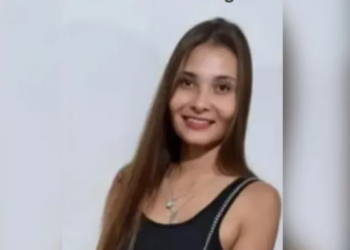
The judicial investigation for the death of the anesthesiologist Alejandro Zalazar keep it up with new details about what happened the day he was found dead in his apartment in the Buenos Aires neighborhood of Palermo. According to what Justice was able to reconstruct from testimonies incorporated into the file, Delfina “Fini” Lanusse and Chantal “Tati” Leclercq were present at the scene when the body was found.along with family members and other people close to the Mendoza doctor.
Zalazar He was found dead on February 20 in his home at 4622 Juncal Street. According to judicial sources, they entered the department together his sister and brother-in-law, as well as Lanusse, Leclercq, a partner and one more friend.
“As she didn’t go to work, her co-workers and friends started calling each other. Then they contacted Zalazar’s sister, who lives in Escobar and was the one who had a copy of the key to the apartment. When she arrived with her partner, they were waiting for her in the hall. Leclercq, Lanusse, another couple and one more girl. “They all entered the apartment,” explained to THE NATION one of the investigators of the case in charge of the prosecutor Eduardo Cubría and judge Santiago Bignone.
Upon noticing that the doctor was unconscious, those who were at the scene attempted resuscitation maneuvers. However, when they found that he no longer had vital signs, they only then notified the police.
That initial stretch of The sequence is now the subject of analysis by researchers, who are looking for accurately reconstruct what happened inside the apartment before the arrival of police officers. The case, which is being processed as an investigation of doubtful death, is within a different file than the one investigating the theft and alleged recreational consumption of anesthetic drugs for in-hospital use.
In that context, two days ago, Justice ordered raids on two homes linked to Leclercq, one in the city of Buenos Aires and another in the private neighborhood of Santa Bárbara, in Tigre. In this last procedure, the first known images of one of the operations were recorded, released by journalist Mauro Zseta.
During those raids, investigators seized electronic devices, including a cell phone and a tabletwhich were made available to the Court for analysis. The proceedings, as explained by judicial sources, do not in themselves imply criminal accusations, but are part of a set of measures aimed at collecting evidence and reconstructing personal and communication contexts linked to the case.
According to sources with access to the file, Leclercq is not charged in the case of Zalazar’s death or in the parallel investigation into the theft of anesthetics.. His name appears mentioned in the process based on testimonial statements and extensions of the complaint presented by professional entities, which revealed personal links between some of the protagonists of both files.

One of the points that focuses the attention of the investigators is Zalazar’s cell phone, present at the scene at the time the body was found. According to a testimonial statement incorporated into the case, one of the people who was in the apartment claimed to have seen Leclercq manipulate the device in the middle of the scene. The Justice Department clarified to LA NACION that at the moment there are no elements that allow it to be argued that the phone has been adulterated. or that information has been deleted, and that this situation is part of the lines that are still being analyzed.
In this framework, expertise on the devices advances unevenly. Zalazar’s cell phone began to be examined after his family provided the access code, which allowed specialists to begin the survey of messages, records and other contents. This is a significant volume of information, so the analysis will take several days and the preliminary report would not be known before next week.

The situation with Leclercq’s phone is different. As confirmed judicial sourcesthat device could not yet be assessed because the key was not delivered, which for now prevents access to its content. The Prosecutor’s Office indicated that the situation does not change the procedural status of the doctor and that it is a common circumstance in investigations of this type.
In parallel, Justice specified which drugs were found in Zalazar’s apartment. Judicial sources indicated that ampoules of propofol and midazolam were found at the scene, both anesthetics for in-hospital use, while no vials of ketamine were found, a substance that had been mentioned in preliminary versions. Toxicological tests continue to be analyzed to determine what substances the doctor would have consumed.
The research also focuses on another central axis: ltraceability of the drugs foundthat is, establishing which institution they came from and under what circumstances they arrived in an area outside of authorized medical use. This aspect is key and may be the link with the parallel case that investigates an alleged circuit of theft and recreational consumption of anesthetics, a file in which Lanusse and Hernán Boveri are already accused, both of them separated from the anesthesiology service of the Italian Hospital.
Although these are different judicial processes, investigators evaluate possible points of contact between both cases, especially based on the personal relationships that emerge from the testimonies and the discovery of medications for hospital use in the home where Zalazar was found.
However, researchers recognize the difficulty involved in determining the traceability of the drugs found in the Zalazar department. As an example, they explained: “The two vials of propofol belong to a batch of more than 100,000 units that were distributed in more than a dozen hospital pharmacies. “It’s like trying to track down where you bought a bottle of soda.”
While the technical expertise advances and the testimonies are analyzed, Justice seeks to precisely reconstruct what happened within the department in the moments prior to the police intervention, a key section to understand the circumstances surrounding the death of the anesthetist.
Furthermore, it remains to be determined whether the last communication that Zalazar had before being found dead was with Leclercq, a fact that will be corroborated by the analysis of his cell phone. “Next week, possibly, we will have the report of what was found on Zalazar’s cell phone,” an investigator told LA NACION.who recalled that the results of the toxicological tests that will allow us to establish whether he died as a result of an overdose are not yet available.