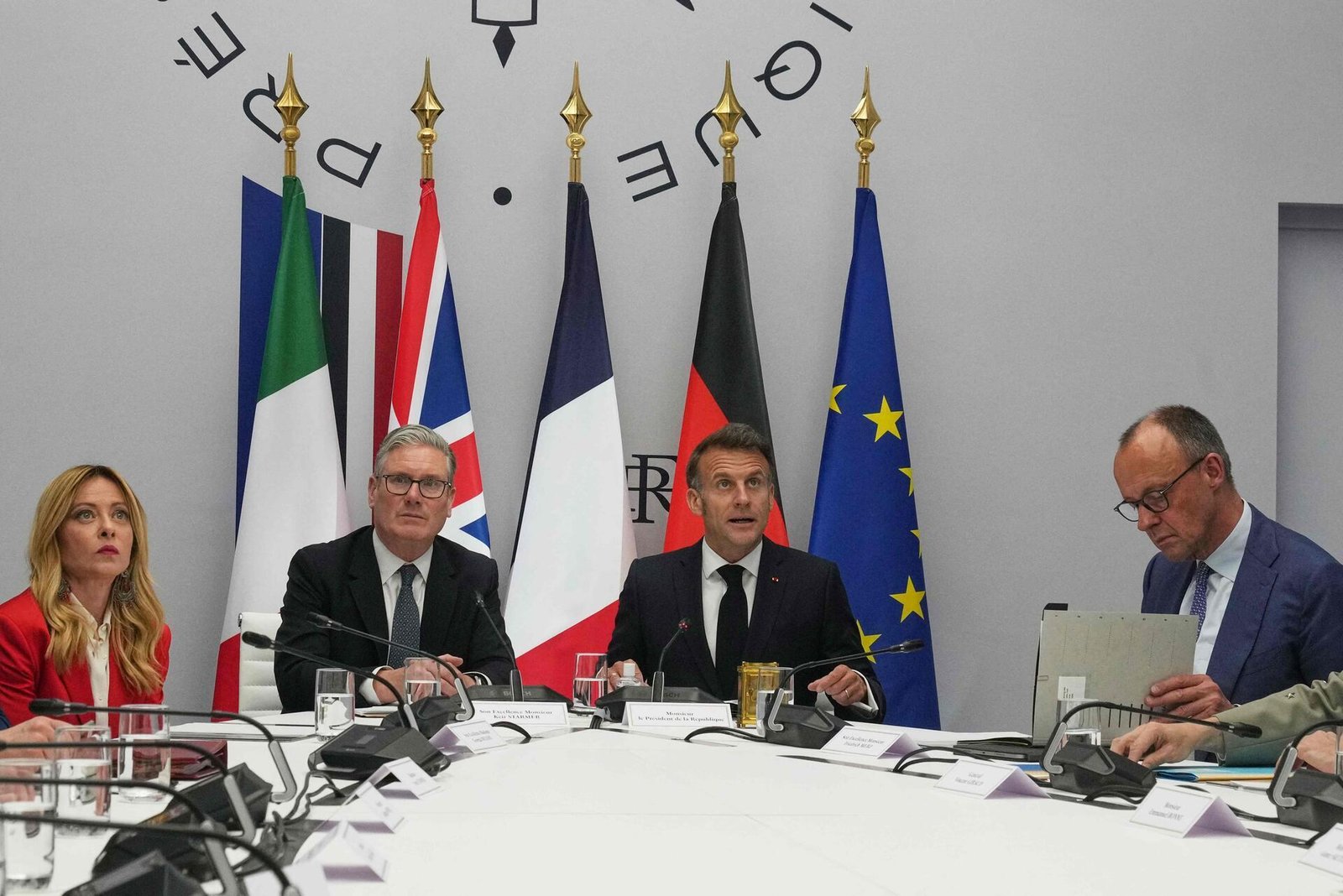
Representatives of 50 states and organizations took part in the conference, including around 30 heads of state and government. Most of them were connected via video. During the conference called by France and Great Britain, Iran declared that the strait, which is important for world trade, should be opened during the current ceasefire.
France and Great Britain expressed their willingness to take over the leadership of the multinational mission. The operation should begin “as soon as circumstances permit,” said British Prime Minister Keir Starmer in Paris. “This will be a strictly peaceful and defensive mission to ensure merchant shipping and support mine clearance,” he stressed.
The German Chancellor Friedrich Merz promised the Bundeswehr’s participation in mine clearance and maritime reconnaissance. Merz welcomed the Iranian announcement and at the same time demanded that the opening must be “reliable” and “permanent”. “This must be designed in complete accordance with international maritime law so that there are no restrictions whatsoever,” added Merz. There should also be no payments for a passage, “in whatever form,” emphasized Merz. He added that US participation in the operation was “desirable”. “This war must not become a transatlantic stress test,” said Merz.
Macron does not want the USA to participate
However, there were different views on the role of the USA. French President Emmanuel Macron strictly rejected US involvement. The mission should be “clearly separated from the warring parties,” he emphasized. But there should be agreements with the USA and Israel, he added.
France says it already has an aircraft carrier, ten warships and 50 aircraft in service in the Mediterranean and the Middle East.
The Strait of Hormuz, which is important for world trade, was recently affected by a double blockade: Since the US-Israeli attacks began at the end of February, Iran has largely blocked the strait by attacking ships, threatening attacks or demanding fees.
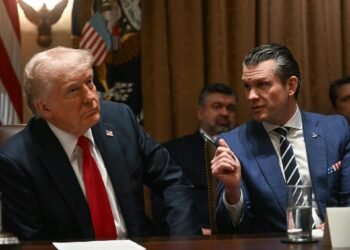
The US military, for its part, has been blocking ships attempting to enter Iranian ports since the beginning of this week. US President Donald Trump imposed this blockade after Iran did not make the expected concessions on its nuclear program. Regardless of Iran’s announced opening of the Strait of Hormuz, it should continue until there is a comprehensive agreement with Iran, Trump said on Friday.
Trump maintains naval blockade
“The passage for all merchant ships through the Strait of Hormuz is completely open for the remaining period of the ceasefire,” said Iranian Foreign Minister Abbas Araghchi on the online service X on Friday. Immediately after Araghchi’s announcement, the price of oil initially fell by a good ten percent. The price for a barrel (159 liters) of North Sea Brent for delivery in June fell by 10.42 percent to 89.11 dollars (75.25 euros) in the afternoon. The US benchmark WTI was even traded for 11.11 percent less and fell to $84.11 per barrel. Shortly before, oil prices had already fallen by five percent due to hopes of an easing of the conflict between the USA and Iran.
“The naval blockade will remain in full force as it relates to Iran until our transaction with Iran is 100 percent complete,” Trump said on his online service Truth Social. The US President was convinced that an agreement with Iran could be reached “very quickly”.
The US President also stated that he had rejected an offer of help with a view to the Strait of Hormuz. “Now that the situation on the Strait of Hormuz is over, I got a call from NATO asking if we need help,” he wrote on his online platform Truth Social. “I told them to stay away,” he added. However, it remained unclear whether he was referring to the planned international mission, which has nothing to do with NATO – and is in no way planned to support the USA. (AFP/ed.)