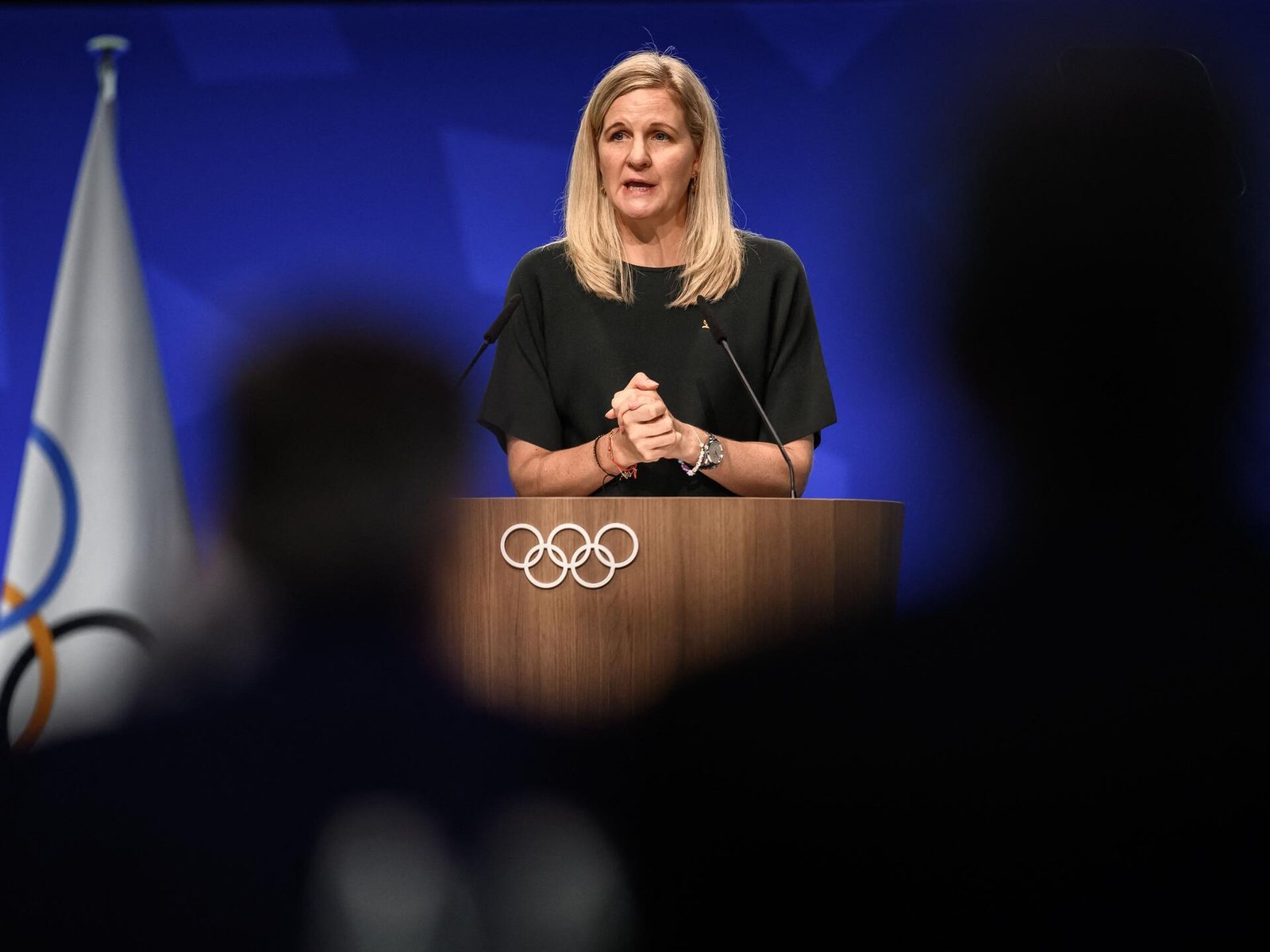
Kirsty Coventry chose big words to announce even bigger actions. “Now it’s our turn,” the president called out to the IOC members with a lot of pathos in her voice, “we have to make sure that the Olympic movement remains relevant.” The reform session at the SwissTech Convention Center in Lausanne even broke with a taboo and decided on an “Olympic bonus”.
For the first time in its 132-year history, the International Olympic Committee shares its income with athletes. There should be $10,000 retroactively for the Winter Games in Milan/Cortina. An unexpected paradigm shift.
Until recently, Coventry had resisted direct payments to athletes and had made many a mistake in the process. The athletes would get “beautiful competition venues, beautiful villages and a nice experience,” said the two-time Olympic swimming champion.
The bonus, which is to be paid out on demand, is well below the proposal of the international advocacy group Global Athlete ($25,000), but IOC members such as Sebastian Coe, President of the World Athletics Federation, celebrated it as a “historic moment”. Canoe slalom Olympic champion Jessica Fox called the decision a “huge milestone.”
It was at least the surprise of a general meeting that had previously been predictable. Another important decision: The awarding of the 2036 Olympic Games will be decided in 2029. Under Coventry’s predecessor Thomas Bach, non-transparent awards caused dissatisfaction.
Reform in the awarding of the Olympics
On the one hand, the reform is intended to make a pre-selection and, on the other hand, to involve all of the IOC members (currently 104) more closely. What is new is an intermediate stage: the “strategic dialogue” is to be switched between “continuous dialogue” and “targeted dialogue”.
Coventry is now looking beyond the upcoming summer editions in Los Angeles (2028) and Brisbane (2032) as well as the winter games in the French Alps (2030) and Salt Lake City (2034). She wants to make the IOC “sustainable”, but to do this the organization has to leave “the comfort zone”. However, Coventry avoided major debates a year after taking office, as well as concrete decisions on the future Olympic program.
After all: A new system should ensure greater permeability after Brisbane; the IOC wants to adapt to the pace at which the world is changing. With the Olympic Award, Coventry is taking a step towards the athletes, whom it always describes as the “heart of the movement”. (SID)