When Giovane Elber was still a football expert on German television, he commented on the topic with his characteristic smugness. Elber was asked what he thought about two brothers playing for different nations at the World Cup and then playing against each other. It’s always good “when a father has several sons,” said the Brazilian on the occasion of the Boateng brothers’ duel at the 2014 World Cup.
This is not always so simple for those affected, as the example of Jérôme and Kevin-Prince Boateng shows. The duel between the half-brothers who grew up in Berlin took place at two world championships. While Kevin-Prince chose his father’s native Ghana, Jérôme acknowledged the roots of his youth – and became world champion in Brazil with the DFB team.
Seven pairs of siblings at the 2026 World Cup
Before the 2010 finals, a rude foul – by Kevin-Prince of all people – ensured that Jérome’s teammate and captain Michael Ballack missed the entire World Cup in South Africa due to injury. Jérôme didn’t really want to defend his brother, who was criticized as a bully. “I don’t want to say anything more about Jérôme. Only this much: There are reasons why we are no longer in contact,” countered Kevin-Prince Boateng at the time – it was an ice age.
There will be seven pairs of brothers at the 2026 XXL World Cup. The Duartes from Cape Verde, the Bacunas from outsiders Curaçao and the Hernandez brothers Theo and Lucas from vice world champion France all play for the same nation. The other four pairs of siblings play – like the Boatengs back then – for different nations. How does this happen?
Barefoot through the Sahara: The Williams parents
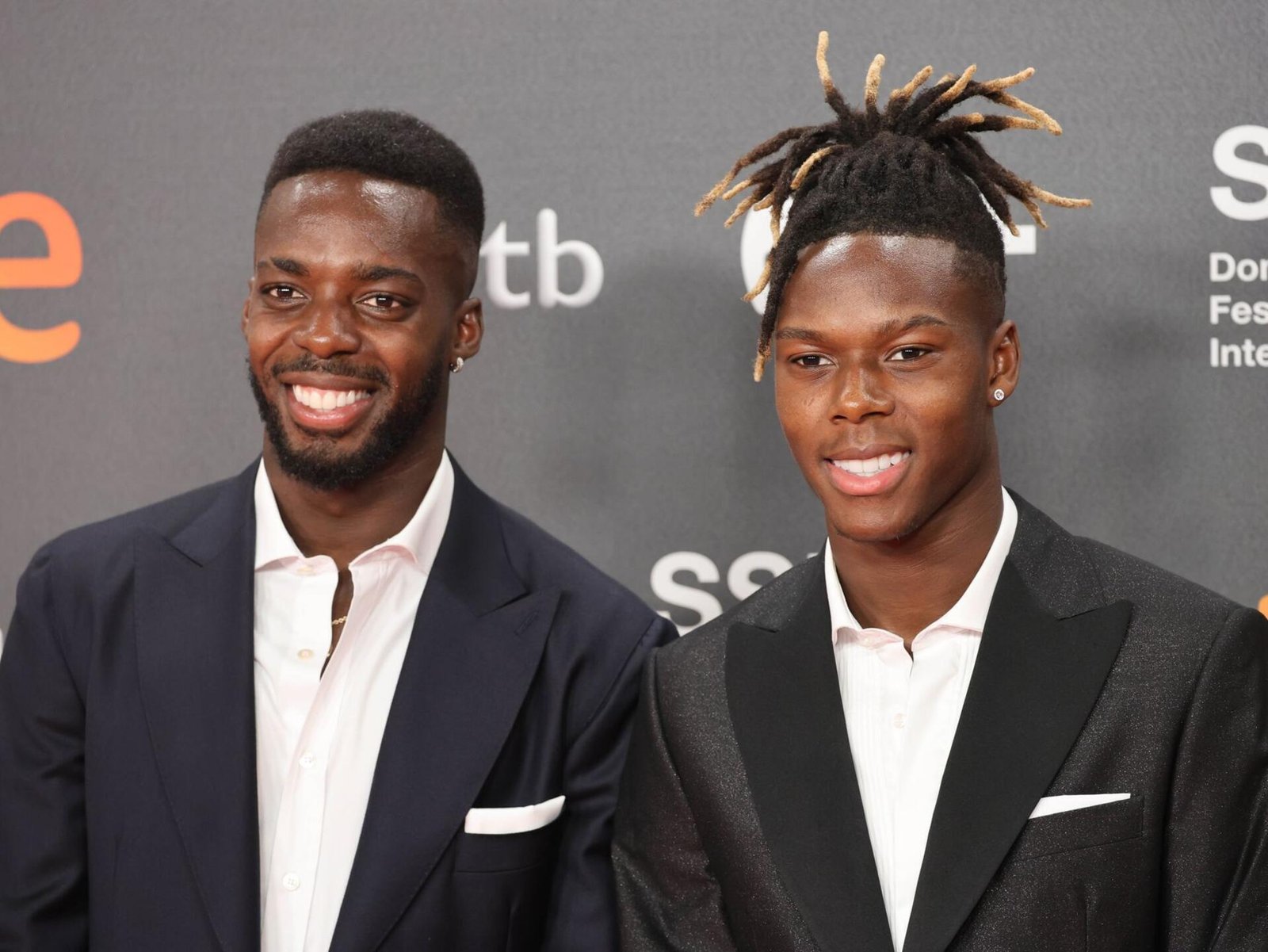
In tennis, the Williams sisters Serena and Venus will still be playing at Wimbledon in 2026. Athletic Bilbao footballers have had the Williams brothers Nico and Inaki for over a decade. The younger Nico (23) even resisted offers from FC Barcelona and Real Madrid; he signed a contract in Bilbao until 2035. For Inaki (32), a change is also out of the question.
While the brothers wear the same jersey in the club, the two Basques chose different paths in the national team. The Ghanaian parents had made their way to Spain when mother Maria was pregnant with Inaki. The couple walked barefoot through the Sahara. Inaki takes its name from a Spanish priest who helped the parents cross the border.
The older brother chose Ghana. Nico, on the other hand, chose Spain and became European champions as a regular player in 2024. “As an older brother, I am incredibly proud to see his development and witness his progress as a footballer. He has limitless potential,” Inaki told the BBC about his brother, who is nine years his junior.
Derrick Luckassen and Brian Brobbey
The case for Derrick Luckassen (Ghana) and Brian Brobbey (Netherlands) is similar to that of the Boateng brothers. Both have the same mother, a Ghanaian, and were born in Amsterdam. Luckassen went through various Dutch youth teams before choosing his parents’ homeland. Brobbey made the jump to the eleven, for which he made it into the 2026 World Cup squad and came on as a substitute in the first game.
Desiré and Guéla Doué
The brothers Desiré and Guéla Doué have an Ivorian father and a French mother. Both grew up in France and took their first steps in professional football at Stade Rennes. At 21, Desiré is not only the younger, but also the significantly more talented of the two brothers. His resume already includes two Champions League titles with Paris Saint-Germain.
As a result, Desiré decided early on for France and made it into the co-favorites’ World Cup squad. Its market value is now estimated at 120 million euros. Brother Guéla (23) moved from Rennes to Racing Strasbourg in 2024 and had previously decided on the Ivory Coast. In contrast to his offensive-oriented brother Desiré, Guéla Doué is a full-back.
The Souttar brothers John and Harry
John and Harry Souttar are the offspring of a Scottish-Australian couple. Father Jack is Scottish and was a professional in the 1970s, while mother Heather was born in Adelaide, Australia. The two footballers grew up and were socialized in football in Scotland, but Harry chose Australia, his mother’s home country, in 2019.
“They talk about games all the time. They’re always looking out for each other, that’s for sure,” father Jack said of his two sons. At the start of the World Cup, John and Harry and their teams won their first games on the same day. While John sat on the bench for 90 minutes in his Scots’ 1-0 win against Haiti, Harry, as captain and head of defense for the Australians, was one of the guarantors of the surprising 2-0 win against Turkey.