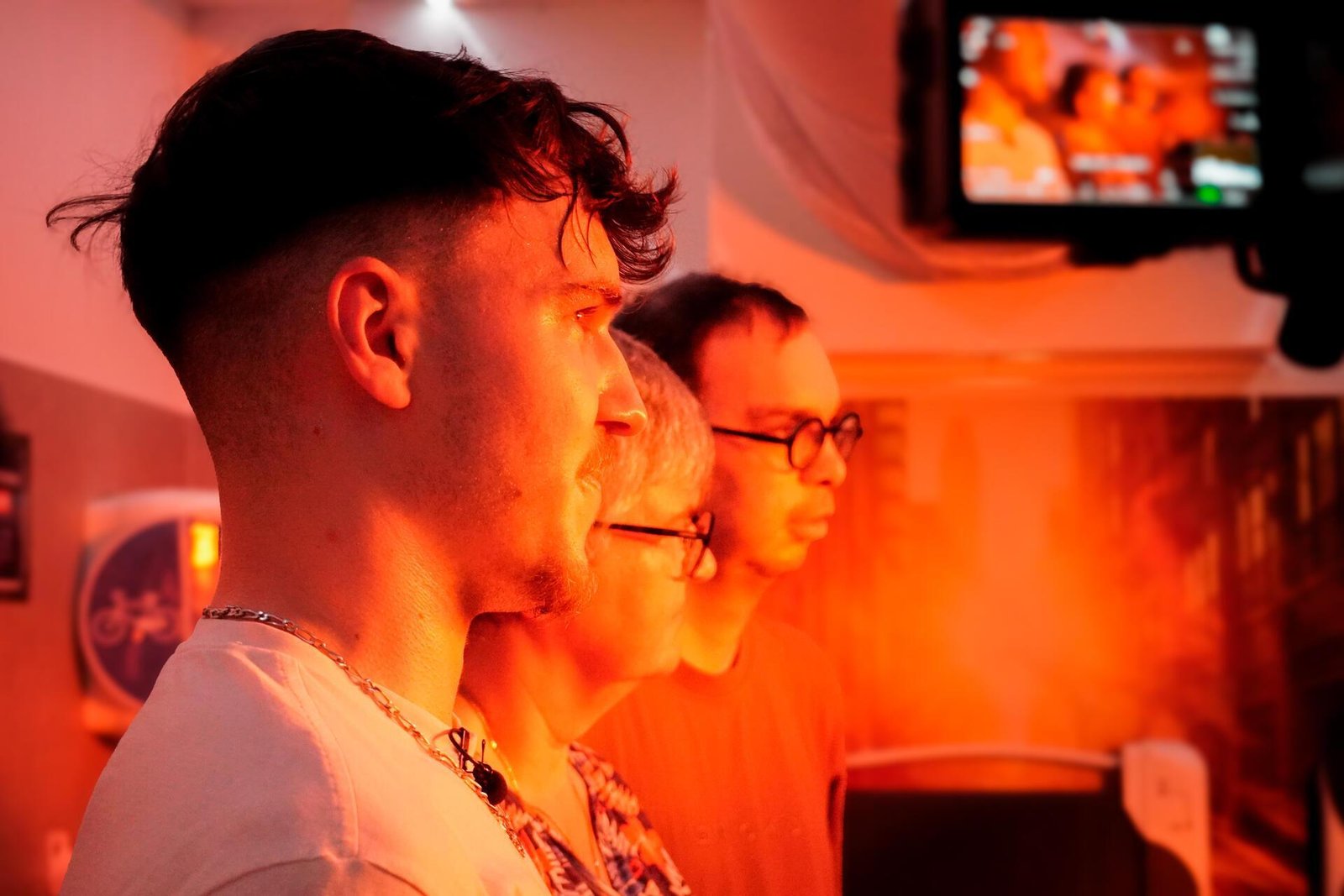
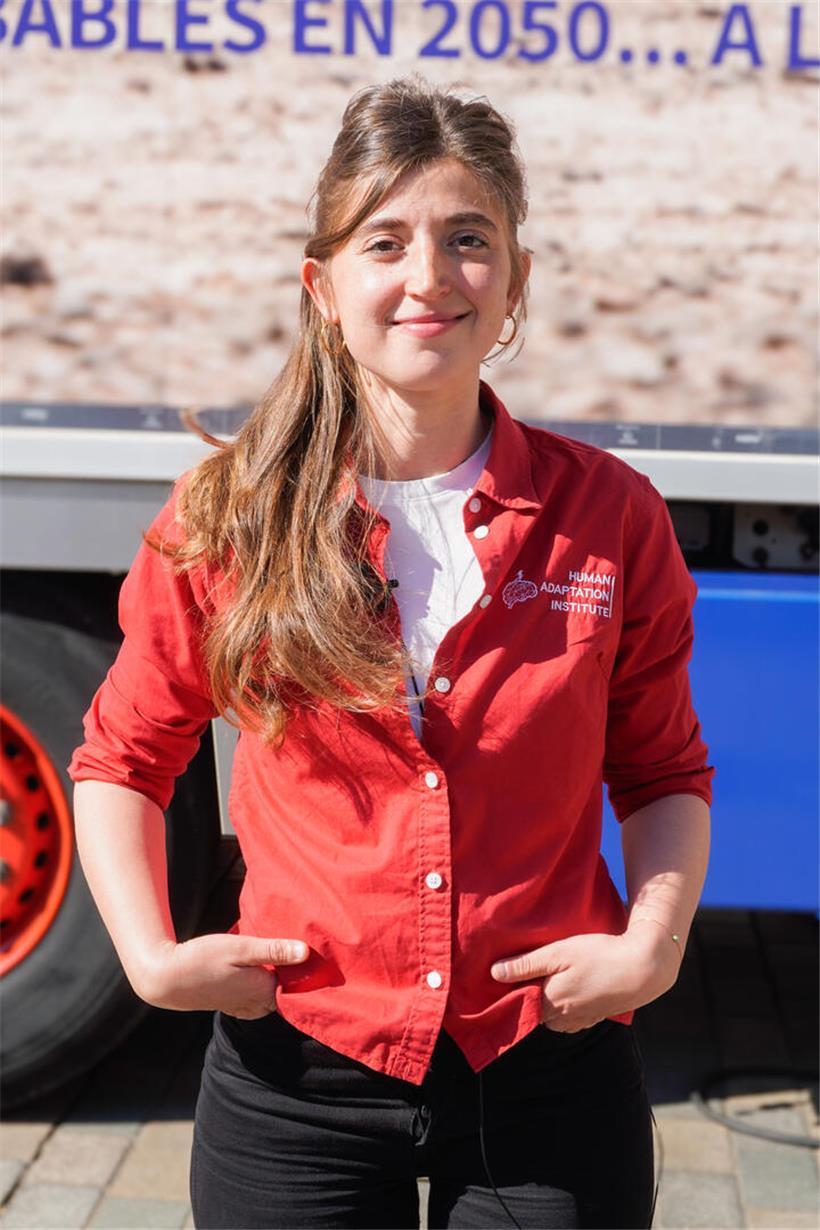
Eva led the participants through the simulation Photo: Editpress/Miguel Moutinho De Sousa
At 8 degrees Celsius and a light wind, I’m standing in front of the town hall in Esch shortly before 9:30 a.m. on Wednesday morning. I deliberately wear shorts. Because: In a few minutes I will be entering a truck that simulates temperatures of 50 degrees.
“The researcher Christian Clot initiated the project,” says employee Eva. The goal is to let people experience climate change in real life instead of just providing information with abstract reports. Because: “The motivation to change behavior always comes after an experience.”
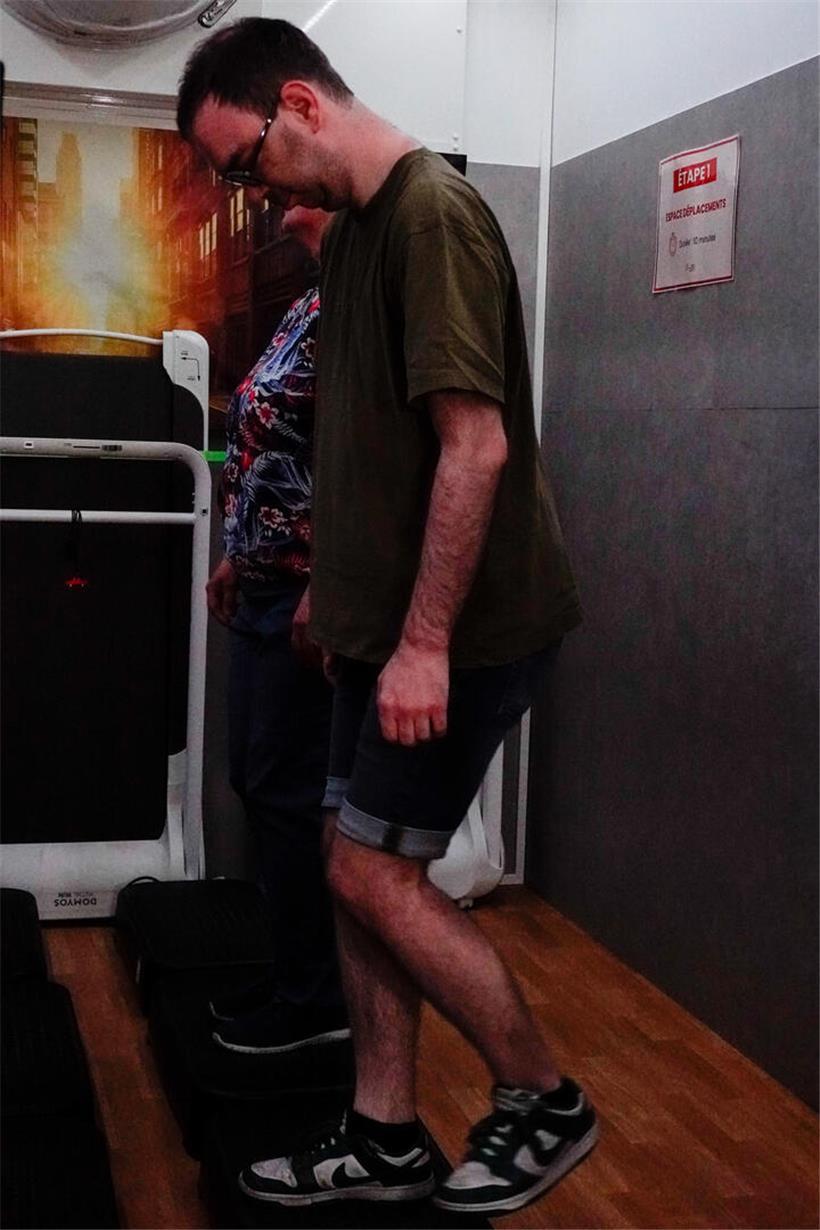
Exercising in 50 degrees is strenuous Photo: Editpress/Miguel Moutinho De Sousa
Climbing stairs at 50 degrees
My body temperature is 37.8 degrees, which is normal. Then we go into the truck. Once inside I feel as if I have just entered a sauna. In front of me are steppers who are supposed to simulate walking to the 17th floor – ten minutes without a break. Surprisingly, the task doesn’t feel as strenuous as expected. Probably because I’m still at the beginning of the simulation.
The temperature in the sun is then simulated using a type of hot radiator. I stand in front of it for a minute at most. The hottest point is around 60 degrees, explains Eva. “Crazy,” I think, and I’m happy when the device is switched off again.
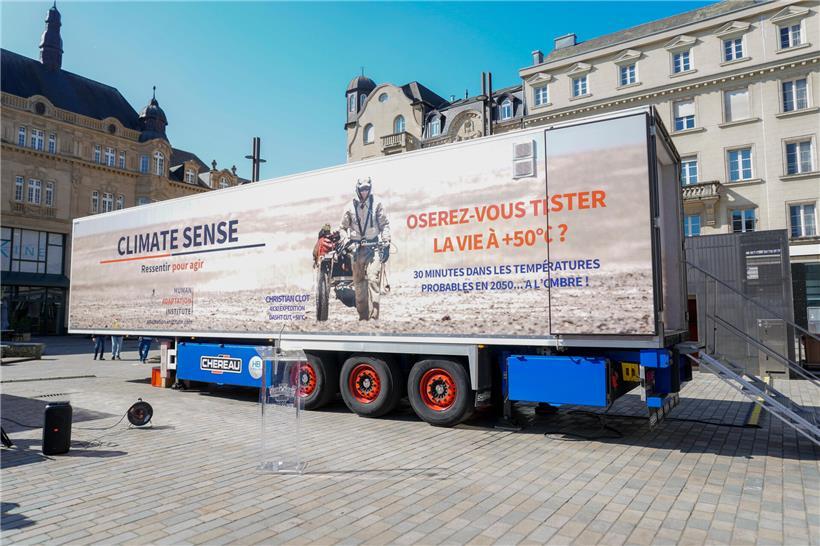
Tropical temperatures prevail in this truck Photo: Editpress/Miguel Moutinho De Sousa
“Heat has an effect on the body, the heart beats faster and the kidneys have to work a lot,” says Eva. Extremely high temperatures would also have an impact on cognitive and social skills. It is then difficult to concentrate or talk to other people.
A number of everyday objects hang on one wall, such as cell phones, a drinking bottle and some glasses. I put on one of these glasses. The material is extremely hot. Glasses wearers like me might have problems at 50 degrees.

I literally sweated through Game Four Wins Photo: Editpress/Miguel Moutinho De Sousa
The second station is a table with games of skill. I play Four Wins against another participant. I notice how it is becoming increasingly difficult for me to think. Example: I push a stone of the wrong color into the grid. Unsurprisingly, I lose the game. During the game I start to really sweat – I’m starting to feel the heat.
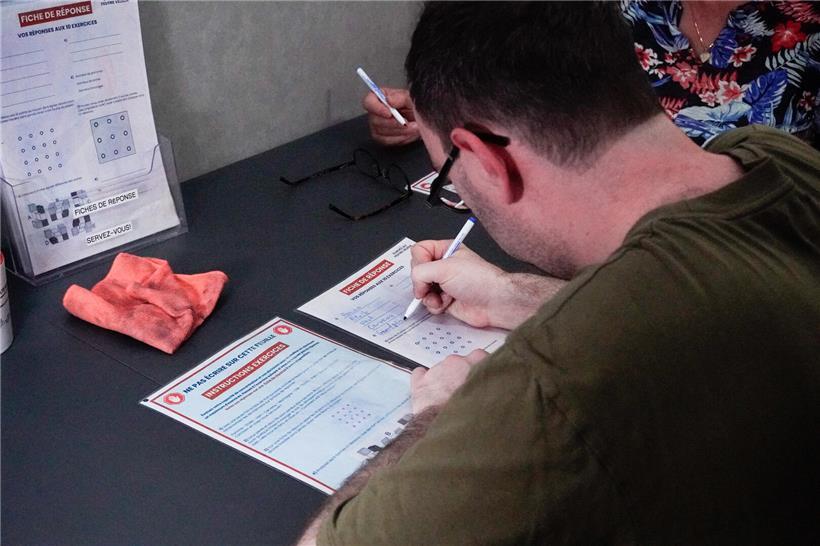
Heat noticeably reduces concentration abilities Photo: Editpress/Miguel Moutinho De Sousa
The brain sweats
The final part of the simulation is a series of brain teasers. Mental arithmetic is generally easy for me, and even at 50 degrees that’s not a problem. Logical and spatial thinking, on the other hand, are impossible. If this were an exam, I probably wouldn’t have passed. I’m thinking of students who can hardly follow lessons in such extreme temperatures.
According to the organizers, 50 degrees by 2050 is not unrealistic for France, although not the norm. “But there will be heat waves of up to 50 degrees,” says Eva.
Three questions for climate researcher Ralf Seppelt from the University of Luxembourg
How likely is 50 degrees Celsius for Luxembourg and what do the forecasts say for the Grand Duchy?
Ralf Seppelt: If no countermeasures are taken, the climate in Luxembourg in 60 years will be an average of 6.2 degrees hotter and around 16 percent drier. Winter temperatures will rise by approximately 4.3 degrees and the season will be 10 percent wetter. This is comparable to the current climate of a city in Abruzzo. But we will never experience 50 degrees here.
Can this development still be stopped? If yes, how?
We are definitely not turning the climate back to the time before industrialization. In all likelihood, we have missed the goal of keeping global warming below 1.5 degrees. Any further increase must be avoided at all costs and the effects reduced. To achieve this, renewable energies should be expanded massively and quickly, transport should be electrified and reduced (especially flying), and, above all, eating habits should be changed. Healthy nutrition is climate and nature conservation.
What do you say about projects like Climate Sense?
50 degrees is extreme. To get the message across that such temperatures are real stresses, and can even be fatal under certain conditions, and how people experience them is quite instructive. Especially because 50 degrees will increase in regions that are not medically equipped for this. This is an important learning effect that makes it clear what our lifestyle is all about in these regions.
So my half hour in the truck is already over. My body temperature is measured again: 37 degrees. “If you sweat a lot, your body can regulate its temperature well,” explains Eva.
Finally outside again
Then I can finally leave the sizzle truck. “8 degrees has never felt so good,” I think to myself outside. But: I was only in the truck for half an hour. And: As I write these lines, I notice that I am significantly more exhausted than usual. I can manage 30 minutes at 50 degrees, but longer could be critical, is my conclusion.
“All participants say it is impossible to live with such temperatures,” says Eva. Therefore, they would ask how they themselves can help mitigate global warming. “Some even react very emotionally. They wonder how they or their children can live like this.”
The truck will stop in Beles on Thursday and in Villerupt on Friday. Places can be on infomaniak.events.fr be booked. But spontaneous visits are also possible, subject to availability. Entry is free.
Sweaty local politicians
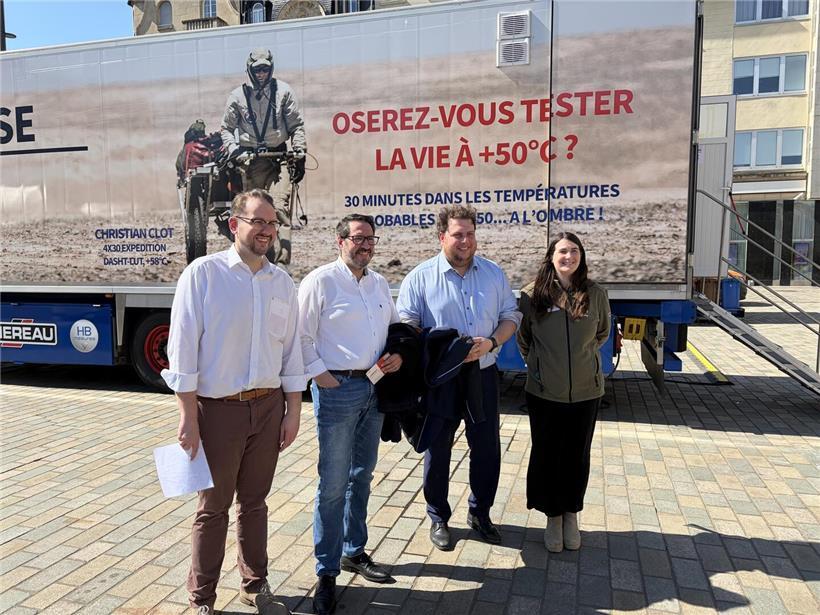
Sweaty local politicians: Christian Weis, Bruno Cavaleiro and Meris Sehovic (from left) Photo: Editpress/Tun Stemper
Mayor Christian Weis (CSV) and Escher aldermen Meris Sehovic (“déi gréng”) and Bruno Cavaleiro (CSV) also took part. Everyone agreed: It was hot in the truck. “I’m actually a little scared,” said Weis. His body temperature rose from 35.9 to 40.3 degrees Celsius in half an hour. “The temperature of everyday objects worried me,” Cavaleiro said. This is particularly difficult for parents who raise their children with bottles. “My fine motor skills no longer worked at all,” said Mehovic.