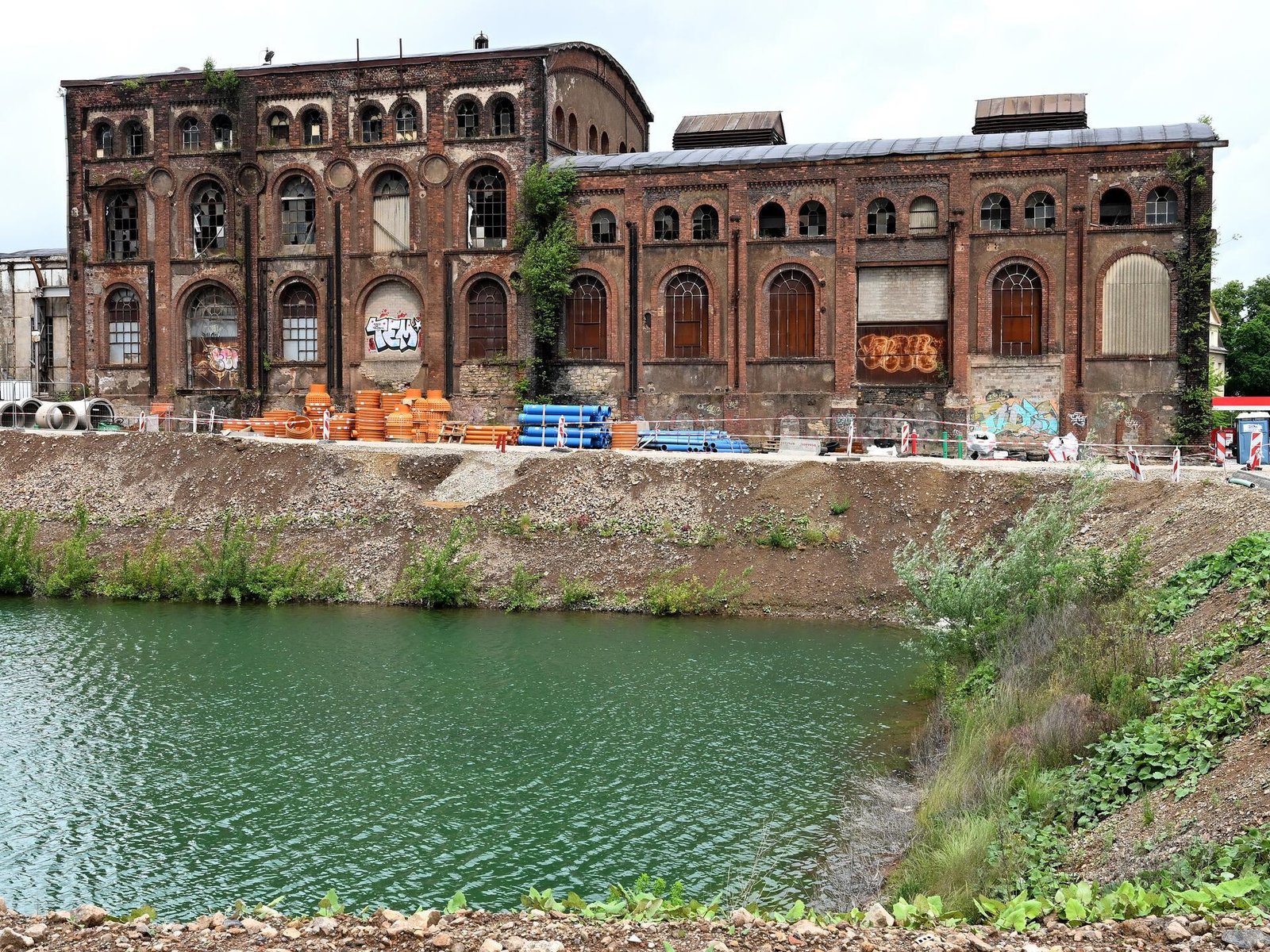
It was supposed to be Georges Mischo’s (CSV) prestige project in what had previously been a picture book political career: from the mayor of Escher to the Ministry of Sports to complete the long-awaited national sports museum in his hometown. Ultimately, it led to his exit from government and the transformation of a political high into an unprecedented downfall, which reached its lowest point with a much-noticed radio interview on his return to parliament in January. The Chamber continues to deal with the dossier surrounding the sports museum on the “Rout Lëns” in Esch. And could put two other ministers in need of explanation: Mischo’s party colleague and previous CSV clean man Gilles Roth and the DP building minister Yuriko Backes. According to documents that have now become public, both ministers could have known about the details of the dossier and the “protocole d’accord” between the sports ministry and the property developer much earlier than they have previously admitted publicly. According to current knowledge, Georges Mischo is said to have signed this without informing his government colleagues about it.
In the Budget Control Commission, the respective Chamber factions compiled their questions regarding the dossier in December and submitted them to the government on December 19, 2025. The State Ministry provided the answers to the 39-question catalog on March 18, but due to the size of the submitted dossier (132 pages), they were only discussed in Parliament on Monday. Right at the beginning of the meeting it was clear that the parliamentary committee would not be satisfied with the sometimes very poor answers and would invite the responsible ministers to the commission. Both the new Sports Minister Martine Hansen, Finance Minister Gilles Roth (both CSV) and the Minister for Public Works, Yuriko Backes (DP), will have to explain themselves in the committee because, above all, the opposition MPs Liz Braz and Sam Tanson (“déi gréng”) were not satisfied with the answers provided by the government. Even Claude Haagen (LSAP), who says he is not familiar with all the details of the dossier, noticed some inconsistencies in the government’s answers – including the reasons why no financial controller was involved in the dossier. MP Stéphanie Weydert (CSV) tried to prevent further damage from the CSV ministerial team, but gave in to the flood of questions from opposition MPs during the commission meeting. The only DP representative present, Guy Arendt, never spoke.
Financial inspection certifies “unusual” approach
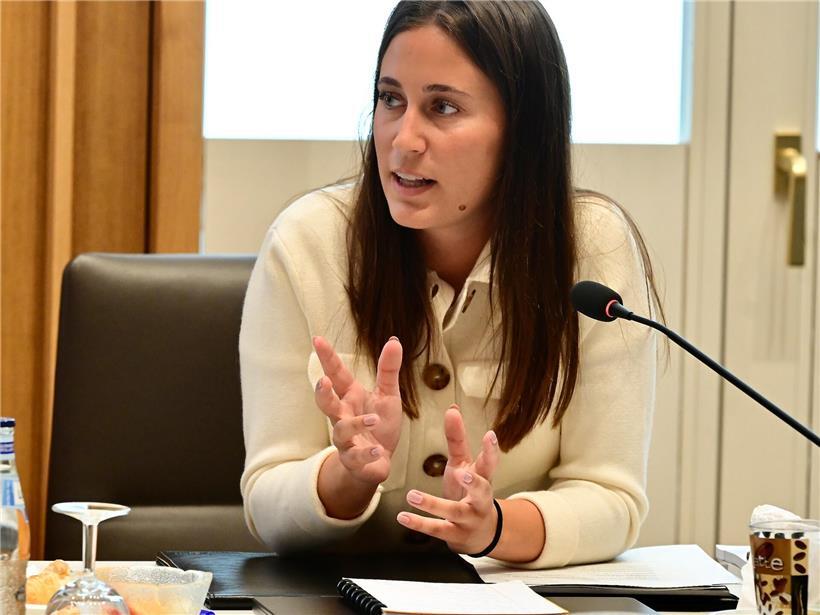
The dossier about the sports museum in the Chamber got the ball rolling: Escher local councilor and LSAP MP Liz Braz Photo: Editpress/Alain Rischard
The dossier submitted to Parliament consists of two parts: a public part and a confidential part, which was not discussed in the Commission’s public meeting – although Tanson and Braz’s allusions suggested that the confidential part also contains documents that could be of public interest. daily newspaperAccording to information, the confidential part contains, among other things, a document from the “Inspection générale des finances” which indicates that the sports museum on the “Rout Lëns” exceeds the original financial framework and that the project is based on an unconventional acquisition of land by the Ministry of Sports. The financial reserve of one million euros is also a rather unusual occurrence on the part of the Ministry of Sports.
But the non-confidential part of the document sent to the MPs also offers some explosive details, especially regarding the timeline of the project and the question of when which ministry should have been involved in the project and therefore potentially should have been aware of the secret “protocole d’accord” that ultimately cost Georges Mischo his job. Because: The Ministry of Sports’ project was presented in October 2024 by the commissioned architect’s office. Officials from the Ministry of Finance and the Public Works Administration were also present at the presentation at the Ministry of Sports.
It was also the representatives from the Ministry of Finance who brought up the idea of buying the future sports museum in the form of a congress center from the building promoter and then having the necessary conversion work carried out into a sports museum. This renovation work would then have had to be advertised as a “marché public”. This at least suggests that the officials could have known about a “protocole d’accord” between the Ministry of Sports and the property developer IKO. However, this is not clear from the documents submitted to Parliament. Neither was the extent to which officials from the public works administration were involved – missing meeting reports and undelivered emails could provide further information about this, says Sam Tanson. There were also several workshops between IKO and representatives of the “Institut national pour le patrimoine architectural” (INPA), which is officially subordinate to the Ministry of Culture.
Project timeline raises questions
At least the participation of the Public Buildings Administration in the project presentation in October 2024 casts a statement by Yuriko Backes from the Government Council on May 2, 2025 in a slightly different light. Backes had stated at the time that the Ministry of Public Works would be “associated” with the project from that point on to control construction standards.

For Sam Tanson (“déi gréng”), there are still numerous questions regarding the Sports Museum case Photo: Editpress/Hervé Montaigu
Overall, the government council’s approach to the sports museum case raises questions. The documents provided by the government do not indicate that a government or independent expert has looked more closely into the costs of the construction project that were unilaterally determined by the developer. Sam Tanson, for example, says that it is “better known” that the cost estimate “unilatéralement ouni vill Hannerfroen zeréckbehale gouf”. Braz also couldn’t understand why no one questioned the estimated total costs of 28 million euros, including around five million euros for the property. “The responsible authorities were not consulted and the project was accepted arbitrarily,” is the analysis by the Escher LSAP politician.
In addition to the newly aroused suspicions, the government’s written answers failed to satisfy MPs. “De Geck gemaach,” says LSAP MP Liz Braz about some of the government’s responses. This includes the answer to the question of why other government agencies were not involved in the project: “The question of the implication of other organs étatiques in the reflections relative to the project is not the same.” Elsewhere, Commission President Franz Fayot (LSAP) says that the answers are sometimes laconic and that it makes no sense to guess what is meant. The result: The commission will personally summon Finance Minister Gilles Roth, Buildings Minister Yuriko Backes as well as Mischo’s successor and party colleague in the Sports Ministry, Martine Hansen. In addition, the Chamber’s scientific service will be commissioned to carry out its own legal analysis. Neither Liz Braz nor Sam Tanson want to rely on the “analyse juridique” commissioned by the government, on which the future of the sports museum probably depends. The discussions are expected to continue in the near future with the questions raised by the MPs and the presence of the three ministers in the Budget Control Commission.
Chronicle of a failed project
June 5, 2025
Sports Minister Georges Mischo presents the project for a national sports museum on the industrial wasteland “Rout Lëns” at a press conference. The museum is expected to cost around 30 million euros.
November 26th
At the request of the LSAP, the sports museum is being discussed in the responsible Chamber commission. Above all, the lack of tendering and the associated dependence on the real estate company IKO Real Estate are criticized by LSAP politician Liz Braz. Mischo claims that a public tender was not necessary because the optimal location had been found. As far as the renovation work is concerned, everything would be carried out in accordance with the law on public tenders.
December 1st
The online magazine Reporter.lu publishes research into the sports museum and the problematic preliminary agreement with the IKO group of companies.
December 3rd
The Ministry of Finance is putting the project on hold Reporter.lu reported first. Mischo did not fully inform his government colleagues about his actions. The government wants to have the project legally examined.
December 5th
Georges Mischo announces that he is withdrawing his prestigious project. He announced this to RTL after the Council of Ministers.
December 8th
Prime Minister Luc Frieden announces a government reshuffle. Georges Mischo could no longer be retained as minister. Marc Spautz takes over the Ministry of Labor, while Martine Hansen is assigned the sports department.