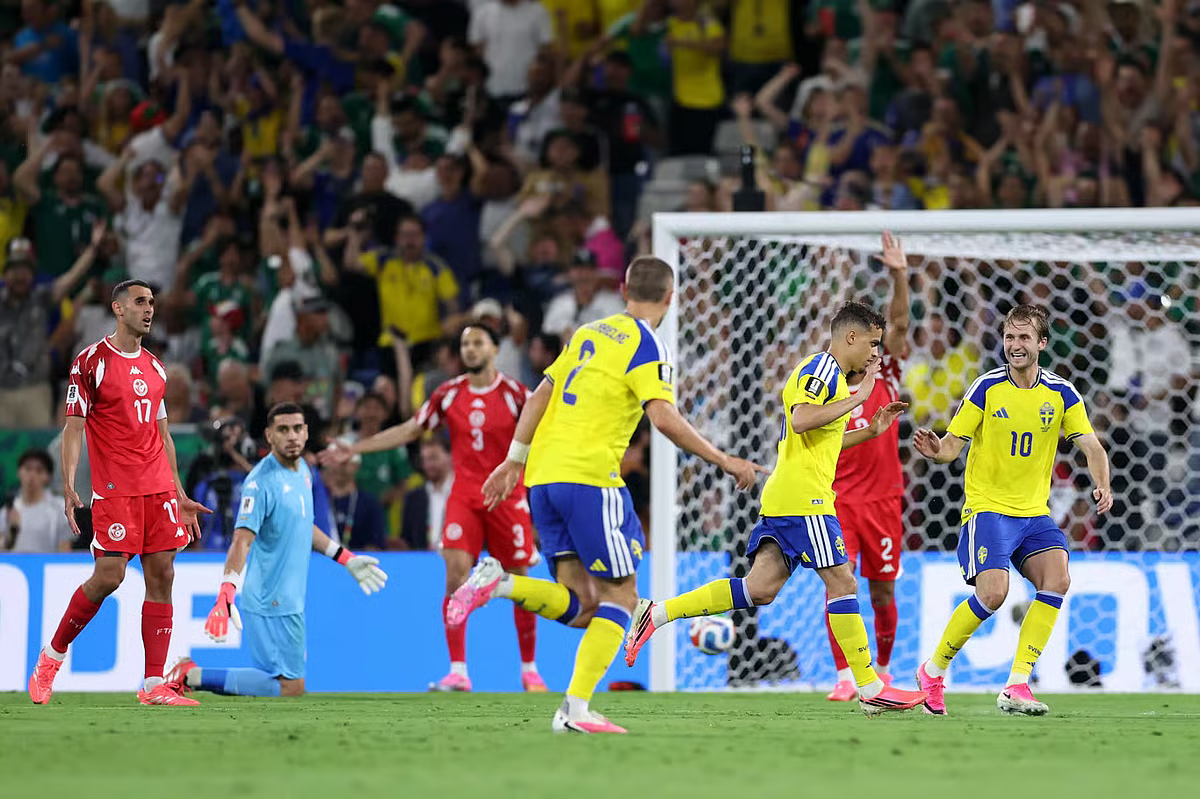
Sweden entered the 2026 World Cup with a display of strength, effectiveness and competitive maturity, beating Tunisia by 5-1in Monterrey, in what was one of the most significant results of the inaugural round of the competition. With a dominating performance from start to finish, the Scandinavian team sent a clear warning to their Group F opponents: they are prepared to take on a leading role.
From the opening minutes, the Swedish team imposed intensity, fast ball movement and constant pressure on the Tunisian team, forcing the opponent to play uncomfortable and far from the opposite goal. Swedish superiority was not limited to possession of the ball: it translated into a constant ability to create danger and dismantle Tunisia’s defensive weaknesses.
The first sign of dominance came early, at seven minutes, when Yasin Ayari opened the scoring with a powerful shot after a Tunisian defensive errorpaving the way for a night of clear Nordic supremacy. The Swedish midfielder, son of a Tunisian father, would end up being one of the great figures of the match, scoring a brace that crowned a display of enormous quality.
In the 30th minute, Sweden struck again, this time through Alexander Isaacwho concluded a quick transition with coolness and precision, confirming the offensive effectiveness of a team comfortable both in organized attack and in moments of counterattack. Even before the break, Tunisia reduced it through Omar Rekikwho took advantage of one of his team’s rare dangerous approaches to the Swedish goal to maintain some hope.
However, the Tunisian reaction turned out to be short-lived. The second half brought an even safer, more intense and clearly superior Sweden at every moment of the game. Viktor Gyökeres increased the lead after a good combination with Isak, Mattias Svanberg scored the fourth goal — validated after a VAR review — and Ayari closed the score, already in stoppage time, with a long-range shot that confirmed the rout.
For Tunisia, the defeat leaves worrying signs. The African team showed difficulties in controlling defensive space, showed little ability to react to Swedish high pressure and rarely found consistent offensive solutions. After a qualifying campaign marked by defensive consistency, the Tunisian team once again exposed vulnerabilities that had already been evident in the preparation for the tournament.