What happens when an unstoppable force meets an immovable object? For 80 years in global foreign policy we never had to answer this question. America was the unstoppable force, and the order the United States built of open trade and global alliances was treated as the immovable object. But that restraint is over.
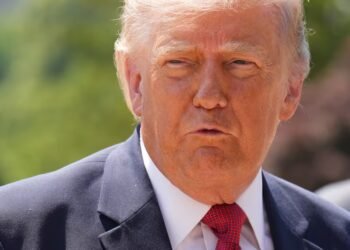
Survey the last year or so from a European seat for evidence. An American president declared his intention to acquire Greenland, considering even taking it by force. When other allies sent units to stand with Denmark against its own ally, Trump threatened to tariff them instead. He struck Iran’s nuclear sites, and then, having already cut off Ukraine’s military aid, asked Kyiv to help defend American bases in the Gulf against Iranian drones. He drove tariffs on friends and adversaries alike to their highest level in a century, before embracing a dance a Financial Times journalist would dub Taco: “Trump Always Chickens Out.”
Let’s call this the Trumpian Strategic Chaos. The strategy, insofar as it could be called one, is unpredictability itself. Allies and adversaries are interchangeably treated as malign, and every prior commitment is merely provisional, depending on the current mood.
The danger with such a strategy is not that America has turned coherently hostile, because adversarialism at least keeps everyone in character (every play needs a villain, and knowing who this is allows you to at least plan your enemy lines). Unreadability is the more nefarious aspect of the Trumpian era. You cannot build a supply chain or a 30-year defence plan around a coin flip – which is exactly why Taco threatens to paralyse the global economy. Chaos need not follow through to do its work; it only has to be possible.
However, Europe was never an immovable object – indeed it treated the entire first Trump term as an aberration, bending backwards to absorb the chaos while believing that business as usual would resume the moment he left office. Four years under Biden proved only a temporary reprieve. The second term confirmed that the interruption of the American order was in fact its replacement.
Now a Europe that has stopped waiting for “normal” to return is one that has, at last, begun to replant its roots. Europe is rearming, with up to €800 billion in additional defence spending, reshoring and rerouting its supply chains on the assumption that the American guarantee has a hefty price. The permanent result of this has a name: post-Americanism.
Where does Ireland stand in all of this?
Amid these changing geopolitical theatrics, it is hesitant to rewrite its own script – reaching for the strategic ambiguity which has always served it best. Ireland is an expert in the art of postponing every choice until some outside force makes it for us. Set beside Trumpian Strategic Chaos, this means our ambiguity can even look like its natural complement; they are, after all, two ways of refusing to commit to a plan in order to survive.
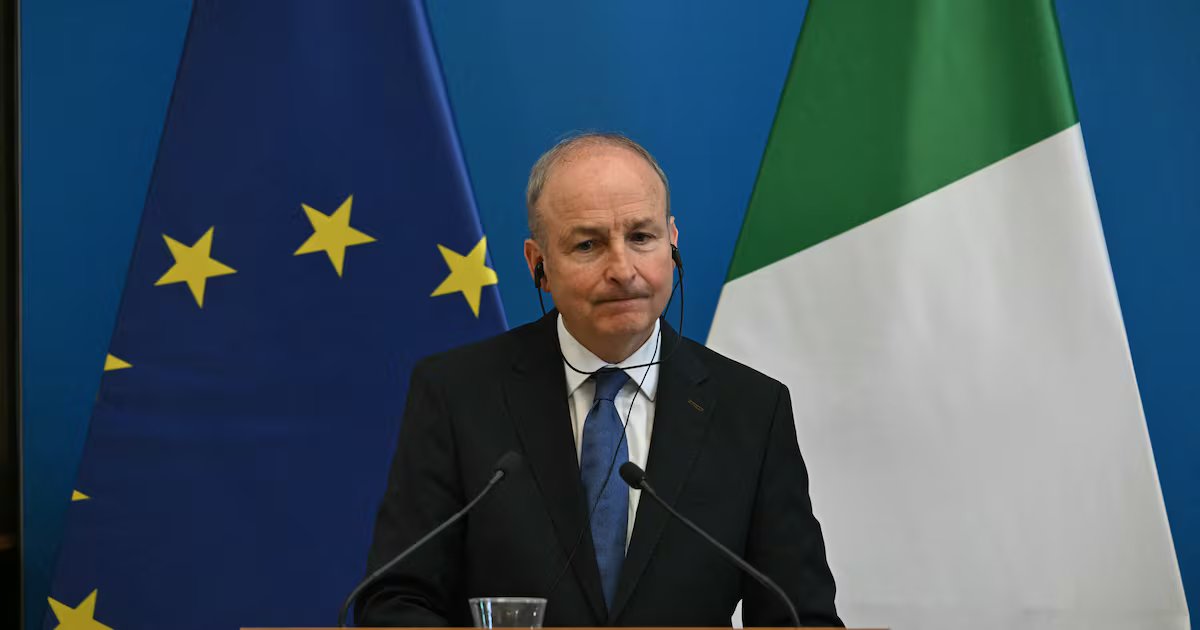
But there is a larger question for Ireland, as it prepares to host the European presidency. Are we still trying to stay on the right side of Washington, or are we trying to become a real member of a changing Europe, one that needs the precise opposite of ambiguity? The first thing a sovereign Europe asks of every member is the thing Ireland’s strategic ambiguity tries so hard to resist: contribution to this renewal.

For Ireland, the most damaging aspects of post-Americanism are security guarantees and the open economic order. In a sense, Ireland is losing twice. First on the tax model that endures as a withering American courtesy, something the European Commission again warned about last week; second on the security subsidy that was an American gift as the Russian submarines are drawn to our waters. This is not a metaphor: 245 Russian shadow fleet vessels passed through Ireland’s exclusive economic zone more than 450 times in the first seven months of 2025, while a convoy of Russian shadow oil tankers were detected off the Irish West coast in late March and early April this year.
In a Europe preoccupied with building its own sovereignty on defence and the economy, there is no viable model in which a nation like Ireland stays ambiguous on both while expecting others to pay. And there’s no evidence this is what Irish voters want either.
On July 1st, Ireland takes the rotating presidency of the Council of the European Union from Cyprus, whose presidency ran under the motto “An Autonomous Union”, a plain statement of where the Continent is heading. Ireland’s motto is “Shaping the Future Together.” Cyprus’s motto names the European project, while Ireland’s hides inside it, with everything resting on the word “together”. It is the same “togetherness” of students who do their homework in a group so they can copy the answers rather than work them out alone. Ireland wants a way to be in the room, on the record and credited with the result, but without ever producing substance of its own. The irony is that the presidency arrives at the very moment a position should be forced out of us. In the EU’s own language, the rotating chair is the “honest broker”, setting aside its own interest to enlist consensus among the others. It is also the part Ireland is genuinely good at, and which we are taken most seriously for; it is the part we have built a national identity around.
But look up “honest broker” in the thesaurus and it is unsparing: mediator, go-between, neutral party; and then, a little lower down in the entries you’ll find: bystander, abstainer. Perhaps “the disinterested one” is more suited; the figure in the room with nothing at stake and nothing to lose. That’s the entire role, stripped of its diplomatic flattery. It is the institutionalisation of having no position of your own.
So before July 1st there is only one question worth asking, and it is the one we always avoid. What do we actually want out of this presidency? The unstoppable force has already moved everything it was going to move. Is Ireland the only object still pretending it cannot be; the last to notice the world has gone on without it?
[ Markets tumble as AI rally pauses and US-Iran peace talks stallOpens in new window ]