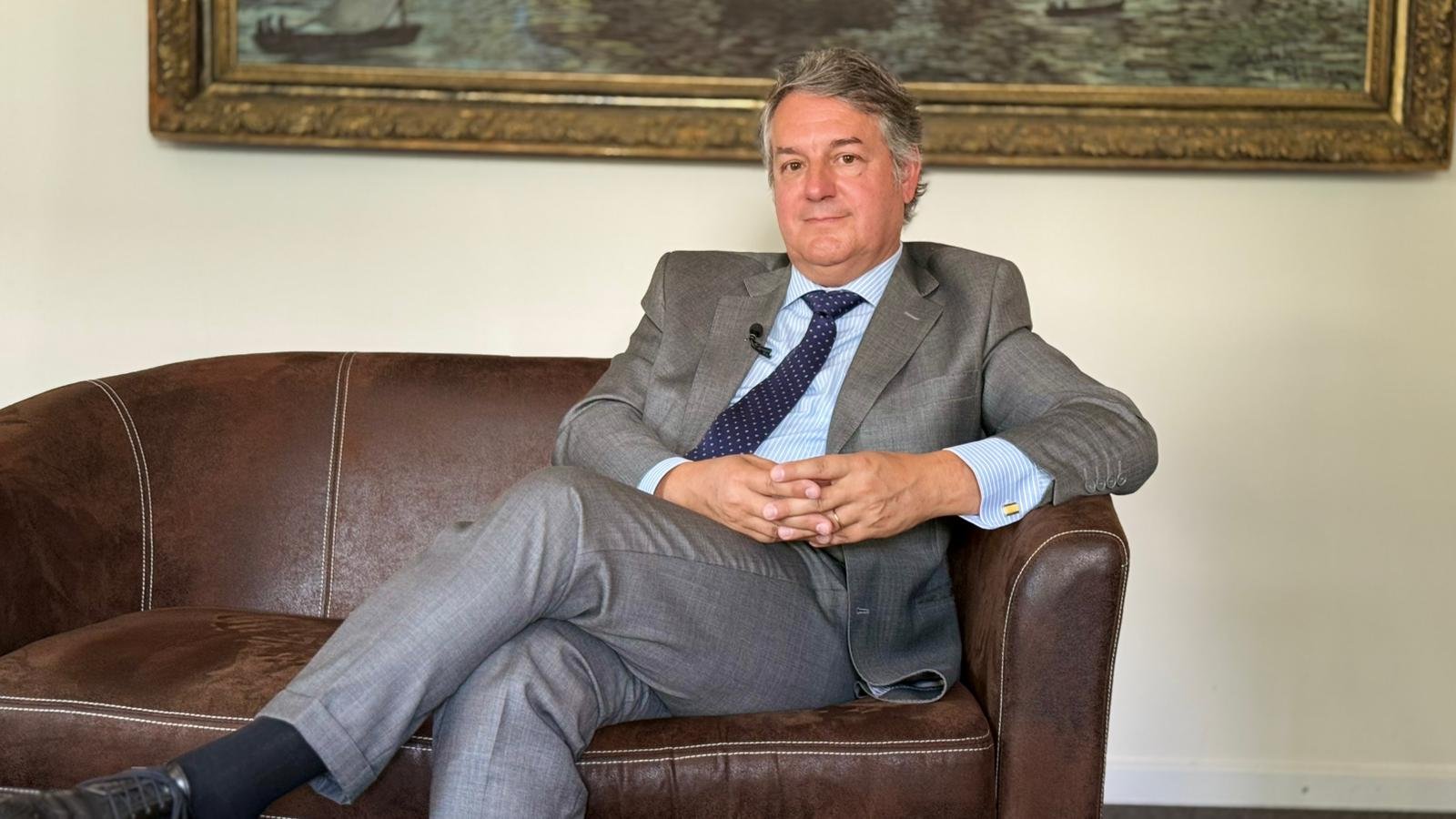
The ambassador, who started his diplomatic career in Luxembourg three years ago, recalls encountering a large, well integrated and diverse community. Wanting to understand the “Portuguese reality in Luxembourg” he recalls some surprises. For Pedro Sousa e Abreu it’s clear that while the community somehow managed to retain
original characteristics and qualities, they’ve taken rigour and assertiveness from Luxembourgish culture.
Sousa e Abreu acknowledged that some stereotypes persist about the Portuguese community. However, he emphasised that people of Portuguese descent are present across all sectors of Luxembourg society, from commerce and cleaning to finance and government ministries: “There’s Portuguese people and luso-descendents everywhere”, adding that for him that is “a source of joy and pride for those abroad, and even more so for those who represent Portugal in Luxembourg.”
The ambassador noted a generational shift among new arrivals from Portugal. Increasingly, new migrants are younger and highly qualified, though Portuguese migration to Luxembourg has remained a constant thread over the years.
He praised the Portuguese community’s strong work ethic, stating, “The commitment of the Portuguese to their work is remarkable. People come here to work, and that sets them apart. As ambassador, that makes me proud.”
A long diplomatic career
Sousa e Abreu describes his role as ambassador in Luxembourg as “enjoyable and rewarding”, and while he admits there’s always a lot of work to do, “it’s worth it”.
Sousa e Abreu said he values both the positive relationship with the Portuguese community and the openness of Luxembourg’s authorities. “It couldn’t be any better”, he explains, “The relationship between the Grand Duchy and Portugal is simply excellent”, This unique relationship with Luxembourg’s political and administrative representatives he explains, makes “my work as Portugal’s representative – and as someone who aims to further deepen relations with Luxembourg – much easier.”
Appointed ambassador on 4 January 2023, Sousa e Abreu values his role as a representative and bridge between the Portuguese state, Lusophone communities, and the Luxembourgish authorities.
His diplomatic career has included positions as director-general of administration at Portugal’s Ministry of Foreign Affairs, diplomatic missions in Palestine, and consular work in Angola. He has also worked with international institutions such as NATO and UNESCO.
Housing, naivety, and false hopes
Despite the community’s success and many Portuguese families thriving – now in their second or third generation in Luxembourg – the ambassador stressed that challenges remain, particularly regarding housing. High housing costs are a well-known obstacle for all nationalities, but many Portuguese people with lower incomes are now forced to live across the border as they can no longer afford to live in Luxembourg.
Another issue is that many new arrivals are not adequately informed or do not take the necessary precautions, leaving them vulnerable.
Sousa e Abreu regrets that, unfortunately, not everyone who promises a job is honest or trustworthy. He recounts that, since taking up office, he had several cases where the embassy had to intervene and assist people who came here hoping to improve their lives, but who were “deceived and exploited, sometimes, sadly, by other Portuguese nationals”.
His advice to prospective migrants is clear: “I urge Portuguese and Lusophone individuals to seek information in advance, about working conditions, housing, and through local authorities, both in Luxembourg and in Portugal.”
Voting behaviour among Portuguese nationals
During the last Portuguese presidential elections in March this year, voter turnout at the consulate in Merl reached nearly 5,000, a record, even if the number remains modest considering the size of the community.
The ambassador is pleased that voter turnout has improved, but still stresses that he would like to see the number of people voting increase, given that there are around 90,000 Portuguese residents in Luxembourg, possibly more when dual nationality is considered.
He also encourages greater political engagement in Luxembourg’s own political life, particularly during municipal elections, though he laments that low turnout among the Portuguese community is mirrored in Portugal as well:
“Unfortunately, this low rate of participation is also mirrored in Portugal”, he said.
Explaining that even with previous efforts to boost turnout, it was difficult to increase participation among Portuguese citizens in the local municipal elections, “Luxembourg’s local authorities have much more power than ours in Portugal. Voting for a mayor means giving them the opportunity to do more in terms of social services, education, and health care, since many areas are decentralised to the local authorities.”
On the subject of voting rights for foreigners, Sousa e Abreu remained diplomatic, stating that the result of Luxembourg’s referendum must be respected and that the issue is currently not on the political agenda.
President’s visit to Luxembourg
The ongoing state visit of the Portuguese President, António José Seguro, and Prime Minister, Luis Montenegro, from 5 to 8 June, coincides with celebrations of Portugal’s national day on 10 June. Sousa e Abreu said the president’s decision to mark the occasion with the Lusophone community in Luxembourg is a powerful gesture: “It is an honour and a recognition of their achievements, their commitment, and their integration here. For all those who feel at home in Luxembourg but carry Portuguese culture in their hearts, this visit is a great honour.”
**The full interview with Ambassador Pedro Sousa e Abreu was conducted entirely in Portuguese as part of the Portuguese president’s visit to Luxembourg, held in the lead-up to Portugal’s National Day on 10 June.