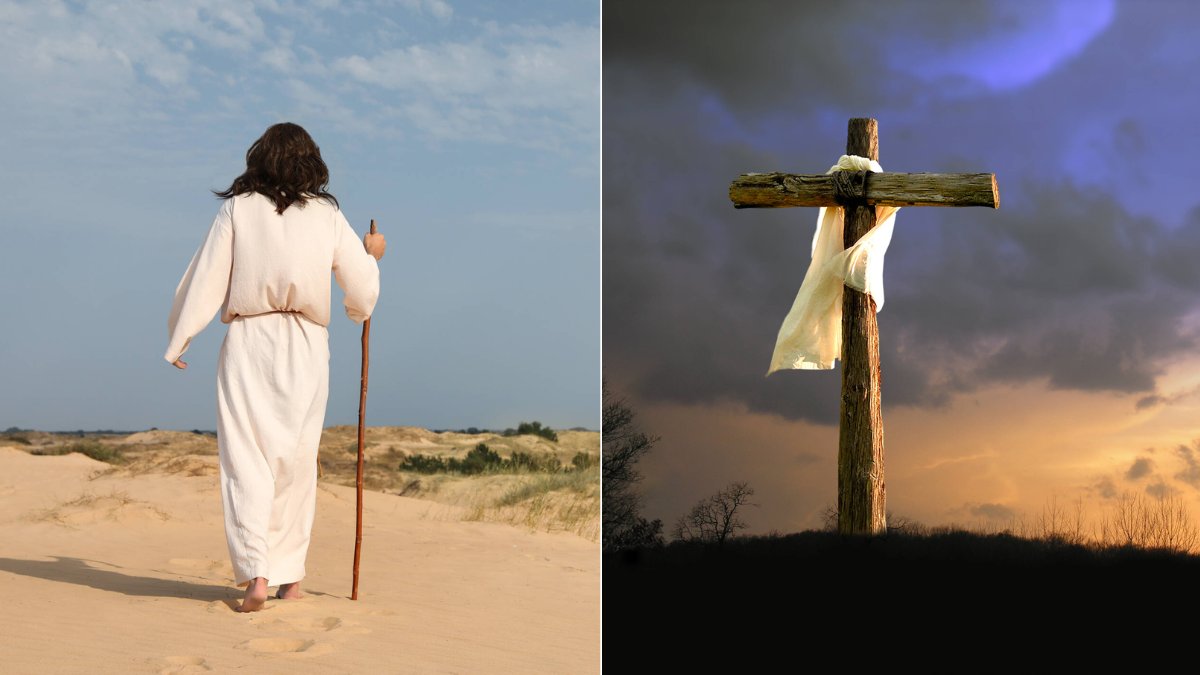
An academic study analyzed the figure of Jesus of Nazareth through an approach that combines historiography, forensic pathology and Bayesian probability.
The work concludes that the resurrection hypothesis is the most coherent explanation for the events after his death in the first century, although the proposal generates debate in scientific and religious spheres.
READ ALSO
The author maintains that the analysis is based on the so-called “minimum facts”, that is, data accepted by a significant part of specialists beyond their personal beliefs.
This the study revealed. Photo:istock
The study incorporates references from ancient historians such as Cornelius Tacitus, who in his work “Annals” mentions the execution of Jesus during the government of Emperor Tiberius by order of Pontius Pilate. According to the report, these records allow us to establish the historical existence of the character and his death by crucifixion.
From this base, the analysis seeks to explain the emergence of Christianity through hypotheses evaluated with historical and probabilistic criteria.
Medical evaluation and refutation of alternative theories
One of the central points of the work is the rejection of the so-called “fainting theory”which suggests that Jesus did not actually die, but rather fell into a catatonic state and subsequently woke up.
The author cites medical literature, including studies from the Journal of the American Medical Association, to describe the effects of crucifixion, such as hypovolemic shock and severe injuries, concluding that Death would be clinically inevitable.
READ ALSO

This was found. Photo:(GPT Visual Time, 2026). / THE TIME
Likewise, the document takes up arguments from the theologian David Strauss, who pointed out that survival in extreme conditions would not have generated the proclamation of a victorious figure over death by his followers.
Historiographic criteria and testimonies
The analysis also applies the criterion of “shame”, used in historiography, by pointing out that the story of the empty tomb includes women as the first witnesses, in a context where their testimony had little legal value. According to the study, this element reinforces the authenticity of the story as it is unlikely as an invention.
The work also mentions the conversions of figures such as James and Paul of Tarsus as facts that, from this perspective, require an explanation beyond phenomena such as collective hallucinations.
READ ALSO
Scientific and religious debate
By applying Bayesian probability models, the author maintains that, by ruling out alternative hypotheses such as the theft of the body or the burial error, the resurrection hypothesis acquires greater explanatory consistency within the framework of the study.
In fact, although the study analyzes the medical effects of crucifixion and points out that this type of execution usually causes death from serious injuries, such as hypovolemic shock and extreme trauma, the author compares different historical interpretations of what happened after the death of Jesus and concludes that lThe resurrection hypothesis is the explanation that best fits.
Research on the Holy Shroud
Recent studies on the Shroud of Turin have provided new data. An analysis published in ‘BioRxiv’ found traces of genetic material from several people in the fabric, making it difficult to consider it as direct proof of its origin.
This object is the one that tradition It is linked to the shroud in which the body of Jesus of Nazareth would have been wrapped after his crucifixion.
The relic was dated in 1988 between the 13th and 14th centuries, although subsequent research has cast doubt on that date. For its part, the Catholic Church maintains a cautious position and does not confirm that the object has a miraculous nature, while scientific investigations continue.
La Nación (Argentina) / GDA.
More news in EL TIEMPO
*This content was rewritten with the assistance of artificial intelligence, based on information from La Nación (GDA), and was reviewed by the journalist and an editor.