Since 2019, the population in the capital area has increased by eighty every week and the number of registered vehicles by sixty every week. The pressure on the street system has therefore steadily increased at the same time that major transport improvements have been delayed.
Figures compiled by engineering firm Efla by Tom Tom for the year 2025 also show that traffic has slowed down even more. As a general rule, it was possible to cover 6.9 kilometers in fifteen minutes, which is a shorter distance than the previous year. Driving ten kilometers took an average of 21 minutes and 49 seconds, and the average speed was measured at 22 kilometers per hour.
Two decades from the beginning to the first phase
The work on the transport agreement is rooted in regional planning that began in 2012. The agreement itself was then signed in 2019, but the project has since been under review. If the current plans go ahead, the first phase of the City Line will not be completed until 2031.
By then, twenty years will have passed since the preparations began. During that time, there will also be elections six times for Alþingi and five times for local councils.
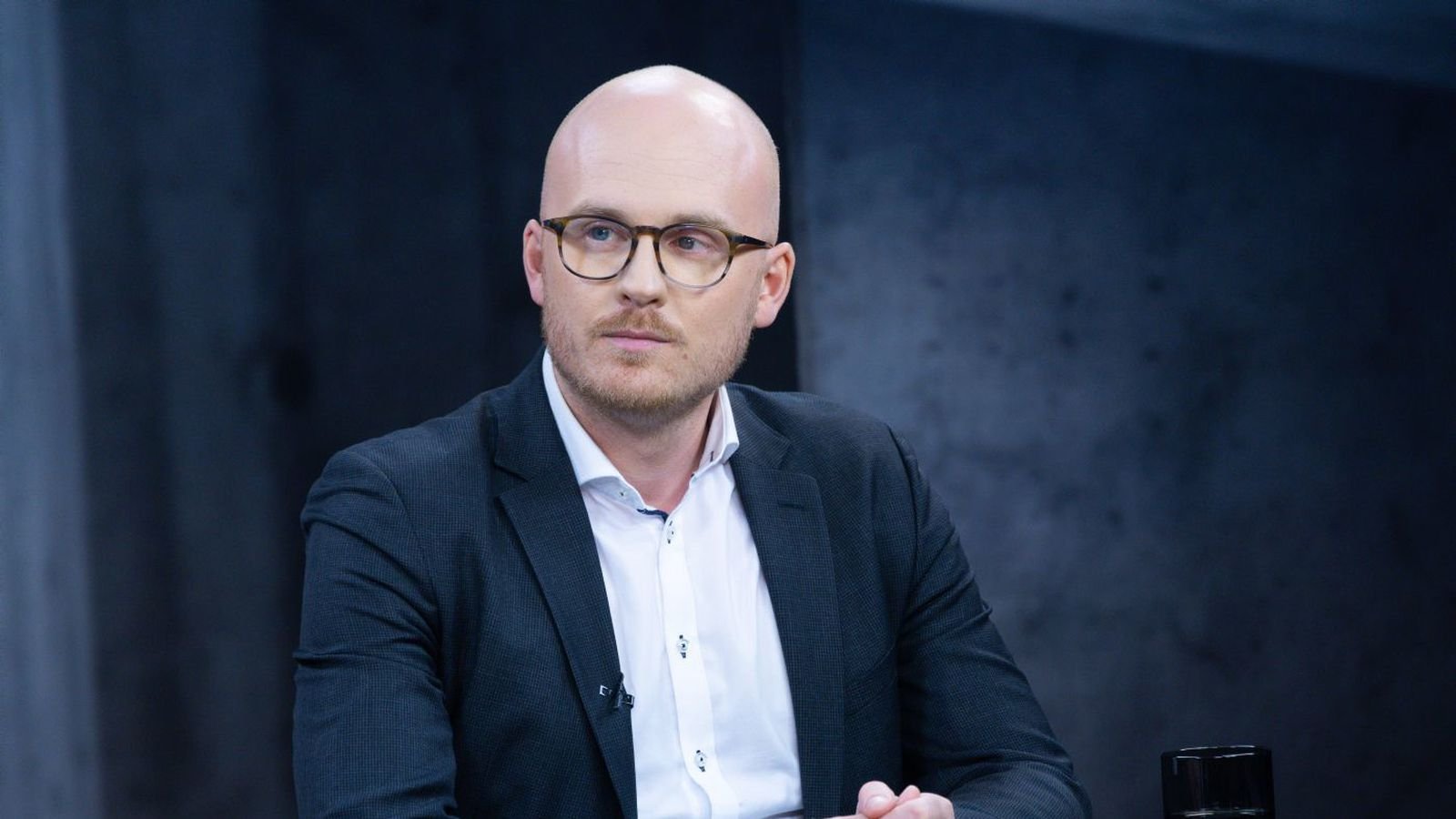
Economist Konráð Guðjónsson reviewed this development at the conference Greið leð – Ideas wanted this week. There he discussed both the growing delays and the costs they impose on society.
The wait is expensive
Konráð says that the traffic has increased a lot, but that it nevertheless largely follows the population development that has taken place in the capital area. That is why the development must be looked at realistically when decisions are made about infrastructure and transport.
In his opinion, the calculations show in black and white how expensive the wait is.
“That’s just significant value that we’re kind of wasting by being stuck in traffic.”
According to Konráð’s assessment, the cost to society due to the delays amounts to over one hundred billion ISK per year. It is equivalent to about 34 to 40 thousand ISK per person per month and about 150 thousand ISK for a family of four per month.
Wants faster solutions alongside larger projects
Konrád says that the current situation calls not only for continued work on large projects, but also for resources that can be implemented more quickly.
“I think we need, because it’s all happening so slowly, to try to go the fastest way possible.”
In that context, he mentions, among other things, more active lighting control and simpler improvements where there is little disagreement about methods. He also suggests that shafts under key intersections could be considered, which can be less invasive than larger structures and also take up less space.
He also says that it is important to listen more closely to what can be done quickly and produce real results in people’s daily lives, without waiting years for the biggest projects.
The transport agreement must not become a fixed framework
In Konráð’s opinion, the transport agreement must also be seen as a living piece rather than an immutable framework, especially when conditions change and delays accumulate.
“You can’t think that a fifteen-year project or a twenty-year project is just fixed like a constitution. It must be a living thing.”
He says that he allows himself to doubt the benefit due to some of the assumptions on which the transport agreement is based, among other things because it assumes a very large increase in traffic and economic growth, which he does not think is so clear. In his opinion, it should lead to people asking whether it is possible to achieve the goals in a more efficient and effective way.
At the same time, he emphasizes that it is normal for significant funds to be spent on transportation in the capital area, where the majority of the population lives. The key point, however, is that the benefits pay off sooner.
Every day without improvement costs
Konráð’s conclusion is that the biggest lesson is not only limited to transport, but also to the way in which large infrastructure projects generally develop in this country. When decisions are delayed and implementation is delayed, the cost rises, not only on paper but in people’s time, productivity and daily quality of life.
“Every day we’re stuck in traffic costs us a lot.”