In media analyses, various experts give us their impressions of the first round, that is, the previous part of the World Championship. We noticed the thesis of one analyst who pointed out the following – at this World Cup, it is noticed that the selectors are no longer inclined to play with three defenders in defense, that is, with a defensive block of five players (lowering the laterals) plus two midfielders. In addition to playing more offensively, the point is that coaches move away from the low block as much as they can.
So far, South Korea, Japan, Jordan, the Czech Republic, South Africa, Tunisia, Uzbekistan and the next two opponents, Croatia and Panama, have played with three defenders in this tournament! So, 8–9 among the 48 participants guessed in principle a more defensive variant with three defenders, in which they actually give up one midfielder for a “tighter defense”.
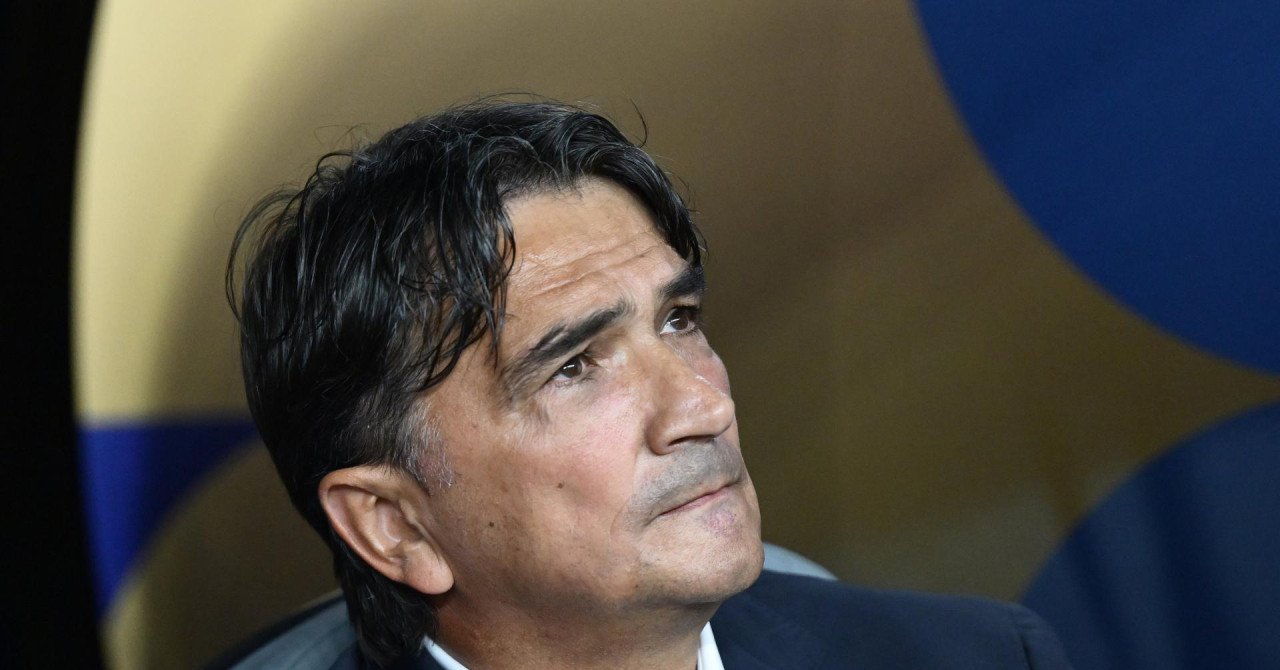
Zlatko Dalić has rarely opted for that system in almost nine years. After Croatia was defeated by England, he already said that he would return to the factory settings. In his successful era of performances at the world championships, this is a tactical option with four defenders, with two pivots and three midfielders and one forward, or with 4-3-3. It is important to emphasize that Dalić already made it known in the preparations that the option with three defenders will be for the match against the English, and then that he will return the defensive line with four against Panama and Ghana.
Admittedly, if the 3-4-2-1 system had worked more convincingly with the English, we believe that the coach would have continued with that version of the game. Perhaps this indecisiveness had an effect on the fact that the players did not feel safe and confident with newer tactical approaches, which was clearly seen in the second part of the match with Belgium and against Slovenia? The players know this best, that is, Dalić and his colleagues who are constantly with them and communicate and consequently get a full insight into what would suit the Vatren best.
Anyway, it is certain that against Panama, our national team will take the field with a formation in which the last line will have four players. Considering the little drama that was created in the domestic public after the defeat against the English (unnecessary), it is to be expected that Dalić will opt for proven tactical settings and proven competitive actors. The match with Panama, as expected even before the start of the World Cup, and especially now after the defeat against the English, received the framework of imperatives. Croatia needs three points in order to play with more confidence in the third game with Ghana. It is true that even a draw with Panama would remain an active result for passing, but then with the African national team we enter the strongest imperative of victory. Going into the deciding match with Ghana knowing that Panama had not been beaten would be the detonator of a realistically dramatic competitive situation.
In the camp of the national team, as can be found out, the initial regret at the epilogue with England was quickly replaced by an intense desire to wash away the bitter taste of defeat as soon as possible and, especially, the weaker performance in the second half. Vatreni’s motivation is at a high level and this can be, of course, along with the quality of the game, one of the decisive factors in defeating the oldest selection in this championship. It is logical to always underline, as the trends of this World Cup show, this work will not be easy at all. Namely, the lower-ranked national teams are full of energy and enthusiasm, and over the years they have progressed in both technical and tactical terms. Today, all national teams have a high level of physical fitness, are tactically more disciplined, and competitively mature.
Admittedly, Panama lost to Ghana in the last moments of the game because they allowed their opponent to create a scoring chance from a counterattack without a “tactical violation”. Panama will certainly have more experience, and with which they will oppose Croatia, extra motivated to achieve point(s). Will her system be like before (3-4-3), which defensively turns into 5-4-1? It is likely that coach Christiansen will not significantly change what has been his tactical approach for six years.
For Dalić, a much more important indicator is that the Panamanians as a team are very aggressive, they seem fast and motoric, and at the same time they want to have longer possession and build offensive actions through combinatorics. This, more or less, is the basis of the approach that Dalić had with Croatia in the past years. Having possession, control of the ball and consequently a rhythm that suits our selection, building an attack through combinatorics and creating conditions and a suitable moment for the finish. So that is Croatia’s forte. With a rival with a similar approach, whose manager criticized his team’s edition in the continuation with Ghana, primarily because of long balls “which are not our style of play”, the fiery team will have to raise the level of aggression to impose this forte. In terms of technical quality, there is no doubt that Croatia has a higher level, and especially more experience in such competitive situations.
How will Dalić arrange the starting eleven? With a return to (most likely) 4-2-3-1, which can be transformed into a more offensive 4-1-4-1 with a minimal shift of one of the “six”, it seems certain that he will change the stopper. Dalić said yes before Vušković the game with four in defense is less suitable, so he will choose one in between along with Šutal Pongracic and Chalet–Emperor. Since there are no “real” defenders, Dalić will “repeat” Stanišić and Guardiola on the right and left in the last line.
Modrić will certainly be in the middle row, who, apart from having additional motivation to show his values after his weak game against the English, means a lot to the team as a leader. It is almost certain that the menu will return to the first set Kovačićwho had a very good and active 30 minutes against the English. Perišić will certainly be on the left side, so it only seems doubtful where the two midfielders, Petar Sučić and Baturina, will be positioned. One of them could in principle be a right wing midfielder, and in fact the third “real” midfielder alongside Kovacic and Modric. In that option, Sučić seems to be closer, while Baturina, according to his dribbling and penetration, could be right at the point, as the so-called. second attacker (semi-colon). Who will be the attacker? That’s an interesting question, first of all because it Musa showed, apart from the goal, good reactions in pressing the opponent and mobility.
Dalić treated Budimir as the first choice, but the impression is that something has changed there. Whether this is really so, the selection of the nine for Panama will show. Croatia needs possession control, that is supremacy in the middle, and more aggressive pressure on the opponent’s last line, especially in the opening of the game. To force Panama to make long passes to avoid that pressure – that, as their coach says, is a big problem for the desired game.