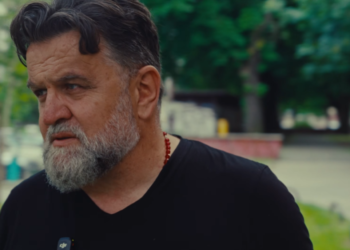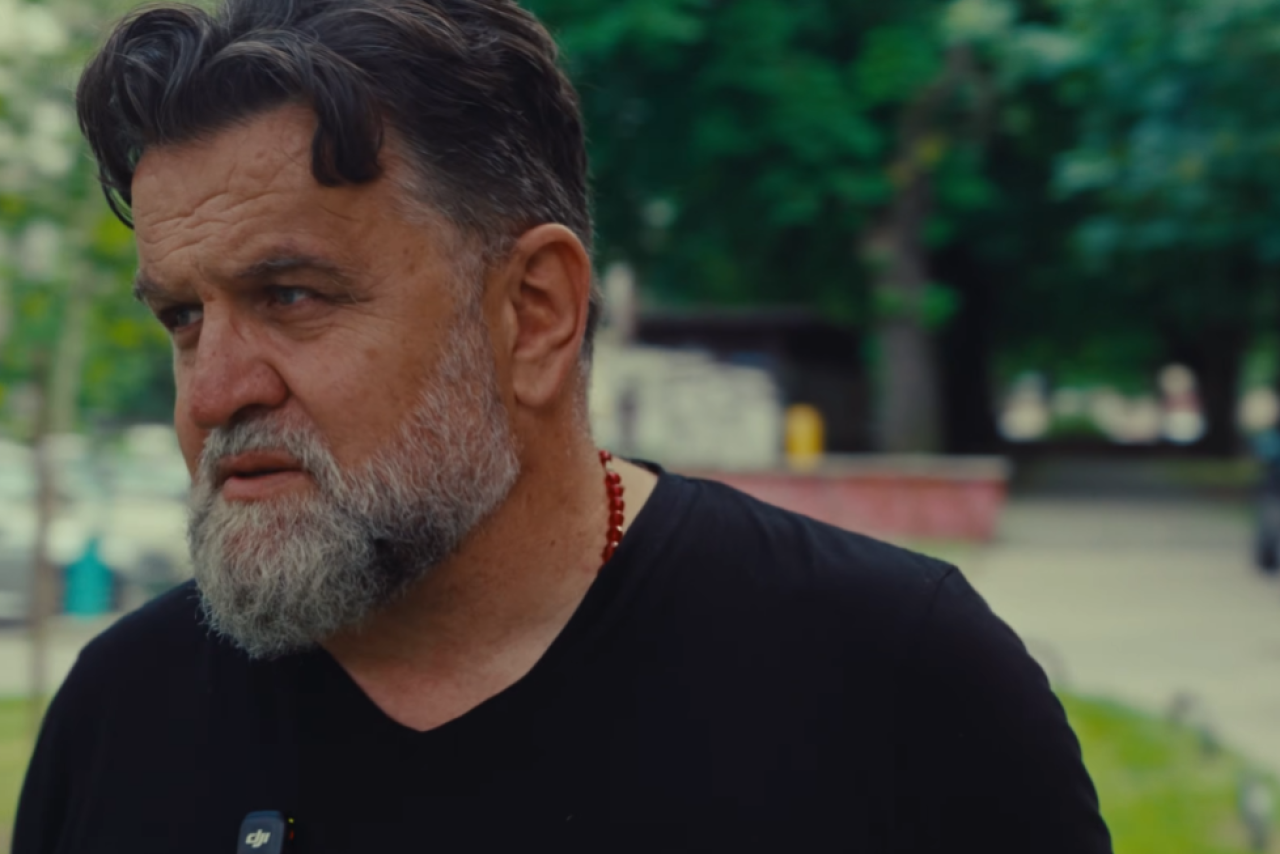
Andrija Jarak is one of the most famous names in Croatian investigative journalism. Behind him are thousands of reports from the field, as well as numerous stories from the black chronicle that marked his journey as a journalist. It is interesting that he started his rich career precisely as a correspondent for Slobodna Dalmacija.
He has been through everything – from a veteran on the front line in his native Dubrovnik, to a thirty-year journalistic journey that culminated in the “Jarak Dossier” as the highlight of his career. Slobodna Dalmacija recognized this and awarded him as a prominent TV personality, and on this occasion we spoke briefly with Jarko about his beginnings, but also about the years he spent in the black chronicle.
You have been engaged in journalism for more than three decades. Do you remember your first journalistic assignment and could you have imagined the career you have today?
– I didn’t. I started as a correspondent in Slobodna Dalmacija. I think it was in ’94, Jug played with Mladost. I had a five-sentence report for the sports column. Those were my beginnings, later everything went as it did, but honestly, I didn’t hope that my career would go in that direction, but now, I always get emotional at the mention of Slobodna, because it was there that I saw my name for the first time.
Have you ever, after all the years in Black Chronicle, wanted to do something completely different?
– No, because after almost 30 years I decided to work on “Ditch File”, which is the crown of my career. I wanted to cover the most terrible crimes from the former state. I have been doing this with my colleagues for four years. I think it’s the most important thing I’ve done in my life. We warn about some things that are very important for society, as well as for the people around us.
Unfortunately, journalism often boils down to giggling, gossiping, events, influencers… I have nothing against anyone. But there are people walking on Croatian roads who killed a father, mother, sister, two, three, five people… I had the need to warn that such people exist.
“Dosje Jarak” brought viewers closer to the background of some of the most famous cases. Is there a story you haven’t covered yet that you’d like to tell?
– There are several of them. Let’s say, I would really like to do a case Muscle from Marjan. We are trying to reach some people. There are a few more stories we’d like to do. In my opinion, it is the most difficult story Ivana Hodak and what we did with To the young man. After that show, an indictment was brought against him and he is currently on trial at the County Court in Varaždin. I think that’s exactly the point of the show.
How do you feel when you see that you have initiated a change in the system?
– That is a huge satisfaction. You travel along the line of least resistance and record some beautiful things and the like. What we’re doing is the line of hardest possible resistance, because we’re digging into some things that people don’t like us to dig into. The biggest problem here is that it is very difficult to get people to talk to you – the murdered girl’s mother, father, brother, sister… The core of the show is that we warned about the existence of such people.
What do you say about the famous “curse”: “Dabogda Andrija Jarak called you in front of your house”?
– I guess people are used to me being where it’s disgustingly difficult, where it’s inconvenient – those trials and murders… I don’t mind that, it’s part of the job.
In one conversation, you said that Croatia is a country with many cooking shows. Is there a lack of serious journalism in the media today?
– It’s a tricky variant. I always say what I think, so I will do the same now. When you watch Croatian television, you would say that we are Switzerland by the sea. “Stars sing”, “The Voice Kids”, “I marry my son”, “I marry my daughter”… First, these are all licensed shows.
“Dosje Jarak” was created by us Dario Todorovic I also drew from scratch. That process lasted a year. Part of the agreement with RTL was that my name or surname must be in the title of the show, that’s how the author’s show was created.
“The Voice Kids”, “Potjera”, “Supertalent” – these are not original shows. You pay for the license, some shor, beard, uncle, whatever you want, comes to you and tells you: “The studio must be this big. You must have 16 cameras, the presenter must be blonde. The presenter must be like that…”. And you pay dearly for it. They present it as their product, which is a scam. That bothers me. To return to the point – culinary shows.
– I wouldn’t trade with any of them. Don’t think I’m jealous or envious, God forbid! People may really think that Nova TV is doing “Supertalent” or that HRT is doing “The Voice Kids”. No, they paid for it, it’s someone else’s idea for which you pay handsomely. When you watch our shows, everything is wonderful, wonderful, great. And then when you do what I do, and you resent the worst scum that walks on the road, you dig into wounds that no one wants you to dig into, and then you who are giggling, they comment on it.
Do not comment on it, because you are not invited to comment on it! Keep living in your bubble, it’s great for us, monkfish fillet with a little whipped cream…
– I took that cooking as a cross-section of the situation in the media. Everything is wonderful, wonderful, events are bursting, we are all happy and satisfied, there is no mafia, privatization, conversion, this guy in Drniš did not kill a child, no people warned about him. Srđan Mlađan didn’t kill a 16-year-old girl and ask her: “Do you believe in God or Satan?”, that didn’t happen…
And then when they say “reporter”. Antun Masle was a reporter, he was in Chechnya, he was there when Yugoslavia was bombed, he spent the entire Homeland War under shells. The man was in Montenegro, they arrested him, they almost killed him. I spent the whole war in Dubrovnik. He was a reporter, that’s the job. You are not a reporter if you travel somewhere and record some chants, songs, stories and how to eat. The reporter is a man who needs to lose his head. Not to slip too far… Croatian journalism shouldn’t be just a black chronicle, but we shouldn’t look at everything through the prism of rose-colored glasses either.
You started in Slobodna Dalmacija, in a time without portals and social networks. How do you see journalism today and what would you say to young people who are just entering the profession?
– If you’re going to do this to get a better piece of meat at the butcher shop or someone to give you a better concert ticket, don’t do it! When I tell you – I have three children, I missed 95% of their birthdays. I think that in twenty years I have traveled two million kilometers and slept in 550 hotels. That’s true.
If you believe in yourself and if you do it because you like to work – great, but if you do it to be famous, don’t do it! You have to have some X factor, some charisma, people have to recognize you by something, and that has nothing to do with the amount of your screen appearances. I think there is hope for journalism and I think television will never fail.
What they say is that social networks will eat television – they won’t! I think the only journalism you can do is the most serious journalism based on facts and facts. Let’s say, in our show, we read the court file just in case. Some have 200, 300, 500 or a thousand pages. The preparation takes several months and you stick to it like the Holy Scriptures, like the Bible.