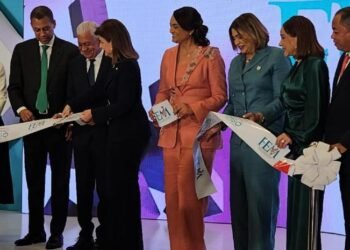
On June 16, 1951, just three years after the creation of the Economic Commission for Latin America and the Caribbean (ECLAC) in 1948, the establishment of an office in Mexico was approved with the mandate to analyze the economic challenges and contribute to the development not only of Mexico but also of Costa Rica, Cuba, El Salvador, Guatemala, Haiti, Honduras, Nicaragua, Panama and the Dominican Republic. This new office would become, from its beginnings, a key actor, contributing to the construction of regional economic thinking and influencing numerous policies of this group of countries, among which the launch of the Central American Common Market stands out.
Over the course of 80 years, ECLAC has consolidated a structuralist approach that understands development not only as economic growth, but as a process that involves profound transformations in productive and social structures. From its headquarters in Mexico, this approach has been applied to the specific challenges of the subregion, combining technical analysis with direct support to governments. The central objective has been to overcome the peripheral condition of these economies in the international system and move towards higher levels of well-being.
In the early 1950s, the world and the region were very different. The ten countries served by the ECLAC Subregional Headquarters in Mexico had barely 46 million inhabitants, and between 60% and 70% of the population lived in poverty. Their economies depended almost exclusively on the export of primary products, with little productive diversification and limited industrial capacity. Economic statistics were scarce and unreliable. Faced with this scenario, ECLAC promoted strategies aimed at transforming the economic structure, strengthening the capacities to design and execute public policies and promoting regional integration as a way to generate economies of scale adequate to undertake an industrialization process.
Particularly important was the role of the ECLAC Subregional Headquarters in Mexico in the conceptualization and promotion of the Central American integration process. He not only contributed ideas, but also collaborated closely with governments in the creation of institutions and regional coordination mechanisms. At the same time, it contributed to the strengthening of state capacities through technical advice and training programs at key moments in recent history. Some examples: the first disaster assessment carried out in Nicaragua after the 1972 earthquake in Managua; studies on the economic and fiscal impact of the reversal of the Panama Canal; and assistance to the reintegration process of those who demobilized in El Salvador after the end of the armed conflict.
In more recent decades, ECLAC has maintained its closeness with governments through an active cooperation agenda. Every year it organizes multiple technical meetings and offers assistance in strategic areas such as productivity, social development, economic integration, institutional strengthening and climate change. Their work ranges from promoting value chains and promoting redistributive policies to analyzing the economic effects of climate change and generating tools to confront them, to name a few areas.
Today, Central American countries export a greater proportion of goods with technological content, have the deepest and most dynamic regional integration process in Latin America and the Caribbean, and have significantly reduced poverty levels. However, this progress coexists with persistent limitations, specifically with the three “development traps” that ECLAC has identified and that reinforce each other: a low capacity to grow and transform; another with high inequality, low social mobility and weak social cohesion, and a third with low institutional capacities and ineffective governance.
The author is director of the ECLAC Subregional Headquarters in Mexico