The “Safe Jornalists Albania” network has condemned Sali Berisha’s attacks on the News24 media, stating that the rhetoric that presents journalists and newsrooms as criminals exceeds the limits of criticism.
In response, it is emphasized that the use of terms such as “free speech mafia” and “unscrupulous mafia” exceeds the limits of criticism of media coverage and constitutes a language that delegitimizes journalism and questions the professional integrity of journalists.
According to the Safe Jornalists network, such attacks ‘expose journalists and newsrooms to further hostility from political supporters who take this framing for granted’.
“Using terms like ‘free speech mafia’, ‘unscrupulous mafia’ and ‘shameful mafia’, Berisha went beyond criticism of media coverage and used language that delegitimizes the media and presents editorial decisions as politically driven or criminalized activity. The problem does not lie in the fact that a political actor opposes media coverage. The problem lies in the language that reframes journalism as an instrument of political treason and places journalists working in these media “under suspicion before their work is judged on its professional merits. In a polarized environment, such rhetoric can expose journalists and newsrooms to further hostility from political supporters who take this framing for granted.” said in response.
While bringing to attention other attacks that have been made against Focus Media Group, SafeJournalists calls on all political actors in the country to avoid this type of rhetoric and respect the standards of public communication, stressing that it will continue to monitor and document the situation of media freedom in Albania.
Full reaction
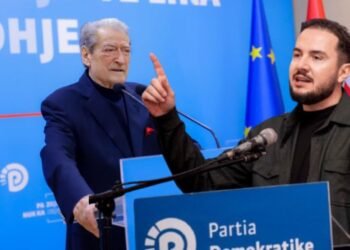
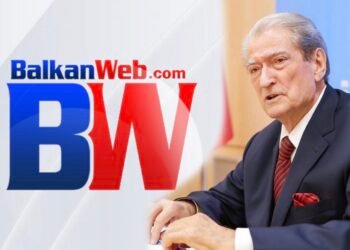
On May 2, 2026, the chairman of the Democratic Party, Sali Berisha, publicly attacked News24 television, BalkanWeb portal, Panorama newspaper and media owner Irfan Hysenbelliu, labeling these media as “free speech mafia” and accusing the editors of acting according to instructions from the Prime Minister’s Office.
The statements were made during Berisha’s weekly communication with supporters and were prompted by the coverage that these media had given to Ervin Salianji, a figure of the Democratic Party who had submitted the candidacy for the leadership of the party. Berisha objected to the volume of coverage for Salianji, claiming that the television had “adopted” him and broadcast “16 news in four hours”. He further claimed that Hysenbelliu was personally directing this cover-up to fix relations with Prime Minister Edi Rama.
Using terms such as “free speech mafia”, “unscrupulous mafia” and “shameful mafia”, Berisha went beyond criticism of media coverage and used language that delegitimizes the media and presents editorial decisions as politically driven or criminalized activity. The problem is not that a political actor objects to media coverage. The problem lies in the language that reframes journalism as an instrument of political treason and places journalists working in these media under suspicion before their work is evaluated on the basis of professional merit. In a polarized environment, such rhetoric can expose journalists and newsrooms to further hostility from political supporters who take this framing for granted.
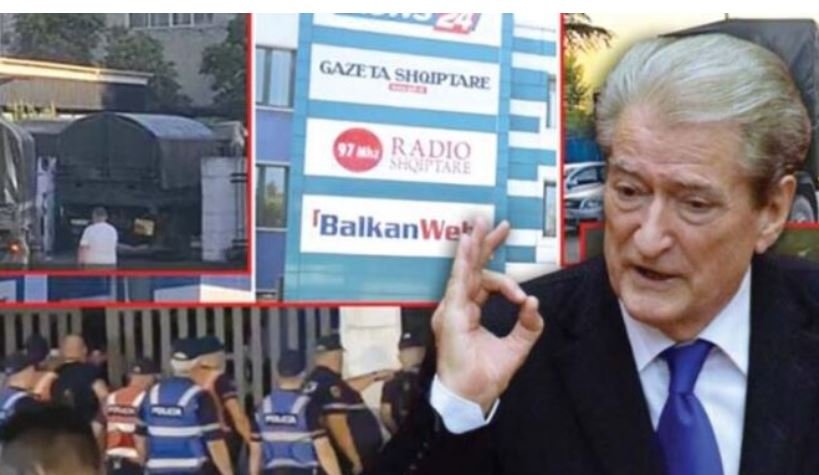
Separately, Focus Media Group was affected by a serious media freedom incident in 2025, when state authorities surrounded the premises where News24, BalkanWeb, Panorama and Gazeta Shqiptare operate, journalists were blocked from entering the newsroom and News24’s broadcast was interrupted. The statements of May 2 add another layer of pressure around the same newsrooms, this time from a different political direction.
Over the past two years, SafeJournalists has documented hostile rhetoric towards the media from political actors across the Albanian spectrum: from Prime Minister Edi Rama, who has described the media and critical political voices as the “kingdom of lies”, “freedom of defamation”, “political-media quagmire” and “pot”*, and who in March 2026 publicly accused two media outlets of money laundering and tax evasion without presenting evidence; by the Mayor of Tirana, Erion Veliaj, who referred to the journalists covering his arrest in February 2025 as “beings” and the media as “gjirizi channels”; as well as by Sali Berisha himself, who in September 2024 threatened to treat critical journalists as “members of a criminal organization”.
Different actors, different political positions, the same rhetorical movement: media that do not toe the political line are reframed as criminal, disloyal or instrumentalized by opponents. This reflects a shared political narrative that delegitimizes inappropriate coverage. It has consequences for journalist safety and editorial independence, especially during politically sensitive periods, including election cycles, corruption cases, institutional crises and internal party contests.
The SafeJournalists Network reiterates that political leaders have the right to challenge media reporting, seek corrections and respond publicly through legal and self-regulatory channels. Rhetoric that portrays journalists and newsrooms as criminals, disloyal or as instruments of political opponents goes beyond the bounds of legitimate criticism and contributes to conditions where journalists are pressured, harassed or harmed.
SafeJournalists calls on all political actors in Albania to avoid this rhetorical pattern and will continue to monitor and document its consequences for journalists and media workers in the country.
* The term “pot” in Albanian is used here in a derogatory way to demean and discredit the media and critical political voices as noisy, empty and without credibility.