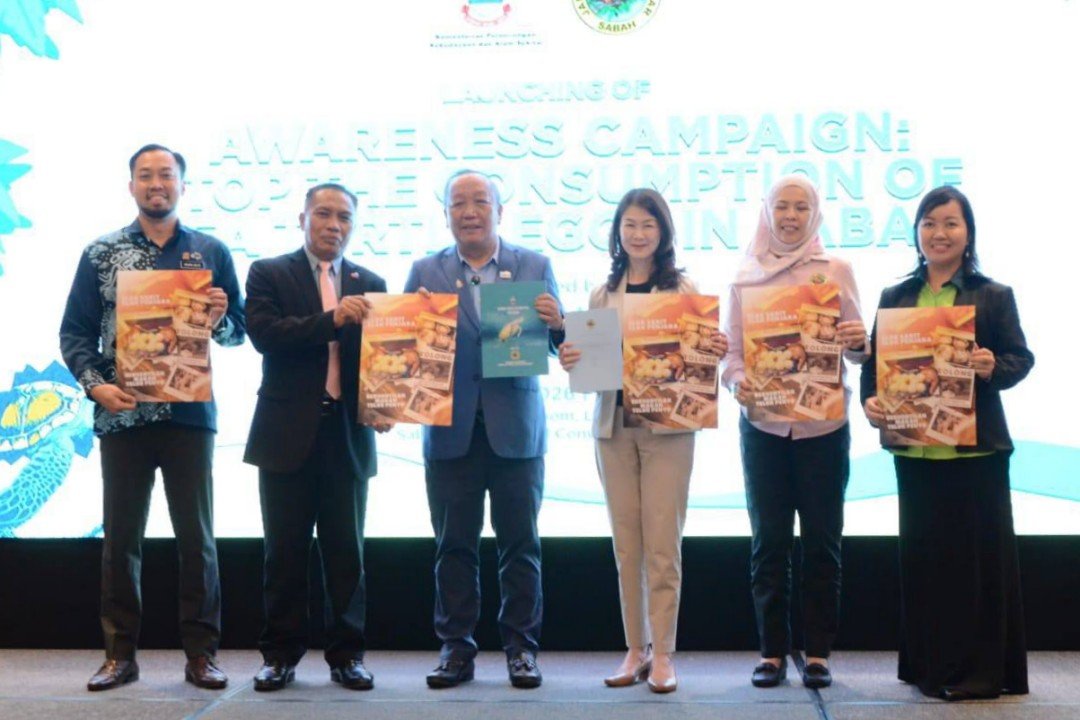

(From second left) Mohd Soffian, Jafry and Josie show the campaign materials after the launch.
KOTA KINABALU (April 14): Sabah has launched three key initiatives to strengthen sea turtle conservation and promote sustainable tourism, marking a major step forward in protecting the state’s marine biodiversity.
The initiatives comprise the Sabah Sea Turtle Action Plan, Standard Operating Procedures (SOP) for turtle hatcheries in Sabah, and a comprehensive behavioural change campaign targeting the consumption of turtle eggs.
Tourism, Culture and Environment Minister Datuk Jafry Arifin said the Action Plan represents a significant milestone in safeguarding one of Sabah’s most iconic marine species.
He said the plan, together with the SOP and awareness campaign, forms a coordinated framework to guide stakeholders in conservation efforts and public education.
“Under the Wildlife Conservation Enactment 1997, three species of sea turtles which are the green turtle, hawksbill turtle, and olive ridley turtle, are classified as Totally Protected species in Sabah.
“Any offence involving these species carries serious penalties, which include fines ranging from RM50,000 to RM250,000 and imprisonment from one up to five years,” he said at the launch at the Sabah International Convention Centre (SICC) here.
However, he stressed that conservation goes beyond enforcement.
“It is about responsibility, awareness, and collective action. This Action Plan serves as a comprehensive guide for all stakeholders, outlining clear priorities and coordinated efforts required to protect sea turtles effectively.
“It also emphasises the importance of awareness programmes to educate the public and reshape behaviors that threaten these species,” he said, urging government agencies, researchers, NGOs and donors to support its implementation.
On the SOP for turtle hatcheries, Jafry said the guidelines ensure programmes conducted in partnership with the government are managed responsibly and scientifically, with a focus on animal welfare and conservation outcomes.
“Grounded in scientific approaches, these guidelines prioritise animal welfare while ensuring that conservation objectives are not compromised,” he said.
He said that by adopting best practices, we not only strengthen conservation outcomes but also enhance Sabah’s reputation as a leading destination for sustainable tourism.
Well managed hatcheries and responsible wildlife interactions will provide meaningful experiences for visitors while preserving our natural heritage, he added.
He said the behavioural change campaign is aimed at addressing turtle egg consumption by shifting public attitudes and reducing demand.
“This campaign calls upon all stakeholders to join hands in spreading the message and raising awareness across all levels of society,” he said.
He also called on local authorities, including district offices and councils, as well as the media, to help amplify the campaign.
Jafry also commended the Sabah Wildlife Department and its partners, including Universiti Malaysia Sabah and WWF-Malaysia, for their continued efforts in turtle conservation.
Also present were ministry permanent secretary Datuk Josie Lai and Sabah Wildlife Department director Mohd Soffian Abu Bakar.