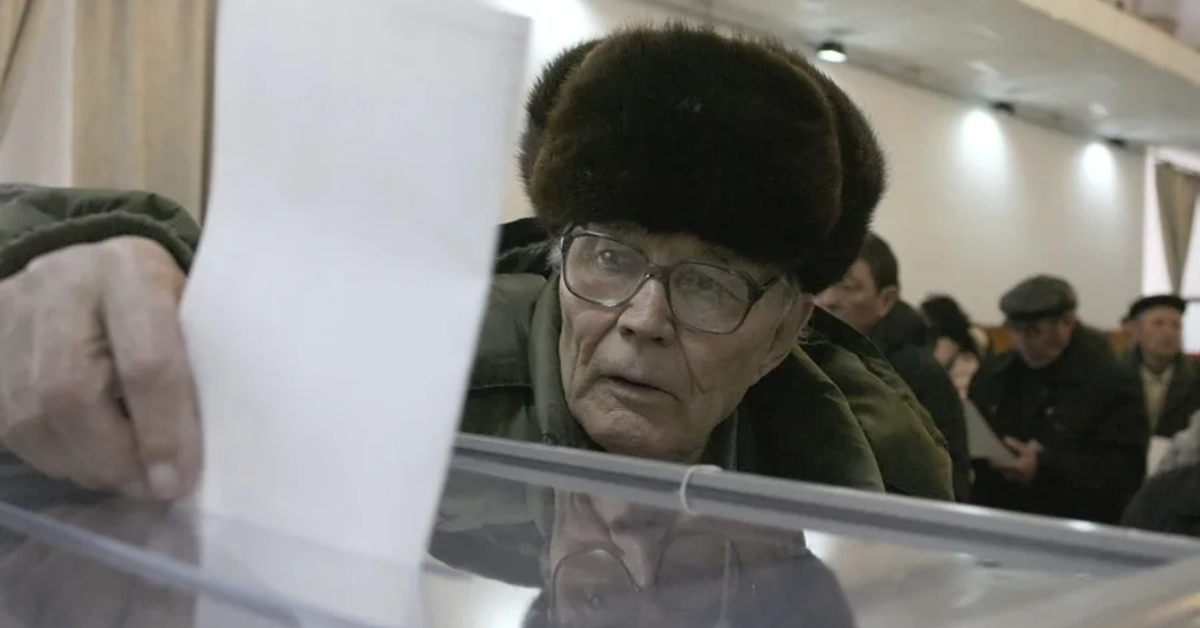
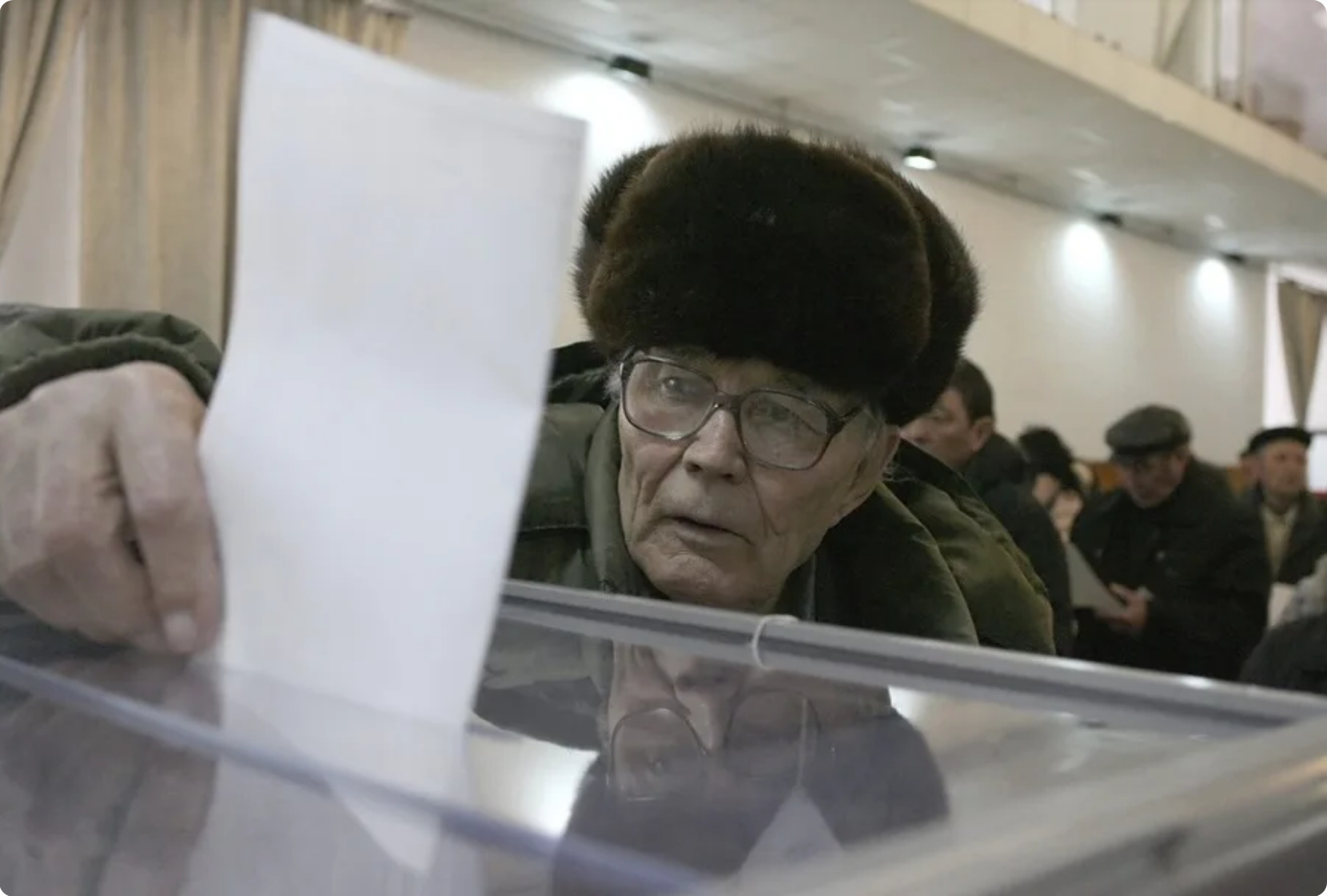
Moscow/The Kremlin party, United Russia (RU), has revalidated the constitutional majority in the Duma or chamber of deputies after the legislative elections held this weekend, the Central Electoral Commission (CEC) reported this Monday.
The ruling party would obtain 355 of the 450 seats in the legislature in the elections that took place from September 18 to 20, according to preliminary official data after the counting of more than 95% of the votes.
This is, despite the social and economic problems related to the four and a half years of war in Ukraine, the best result in its history, breaking the record of 343 deputies achieved in 2016, two years after the annexation of the Ukrainian peninsula of Crimea.
In these elections, RU achieved 57.83% of the votes for party lists, which translates into 147 seats, plus 208 seats for electoral constituencies. Russia has a mixed system in which half of the Duma seats (225) are distributed by lists and the other half by constituencies.
In these elections, RU achieved 57.83% of the votes for party lists, which translates into 147 seats, plus 208 seats for electoral constituencies.
In this way, RU would far exceed the 301 seats necessary to achieve the majority that allows constitutional reforms to be introduced. The ruling party has 324 deputies in the outgoing Duma.
This allowed him in 2020 to reform the Magna Carta and eliminate the clauses that prevented Russian President Vladimir Putin from running for re-election in 2024, allowing him to remain in power, if he so wishes, until 2036.
Meanwhile, the communists achieved only 13.81% of the votes by lists and five seats by districts, for a total of 40 seats in the Duma. They are followed by the ultranationalists of the Liberal Democratic Party with 8.98% for lists and 25 deputies, and the liberals of Nueva Gente with 7.96% and 20 seats.
In the absence of concluding the scrutiny, Just Russia does not enter the parliamentary arc by lists, but finally enters by constituencies, with 4 parliamentarians.
In addition, the Kremlin party has achieved the election of its nine governors who participated in the regional elections. The acting governors of the Belgorod border regions, Alexander Shuvaev; and Bryansk, Yegor Kovalchuk; In addition to Tver, Vitali Koroliov, they endorsed their positions with 65.97%, 76.05% and 69.69% of the votes, respectively, according to CEC data.
The head of the Republic of Mordovia, Artyom Zdunov, achieved his re-election with 77.74% of the votes, while the feared Chechen leader, Ramzam Kadyrov, accused of ruling the region with an iron fist, was confirmed in office with a record support of 99.85%.
The current governor of the Penza region, Oleg Melnichenko, won with 70.89% of the votes, while Vladislav Jovalig won in the Siberian republic of Tuva with 90.95%.
All of them are members of the ruling party, the only exception being the current governor of the Ulyanovsk region, Alexei Russkij, nominated by the Russian Communist Party, who obtained 76.65% of the votes.
All of them are members of the ruling party, the only exception being the current governor of the Ulyanovsk region, Alexei Russkij, nominated by the Communist Party of Russia, who obtained 76.65% of the votes.
In addition to direct elections, the parliaments of the North Caucasian republics of North Ossetia-Alania and Karachevo-Cherkessia elected their respective governors from the Kremlin party. In North Ossetia, Sergei Menyailo, who was already in office, was endorsed, while in Karachevo-Cherkessia, the current governor, Rashid Temrezov, was unanimously re-elected.
The only party opposed to the war, Yábloko, which was excluded from the lists by the Supreme Court, did not obtain any parliamentary certificate. His best results are the second places achieved in several electoral districts of the Russian capital.
The leader of that formation, Nikolai Ribakov, assured after the closure of the schools that Yábloko would have been the second most voted party in the first parliamentary elections of the entire war if it had appeared on the ballots.
Despite this, he did manage to access the Duma of the Novgorod region, a vital result for his future as a political formation. Yábloko has 6.2% of the votes – more than 12,000 votes – which would allow him to have a parliamentary faction in the regional assembly.
By joining at least one regional assembly, Yábloko will not have to collect signatures in the future to run in other elections, a process in which the CEC can easily detect violations and reject registration.
After being accused of treason for condemning the so-called ‘special military operation’ and not including war veterans among its candidates, some sectors have called for the opposition party to be banned, which has opposed all wars in which the country has been involved since its founding in 1993.
Ela Panfílova, president of the CEC, insisted in her press conference that Russia had been the target of all kinds of pressure, attacks and cyberattacks during the campaign and the vote. Furthermore, he stressed that the elections had passed cleanly, despite numerous complaints from the opposition, especially from Yábloko and the communists.
However, he stressed, the biggest problem was the inability of many Russians to vote with ballots and the obligation to do so electronically, an instrument of fraud, according to the opposition.
Several voters in Moscow told EFE that they refused to vote due to the inability to deposit the ballot in the ballot box and being forced to resort to electronic voting.
Several voters in Moscow told EFE that they refused to vote due to the inability to deposit the ballot in the ballot box and being forced to resort to electronic voting.
The opposition in exile had asked Russians opposed to the war to support Yábloko by electoral constituencies and any party that subtracted seats from United Russia by lists, in the action known as Noon for Peace. As EFE was able to confirm, queues formed in Moscow schools right at 12 in the morning.
Furthermore, according to surveys by the non-governmental organization Vesná, in the schools set up by the Russian consulates abroad, the party with the most votes was New People, followed by the Communists.
Turnout was 59.32%, higher than expected, although in places like the annexed Ukrainian regions of Donetsk and Luhansk it was around 80%.