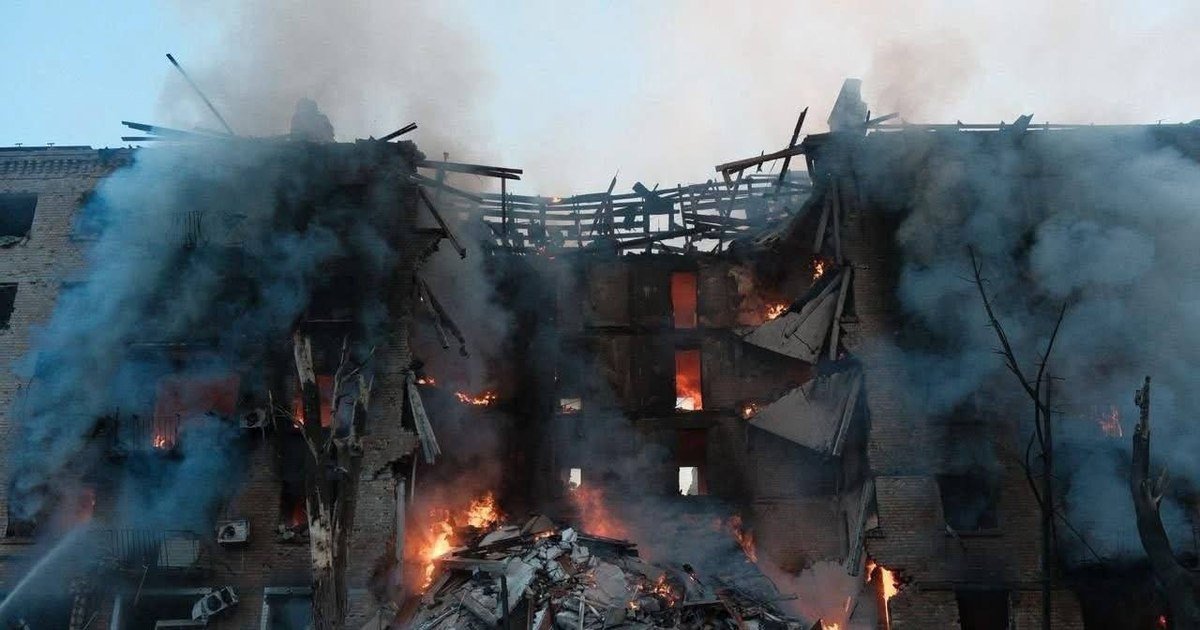
Russia has launched its most extensive airstrikes since the start of the war in recent months, bombarding Ukraine with a record number of drones and high-speed missiles. According to military experts, the escalation of the air campaign comes at a time when the Russian military is facing increasing difficulties in making significant gains on the battlefield.
Russia has increased its attacks on Kiev/FOTO:X
The attacks are designed to overwhelm Ukraine’s air defense systems. Moscow’s tactic involves launching successive waves of cheap drones, followed by ballistic missiles and then cruise missiles, in an attempt to breach air defenses and inflict maximum damage.
The latest bombardment, carried out on Tuesday, also included eight hypersonic Zircon missiles, considered among the most advanced weapons in the Russian arsenal. Ukrainian authorities said it was the largest number of such missiles used in a single attack, and none were intercepted.
The balance of the attack is serious: 23 people lost their lives, and another 151 were injured in different regions of the country. Beyond the immediate effects, specialists believe that Moscow is also pursuing a psychological objective: amplifying the feeling of insecurity among the population and increasing the pressure on the leadership in Kiev to accept negotiations on the Kremlin’s terms.
The front stagnates and the pressure moves into the air
Thomas Withington, a military science expert at Britain’s Royal United Services Institute (RUSI), argues that the escalation of airstrikes is directly linked to Russia’s difficulties at the front.
“Russia now faces serious problems in making relevant progress on the battlefield”he declared. In April, for the first time since 2024, Ukraine recaptured more territory than Russia managed to occupy.
Under these conditions, the expert says, air power has become one of the few tools through which Moscow can exert strategic pressure on Ukraine.
Data from the Center for Strategic and International Studies (CSIS) show that Russia has significantly increased the production and use of Shahed drones. If at the beginning of the year it launched approximately 5,000 drones per month, in the last month their number exceeded 8,000.
Ukrainian defenses are holding up, but vulnerabilities are emerging
Despite the huge volume of attacks, Ukrainian air defenses continue to operate effectively. According to RUSI and CSIS analysis, Ukrainian forces manage to shoot down about 90 percent of the drones launched by Russia and deflect many of the rest with electronic warfare systems.
Ukraine, getting closer to the EU. Brussels paves the way for accession negotiations
However, the situation is much more complicated in the case of ballistic and hypersonic missiles, which travel at extremely high speeds and require sophisticated interceptors.
Tuesday’s attack included 41 ballistic missiles, more than the total launched by Russia in the entire previous month. Of these, 30 reached their targets.
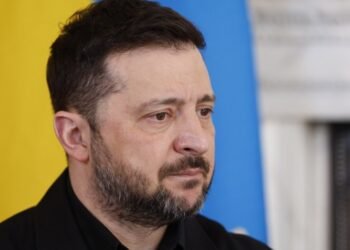
Ukrainian President Volodymyr Zelensky recently said that Ukraine receives only between 60 and 65 interceptor missiles per month, as the production capacity of Western allies remains limited.
“Not enough missiles for Patriot systems”explained the spokesperson of the Ukrainian Air Force, Iurii Ihnat. He pointed out that Russia is increasingly targeting regions where anti-aircraft protection is less than around the capital Kiev.
Kiev demands new Patriot systems
In the wake of the bombings, the commander-in-chief of the Ukrainian army, Oleksandr Sîrski, ordered the improvement of air defense command and control systems and acknowledged the existence of a shortage of modern systems and ammunition for them.
For his part, Zelenskiy renewed calls to Western partners for additional deliveries of Patriot systems and interceptor missiles.
“Europe needs its own anti-ballistic capabilities, and Ukraine needs the support of the United States for the provision of Patriot missiles“, the Ukrainian leader said.
But experts warn that Western stockpiles have been affected by recent conflicts in the Middle East, and production of new interceptors takes time.
Moscow talks about retaliation, experts see a long-term strategy
The Russian Defense Ministry claimed that the attacks targeted Ukrainian military infrastructure, energy facilities and logistical targets, using high-precision weaponry, including hypersonic missiles.
Russian officials also presented the operation as a reaction to a Ukrainian attack on a student dormitory in Starobilsk, a town in the Russian-occupied Luhansk region. Moscow claims 21 people died in that attack, while Kiev says the target was a Russian military unit.
Western analysts, however, believe that these bombings do not represent simple reprisals, but are part of a constant strategy of pressure on Ukrainian society.
“Russia is trying to increase the pressure on the population”explains Yasir Atalan, CSIS researcher. According to him, the Kremlin hopes that increasing fears and deteriorating energy infrastructure will generate internal discontent and weaken Kiev’s negotiating position.
“This is the objective of air attacks on urban centers and energy infrastructure. Russia is trying to obtain more favorable terms in possible future negotiations,” concludes the expert.