The Inter-American Commission on Human Rights of the OAS issued a report on April 16, 2026 on the human rights crisis that has continued in Nicaragua since April 2018.
The IACHR condemns human rights violationsurges the State of Nicaragua to end the repression and restore the rule of law, and demands the release of all political prisoners, and the end of impunity for the murders of more than 350 people.
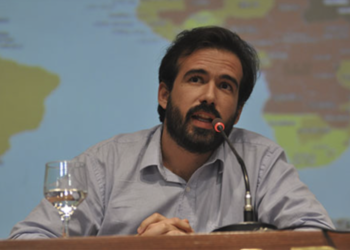
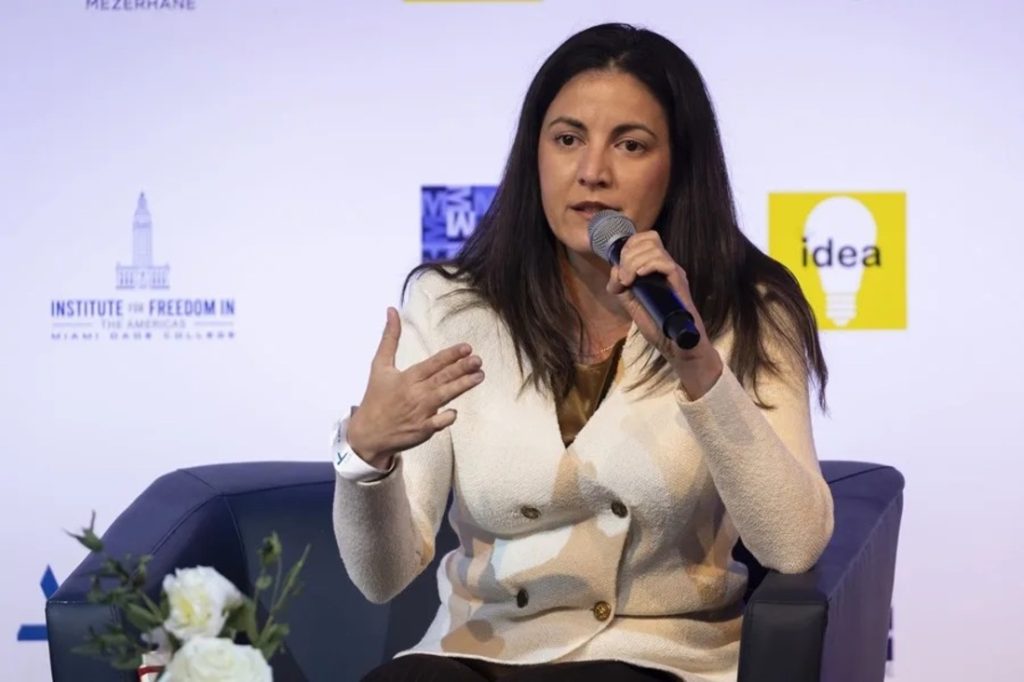
In an interview on the program This week that is transmitted in the CONFIDENCIAL YouTube channeldue to television censorship in Nicaragua, the IACHR rapporteur for Nicaragua, Rosa María Payá, explained that “Nicaragua is currently one of the most critical cases of human rights in the region, and therefore, from the Commission we express our constant invitation to the States of the Americas to contribute to the solution of the crisis.”
“From the (Inter-American) Commission there is no room for the normalization of a dictatorship. What happened two months ago in the (Permanent) Council with this resolution passed unanimouslyspeaks of an intention of the States contrary to a normalization of terror in Nicaragua, based on the information we receive from civil society, human rights defenders, and the relatives of the victims in Nicaragua,” Payá stated.
Eight years have passed since protests and state repression by the Government broke out in Nicaragua in April 2018. How does the Inter-American Commission assess the evolution of the human rights crisis in Nicaragua?
The human rights crisis has continued steadily for more than eight years. We at the Commission see with concern how the State continues to hold political prisoners. violating fundamental rights of Nicaraguanseven getting involved in episodes of transnational repression, and how civic space in Nicaragua is absolutely limited and power increasingly concentrated in the Ortega Murillo environment.
Nicaragua is, at this time, one of the most critical cases of human rights in the region, and therefore, from the Commission we also express our constant invitation to the States of the Americas to contribute to the solution of the crisis and the reestablishment of democracy in that country.
The Commission has described the case of Nicaragua as a state of exception de factoin which there is no state of emergency and, however, all guarantees have been suspended by de facto means.
That’s right, as I had the opportunity to express before the Permanent Council at the beginning of this year (2026), Nicaragua is a dictatorship, one of the three dictatorships that exist in our region, and that is why every time we raise our voice we also do so to urge the Nicaraguan authorities to reestablish the rule of law, to respect the guarantees for all Nicaraguans inside and outside the national territory, and also to take measures to restore democracy in the country. country.
The Mechanism for Political Prisoners in Nicaragua has identified 47 political prisoners, of which 11 are in a condition of forced disappearance. What information does the Inter-American Commission have about the situation of political prisoners? In some cases, you have issued precautionary measures for some of them. Have you had any direct contact with the authorities?
Since the establishment of MESENI eight years ago, more than 160 precautionary measures have been issued. We have seen from our monitoring, but also through the work of the GIEI, through the work of the Special Mechanism for Political Prisoners, how in reality the number that is registered is a sub-registration. We have seen how fear grows within citizens in Nicaragua, inside and outside the national territory, due to the repressive mechanisms carried out by the State. The releases that are announced do not constitute full freedoms, and the released people continue to be subject to mechanisms of repression, harassment and surveillance that cannot be classified as full freedom.
We continue to urge the State to respect all rights and release political prisoners who, at this time, are also in inhumane situations, or disappearances within prisons. Allow me to use this space to send our solidarity to them and to all their families and to all human rights defenders inside and outside of Nicaragua.
The precautionary measures granted by the Commission, which you have said are more than 160, what impact do they have? Can they provide any effective protection when the regime ignores the Commission?
The reality is very challenging. In Nicaragua we are faced with a State that has left the OAS, but has not denounced the American Convention, and therefore the Inter-American Commission on Human Rights continues to have powers over Nicaragua, and we continue to act from the mechanisms that exist in the Commission and from the constant monitoring that we can do. We know that we are speaking to a regime that has made the determination to cling to power by violating the rights of its citizens. And for this reason, our call is not only to those who, at this moment, exercise power from the Nicaraguan State, but also to the rest of the States of the Americas to be part of this effort that accompanies the Nicaraguan people in their constant work for the recovery of democracy.
In addition to these 47 political prisoners and others who have not been reported, perhaps due to fear of their families, and others who have been released but do not enjoy freedom, there are at least a hundred people who are under a de facto house-to-prison system. How do you value this system of deprivation of liberty?
It is a regime of terror that punishes the most sincere voices and those Nicaraguans who within the country still dare to take action and raise their voices for the rights of all Nicaraguans. The systematic deterioration, the sustained crisis of absence of the exercise of human rights for citizens in Nicaragua, does not remain only in repression against dissident voiceswhich also goes further, to co-opt all individual freedoms, to end freedom of the press, to affect indigenous peoples, especially the worrying situation on the Caribbean Coast.
The Commission will be presenting its report soon on this matter, that is the mandate of the Commission. It is up to us to be the conscience of the Permanent Council, and not only monitor the situation, but also recommend actions. For example, we see with great concern how the Nicaraguan State has been using international cooperation mechanisms such as Interpol to extend the arms of repression. This was a topic during the Permanent Council that focused on the situation in Nicaragua just two months ago, and we intend to continue moving in the direction of strengthening, encouraging, acting jointly with those who can collaborate with a solution for Nicaragua.
Given the lack of justice in the Nicaraguan system, what scenarios exist for accountability before international justice? Is the Commission promoting or bringing any case of this type before the Inter-American Court or before other spaces of international justice?
There are several cases that are focused on the situation in Nicaragua, they have reached us through Nicaraguan human rights defenders, some are in the process of going to the Court, those are the mechanisms of accountability and access to justice provided by the inter-American system. Beyond this possibility, there is the action of citizens, civil society, and the Nicaraguan opposition.
From the Inter-American Commission, we try to provide all possible support through monitoring and from the few mechanisms that we can carry out.
And also giving some recommendations for action, such as those that have to do with stopping the use of international police mechanisms such as those that have to do, for example, with financing mechanisms at the inter-American level, at the Central American level, at the universal level, which should not be disconnected from the reality of repression that is carried out by the State in the case of Nicaragua.
What reaction is there among the member states of the OAS to these complaints, and the documentation that the Commission has made about the violations of Human Rights? Some people allege that there is no solution to what happened in Nicaragua and that there is a “normalization” of the dictatorship.
From the Commission there is no room for the “normalization of a dictatorship.” What happened two months ago in the (Permanent) Council with this unanimously approved resolution also speaks of an intention of the States contrary to this sense of normalization of terror in Nicaragua, based on what we received from civil society, from human rights defenders, from the relatives of the victims in Nicaragua.
Our commitment is very clear, not only to not allow the normalization of a dictatorship in Central America, but also to use all the mechanisms at our disposal to accompany the process of recovery of democracy, which is the only environment that can guarantee the exercise of human rights.