The government of donald trump seeks to expand access to USA to Venezuela’s mineral wealth as part of a strategy to extend its influence over the country’s natural resources, reported the Reuters news agency.
Three sources familiar with the conversations explained that the initiative could facilitate US investments in Venezuelan mining. In this way, United States companies could access minerals considered crucial for national security.
The plan would deepen the Trump’s strategy to bring Venezuelan resources closer to the economic and strategic interests of the United Statesafter the arrest of Nicolás Maduro during a US army raid on January 3.
Among the alternatives evaluated is a possible executive order focused on critical minerals. The sources indicated that the document is still being prepared and warned that the strategy to secure these resources could change.
However, a White House official told Reuters there was no need to issue an executive order. The administration believes that current laws already offer a solid framework to channel investments.
US officials have also met with companies to learn about their interest in investing or participating in other ways in Venezuelan mining.
“All we are closely monitoring the oil situation and we recognize that there could be a parallel path with critical minerals,” said an executive at a critical minerals company that was involved in talks with the US government.
Taylor RogersWhite House spokesperson, assured that both countries benefit from cooperation and investments in key industries in Venezuela.
The initiative is part of a broader strategy by Trump to strengthen US influence in Latin America and confront the China’s economic presence in the region.
Uncertainty about mineral potential
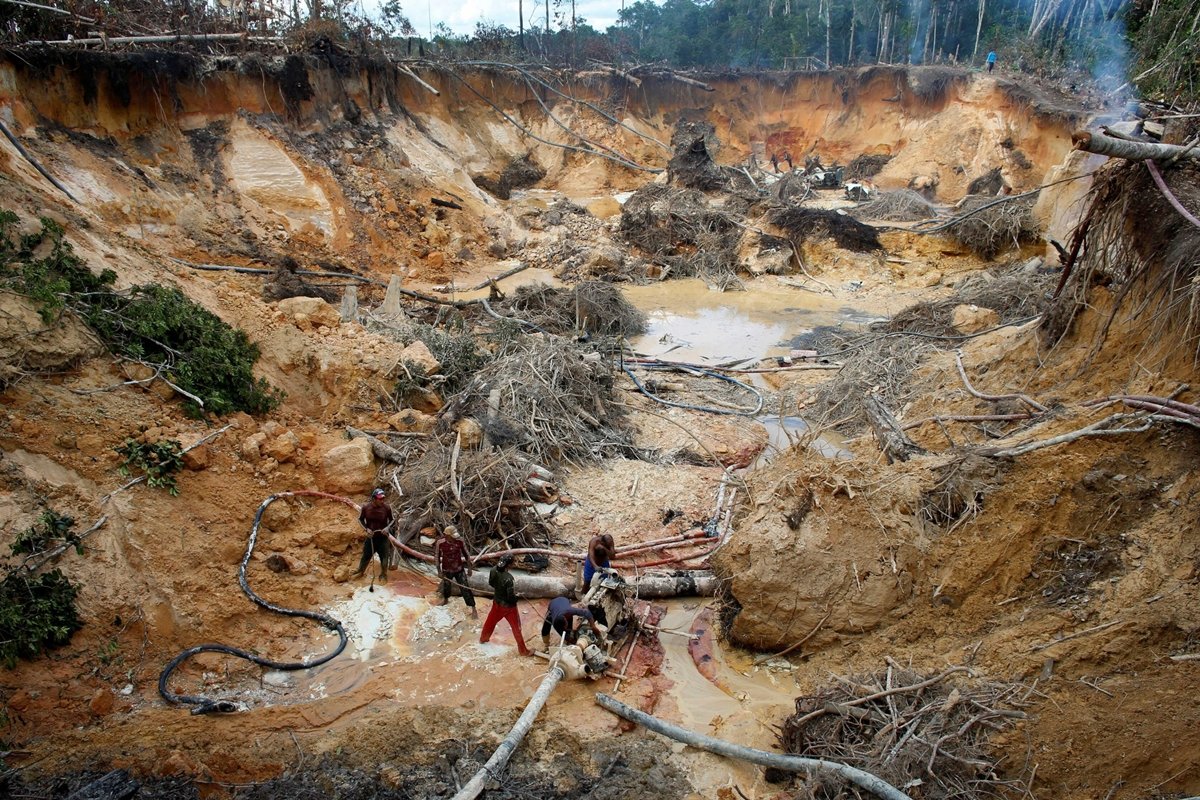
Calculating the magnitude of Venezuelan mineral wealth is still complex. Much of the geological information is outdated. In addition, illegal groups control gold deposits in the Orinoco Mining Arc, near the borders with Guyana and Brazil.
Venezuela has produced gold, iron, bauxite and nickel. However, experts consider it likely that companies and investors will request new geological studies before committing investments. They take into account outdated information, weak infrastructure and illegal mining.
In 2012, Venezuelan officials refused to renew the mining concession of Anglo American for the Loma de Niquel nickel mine. At that time it was estimated that the deposit contained reserves of more than 4 million metric tons of the metal.
The Venezuelan government later assumed control of those assets.
A 2018 official report estimated that Venezuela had 644 metric tons of gold, 14.68 billion metric tons of iron ore, 321.5 million metric tons of bauxite and 407,885 metric tons of nickel.
However, the document used the concepts of “reserve” and “resource” interchangeably. That imprecision made it difficult to establish what proportion of those minerals could be viably extracted.
Another official map published in 2021, prepared with information collected in 2009, identified deposits of copper, nickel, coltan, uranium and tungstenamong other minerals. However, the document did not specify the available volumes.